Skip to content
Skip to content

Contaminants

Cleaning problems described by what has to come off — flux, cutting fluid, polishing compound, oxide, carbon, mould release, particulate — and the process chain that removes it.

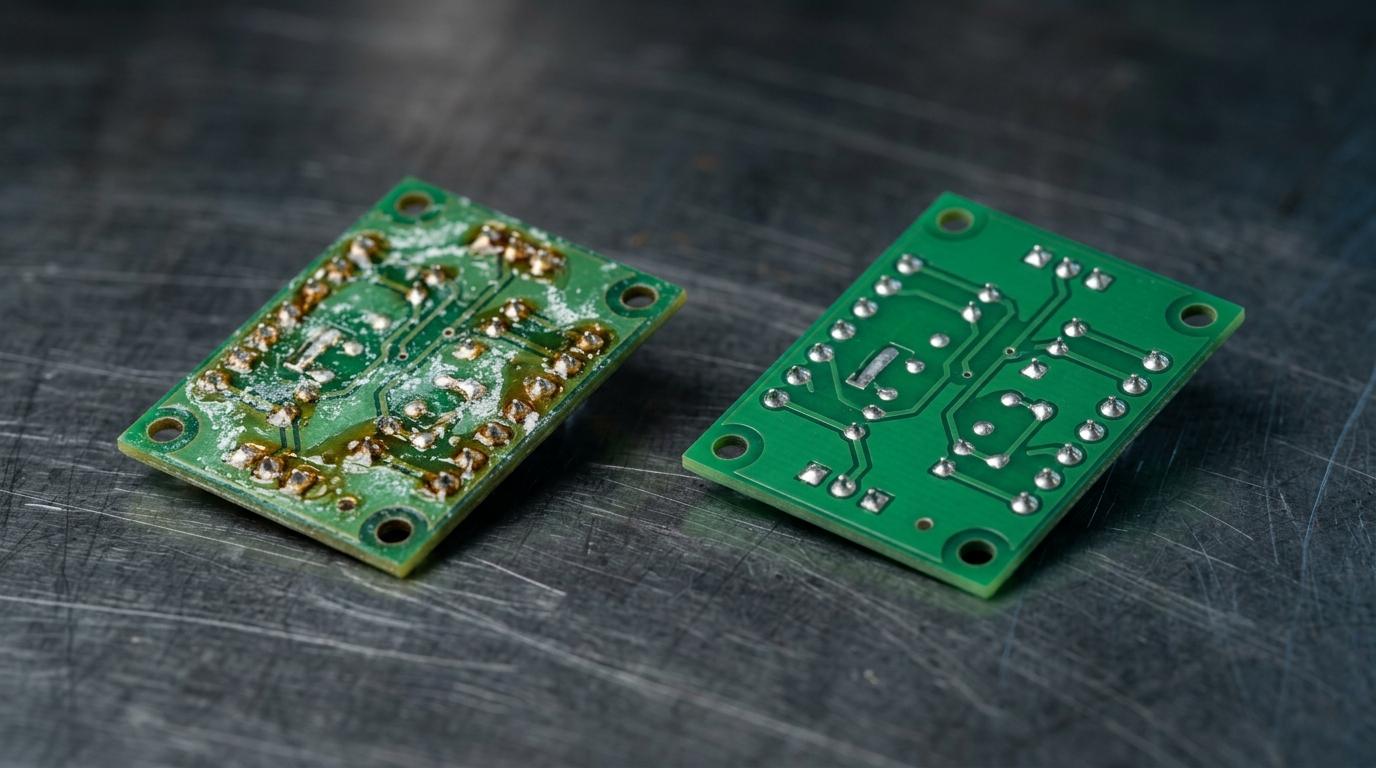
Flux residue: the same component before and after ultrasonic cleaning

Flux residue

Flux residue is the activator-and-rosin film soldering leaves behind on boards, terminals and connectors. Its acidic activators keep attacking metal and its rosin traps ionic contamination, so it causes corrosion and leakage current. Ultrasonic cleaning at 40 to 80 kHz in a warm saponifier reaches under components where spray cannot.

40 / 80 kHz
Learn more
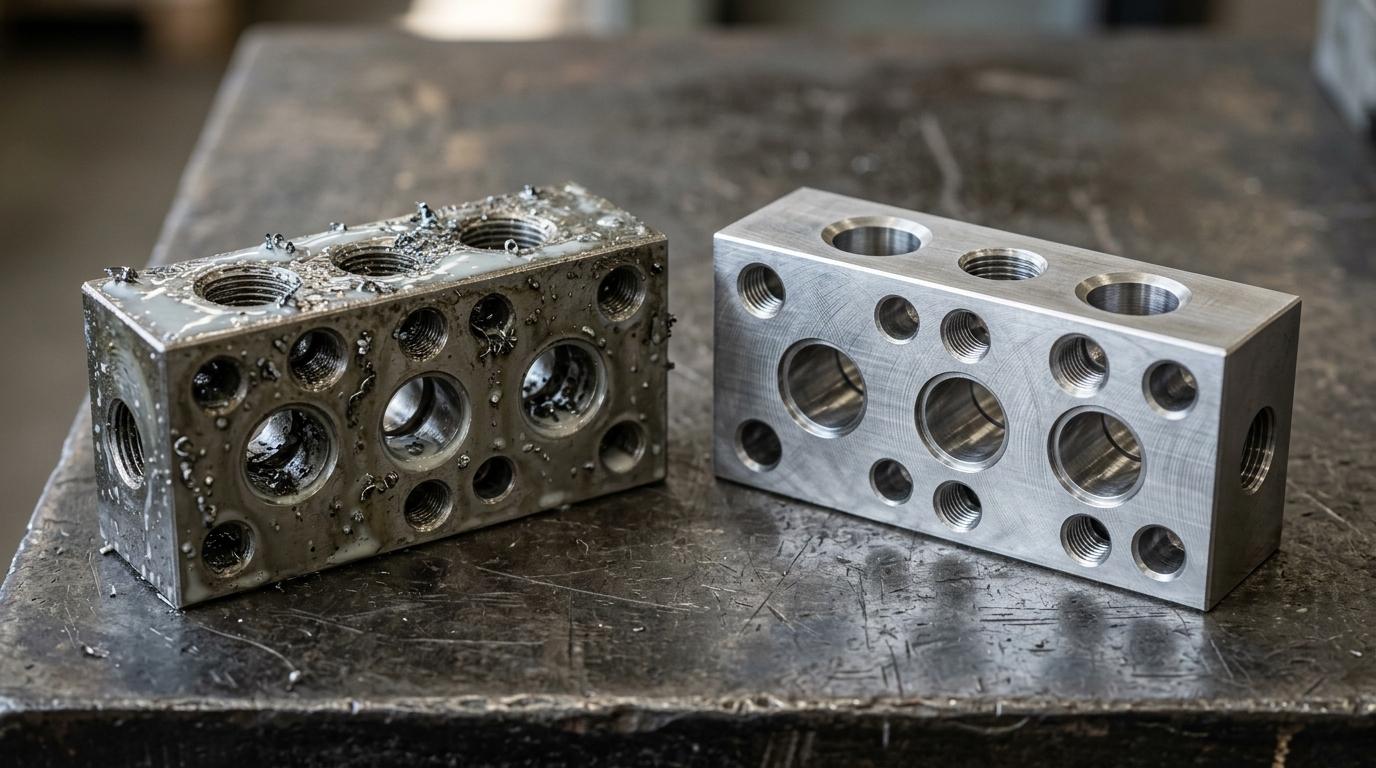
Cutting fluid and machining oil: the same component before and after ultrasonic cleaning

Cutting fluid and machining oil

Cutting fluid is the oil, emulsion or synthetic coolant left on parts after turning, milling, grinding or honing. Its extreme-pressure additives bond to fresh metal and it carries swarf into every recess. Ultrasonic cleaning at 28 to 40 kHz in a warm alkaline degreaser lifts both the film and the chips.

28 / 40 kHz
Learn more
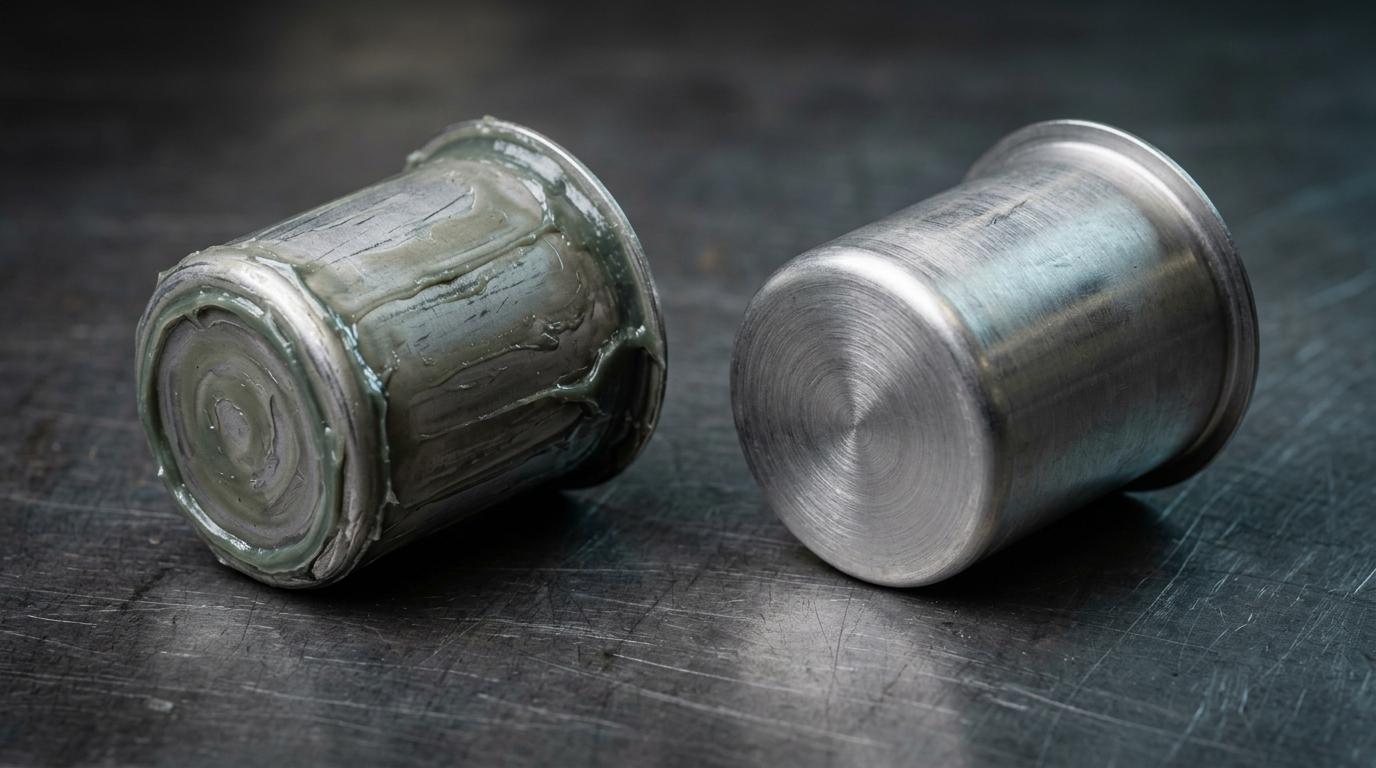
Stamping and drawing compound: the same component before and after ultrasonic cleaning

Stamping and drawing compound

Stamping and drawing compounds are the heavy, additive-loaded lubricants that let sheet metal deform without tearing. They are viscous by design, cling in draw radii and thread roots, and oxidise into varnish if heated. Ultrasonic cleaning at 28 to 40 kHz in a hot alkaline degreaser removes them before plating or welding.

28 / 40 kHz
Learn more
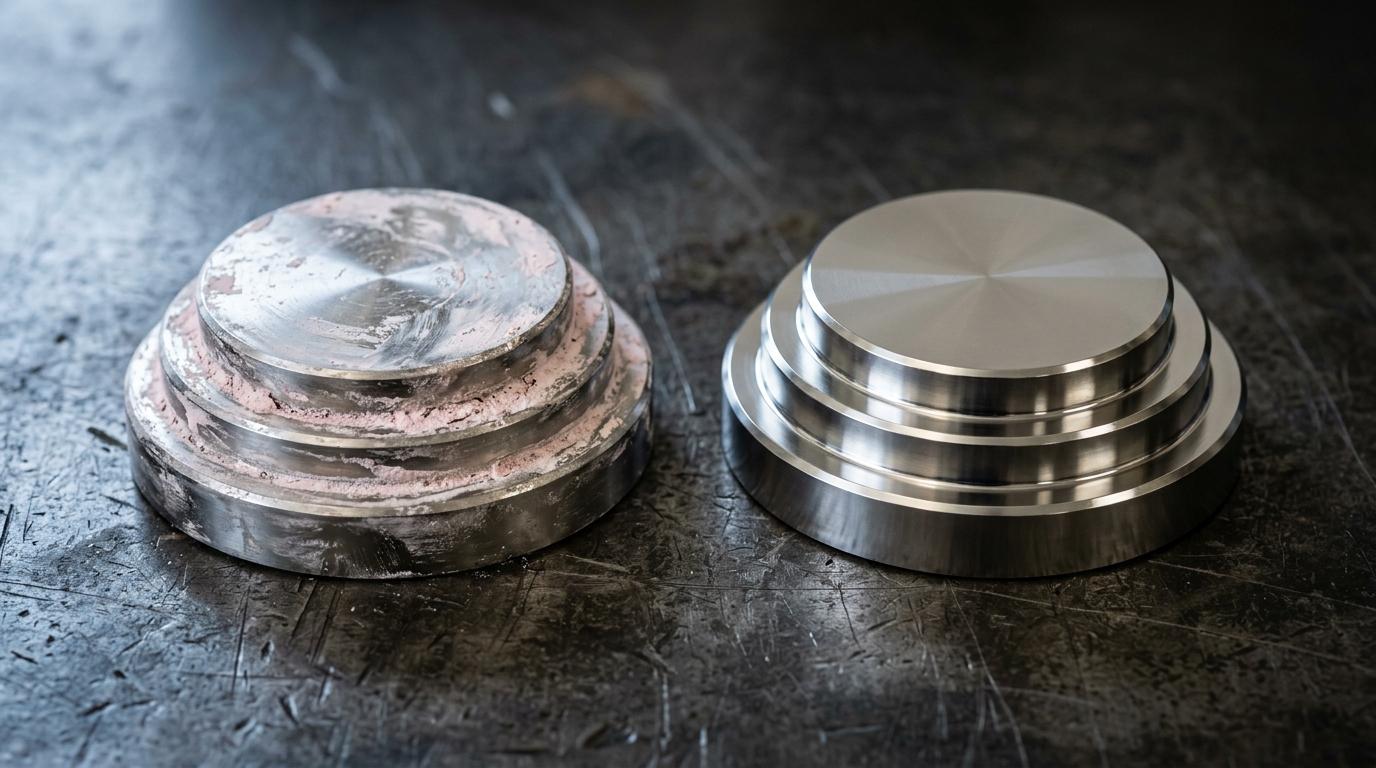
Polishing compound and slurry: the same component before and after ultrasonic cleaning

Polishing compound and slurry

Polishing compound is the abrasive-in-binder residue left by lapping, buffing and CMP — cerium oxide, alumina, colloidal silica or diamond paste in a wax or grease carrier. It is engineered to adhere and it dries into a film. Warm detergent plus 40 to 80 kHz cavitation removes it without touching the surface.

40 / 80 kHz
Learn more
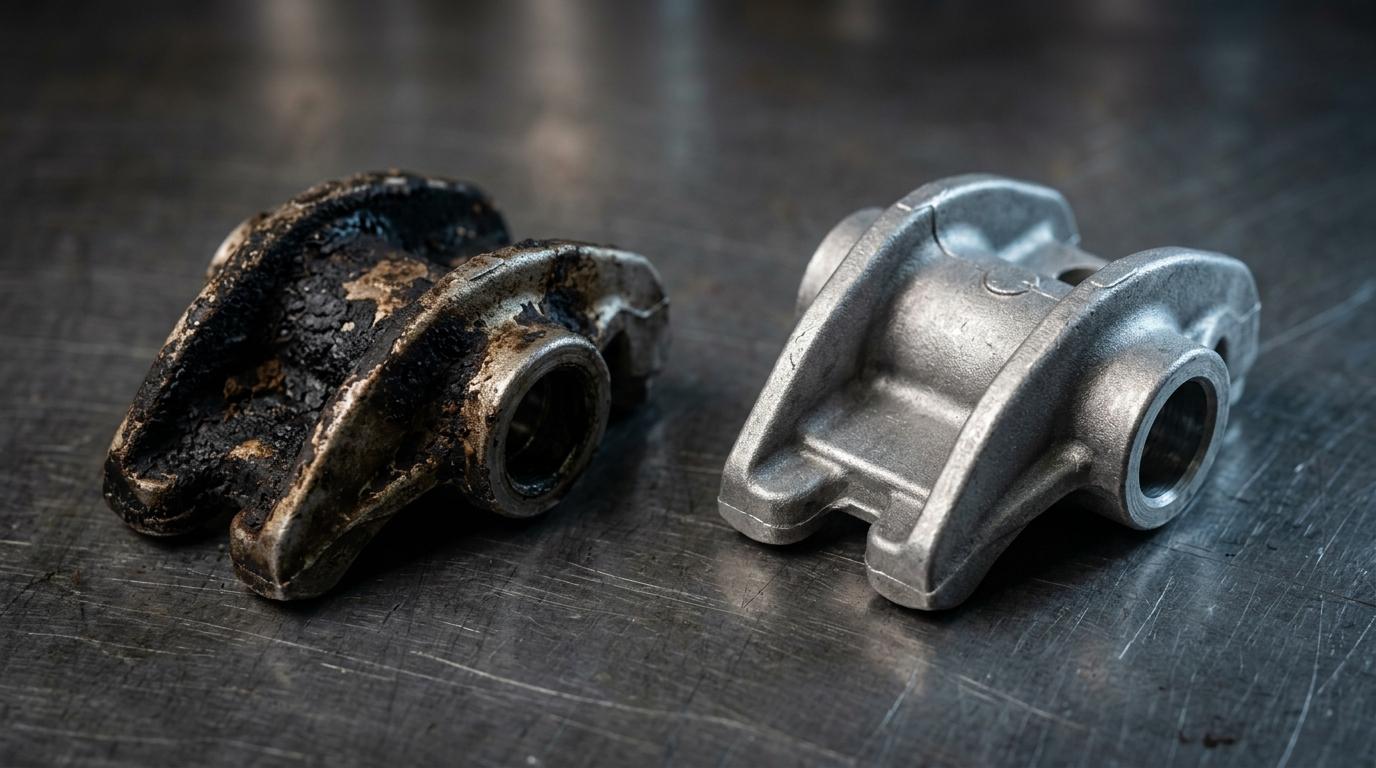
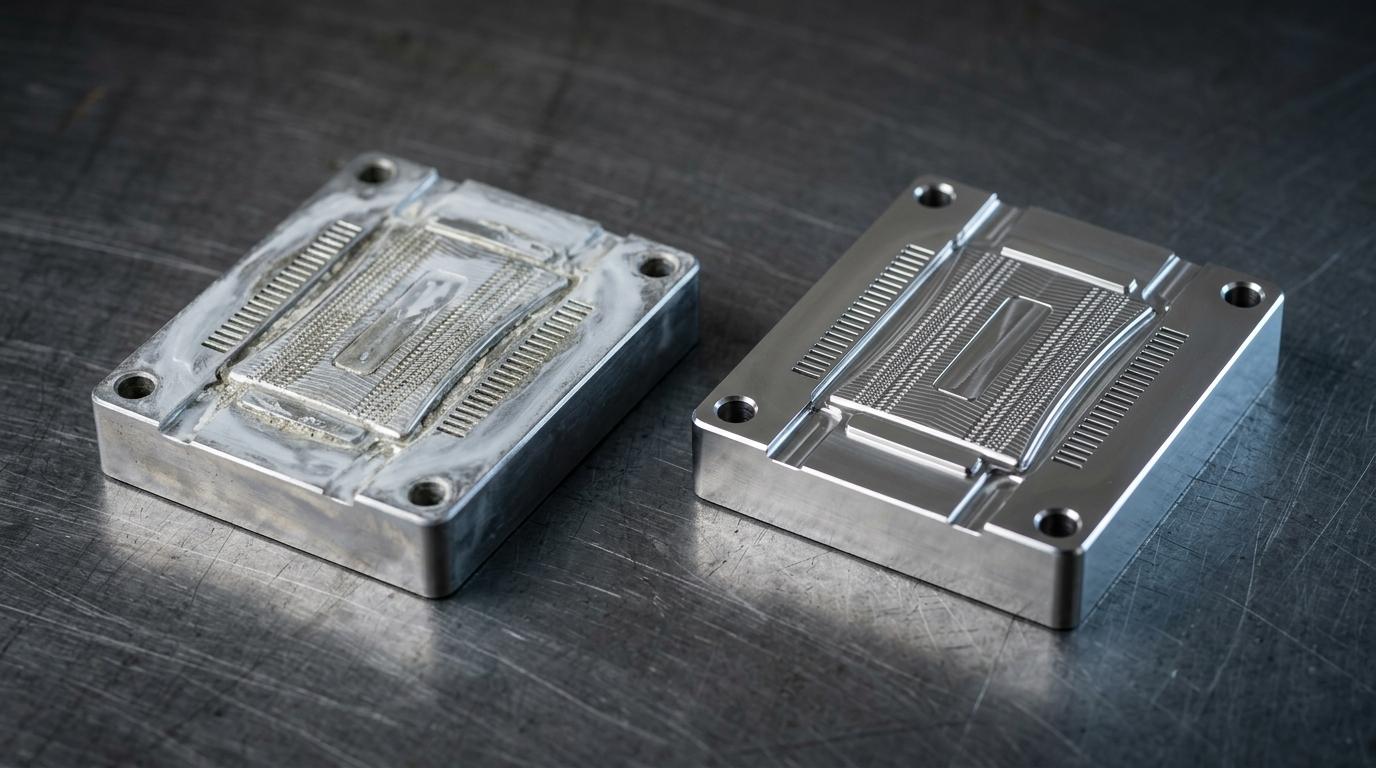
Carbon deposit and coking: the same component before and after ultrasonic cleaning

Carbon deposit and coking

Carbon deposit is the hard, cross-linked film that forms when oil, fuel or polymer is held hot without enough oxygen to burn away. It bonds to metal and shrugs off solvents. Removal needs a chemistry that attacks the film plus 28 kHz cavitation, or electrolysis on moulds.

28 / 40 kHz
Learn more
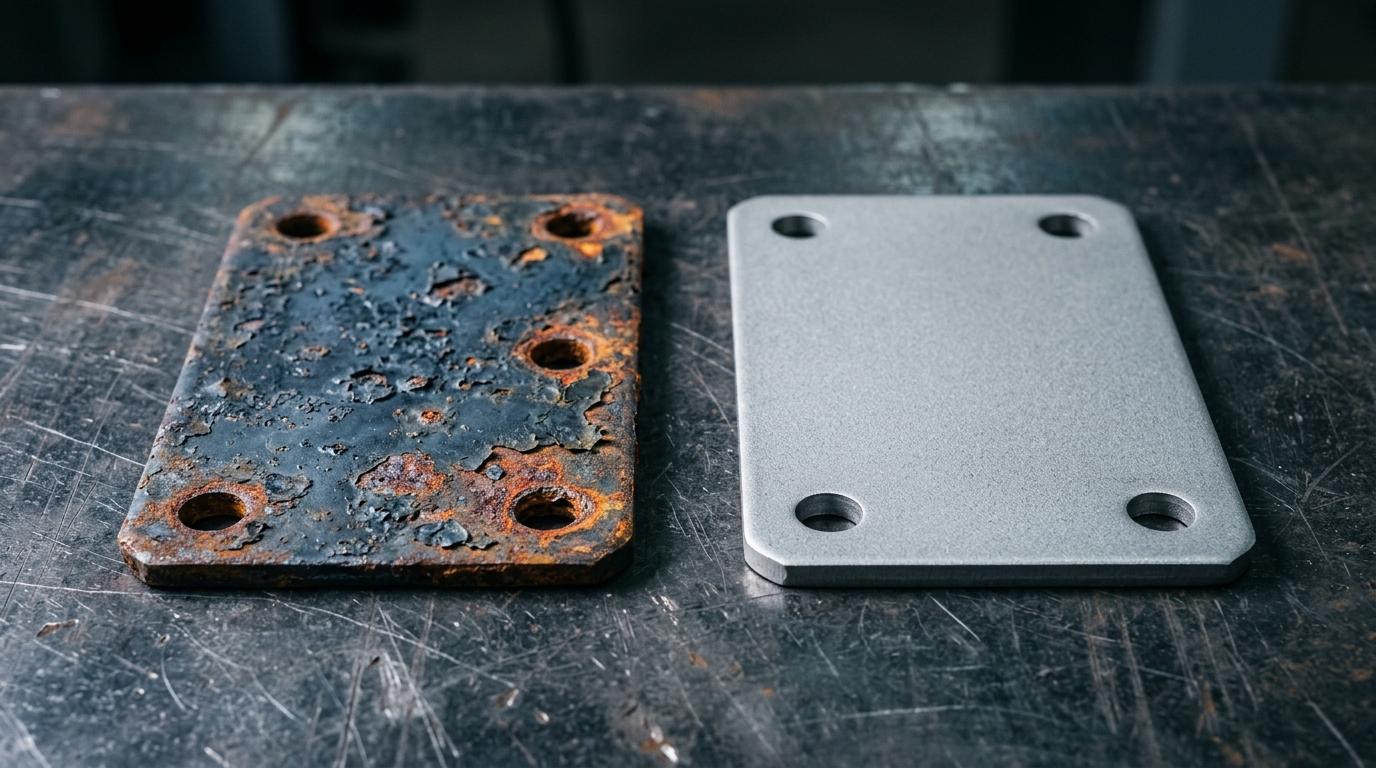
Oxide, rust and scale: the same component before and after ultrasonic cleaning

Oxide, rust and scale

Oxide is the metal’s own surface reacting with air and water — mill scale, heat tint, flash rust and hard water scale. It is chemically bonded to the part, not lying on it, so removal is chemical. Ultrasonic cleaning at 28 to 40 kHz keeps fresh acid at the surface and clears the loosened film.

28 / 40 kHz
Learn more
Mould release agent: the same component before and after ultrasonic cleaning

Mould release agent

Mould release agent is the silicone, wax, PTFE or soap film sprayed into a tool so the part comes out. It transfers to both, builds up in texture and vents, and repels the water that would clean it. Ultrasonic cleaning at 28 to 40 kHz with a matched chemistry strips it.

28 / 40 kHz
Learn more
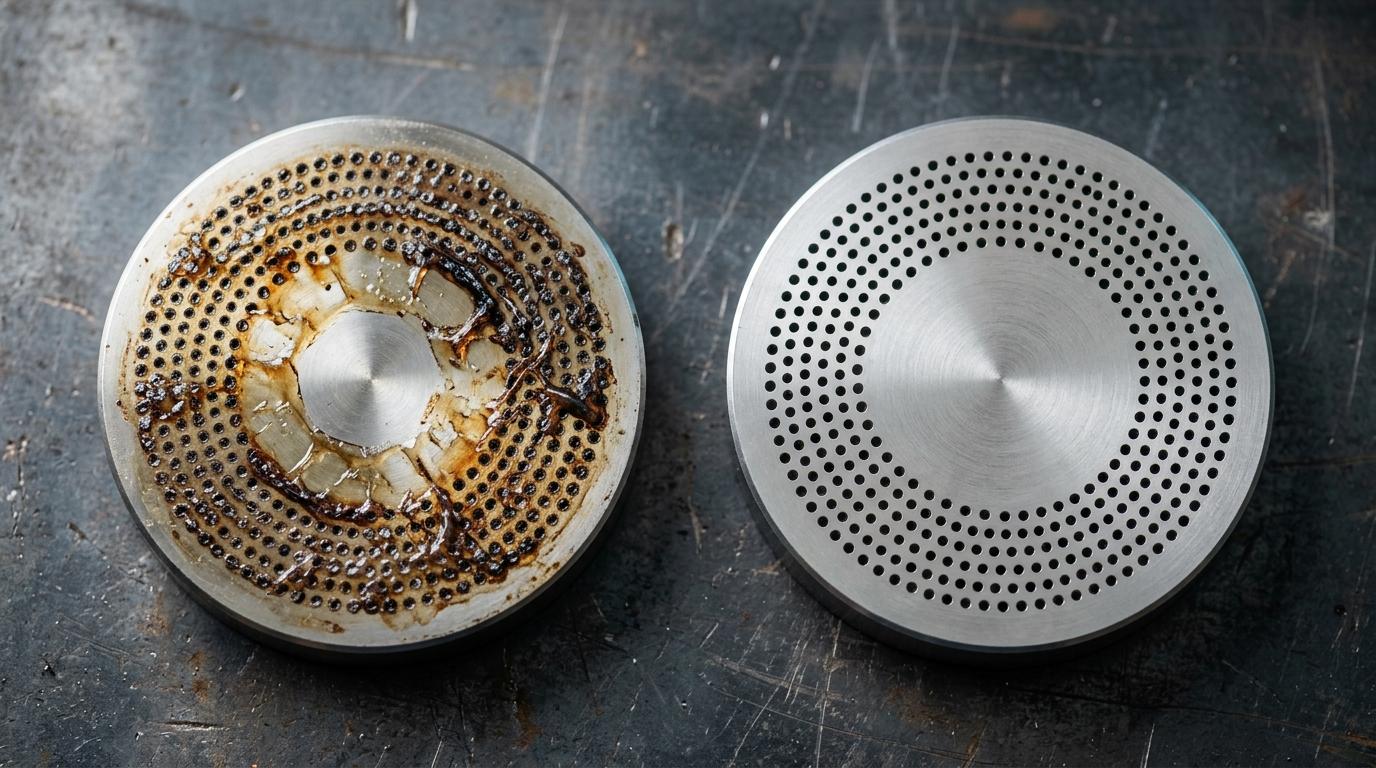
Polymer melt residue: the same component before and after ultrasonic cleaning

Polymer melt residue

Polymer melt residue is the degraded, carbonised polymer that builds up wherever a melt is held hot — spinnerets, extruder screws, dies, hot runners and print nozzles. It is cross-linked and insoluble. Ultrasonic cleaning at 28 to 40 kHz, usually after a thermal or chemical pre-stage, clears the capillaries.

28 / 40 kHz
Learn more
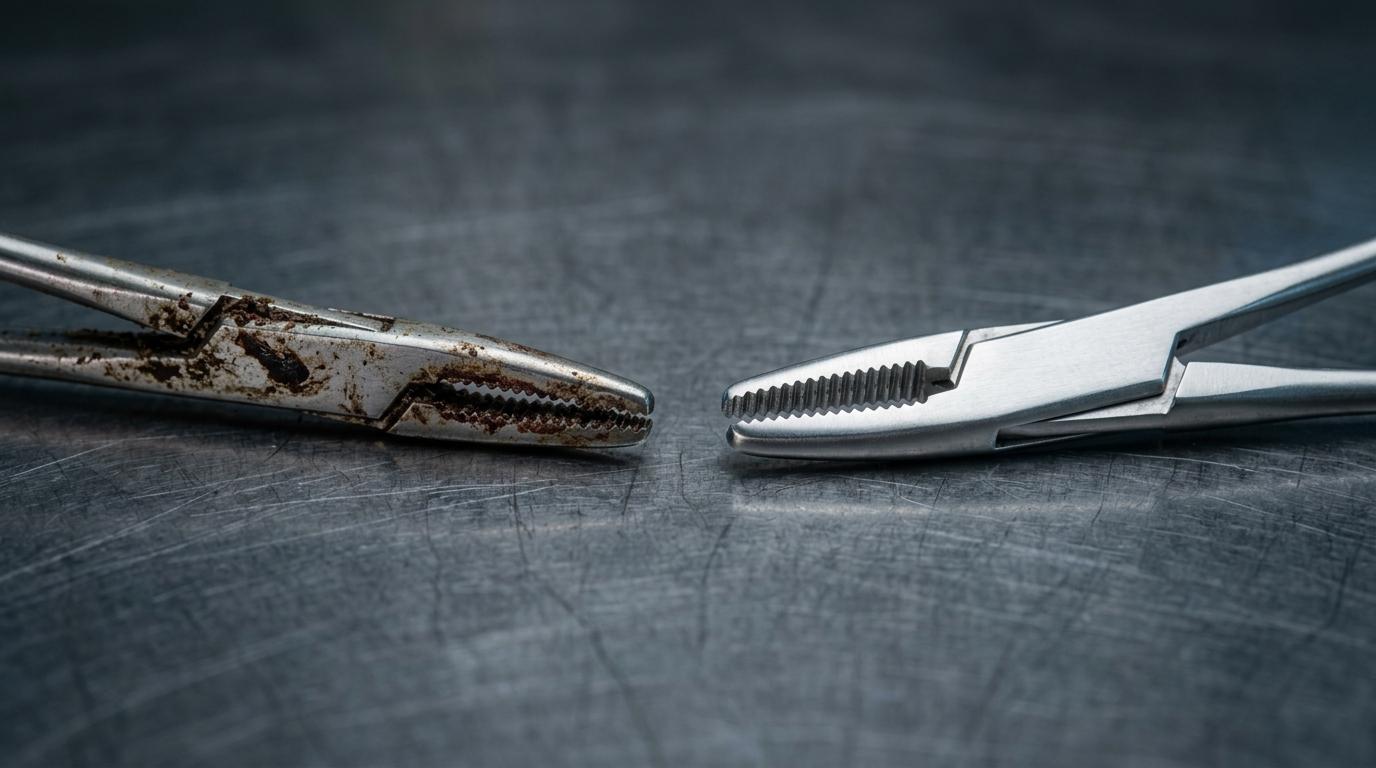
Protein and biological soil: the same component before and after ultrasonic cleaning

Protein and biological soil

Protein soil is blood, tissue, egg, dairy, starch and biofilm — organic matter that denatures when heated or dried and then bonds to the surface. Once fixed it resists detergent. Enzymatic or mildly alkaline chemistry at 40 kHz and below 45 °C removes it before it sets.

40 kHz
Learn more
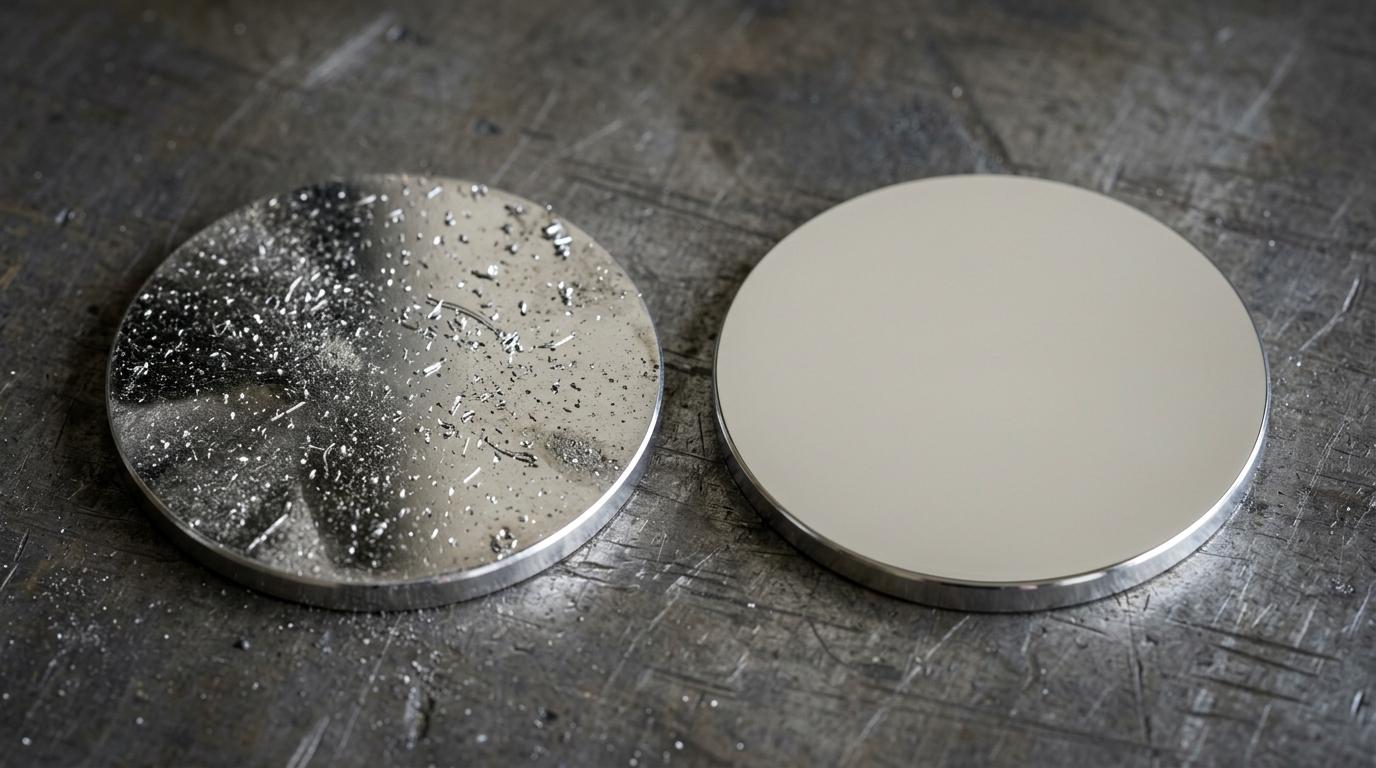
Particulate and metal fines: the same component before and after ultrasonic cleaning

Particulate and metal fines

Particulate contamination is loose solid matter — metal fines, swarf, glass and silicon dust, abrasive grit — held on a surface by static charge, surface tension and geometry rather than by chemistry. Nothing dissolves it. High-frequency ultrasonic cleaning at 80 to 120 kHz lifts particles and filtration takes them out.

80 / 120 kHz
Learn more
Request a Quote

Tell us what you need cleaned

Send us the part, the contaminant and your cycle time. Our engineers size the tank, the frequency and the process chain — and reply with a sized specification for your line.

LINEPhoneRequest a Quote