Polishing compound and slurry
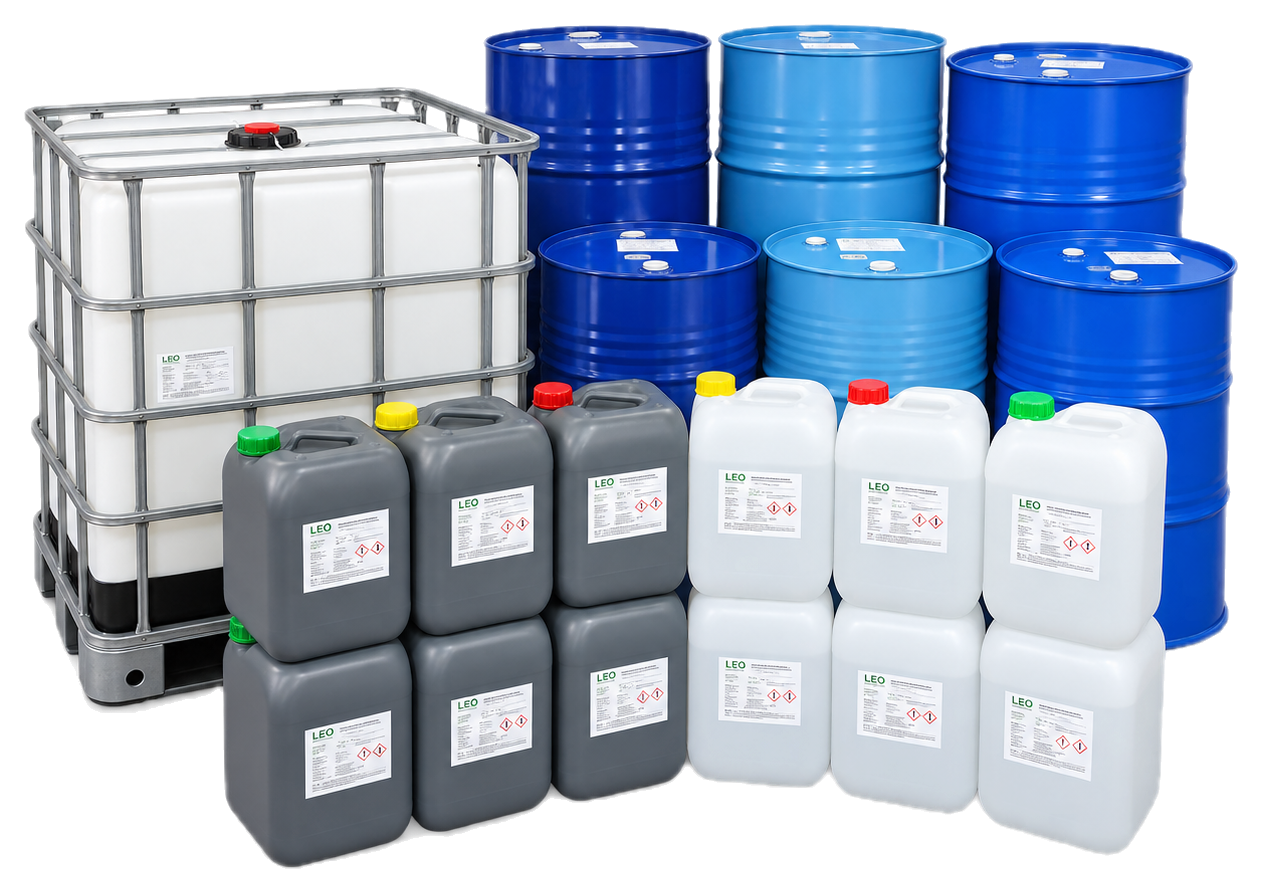
The abrasive-plus-binder residue left by buffing, lapping, honing and CMP — cerium oxide, alumina, colloidal silica and diamond paste in a wax, soap or grease carrier.
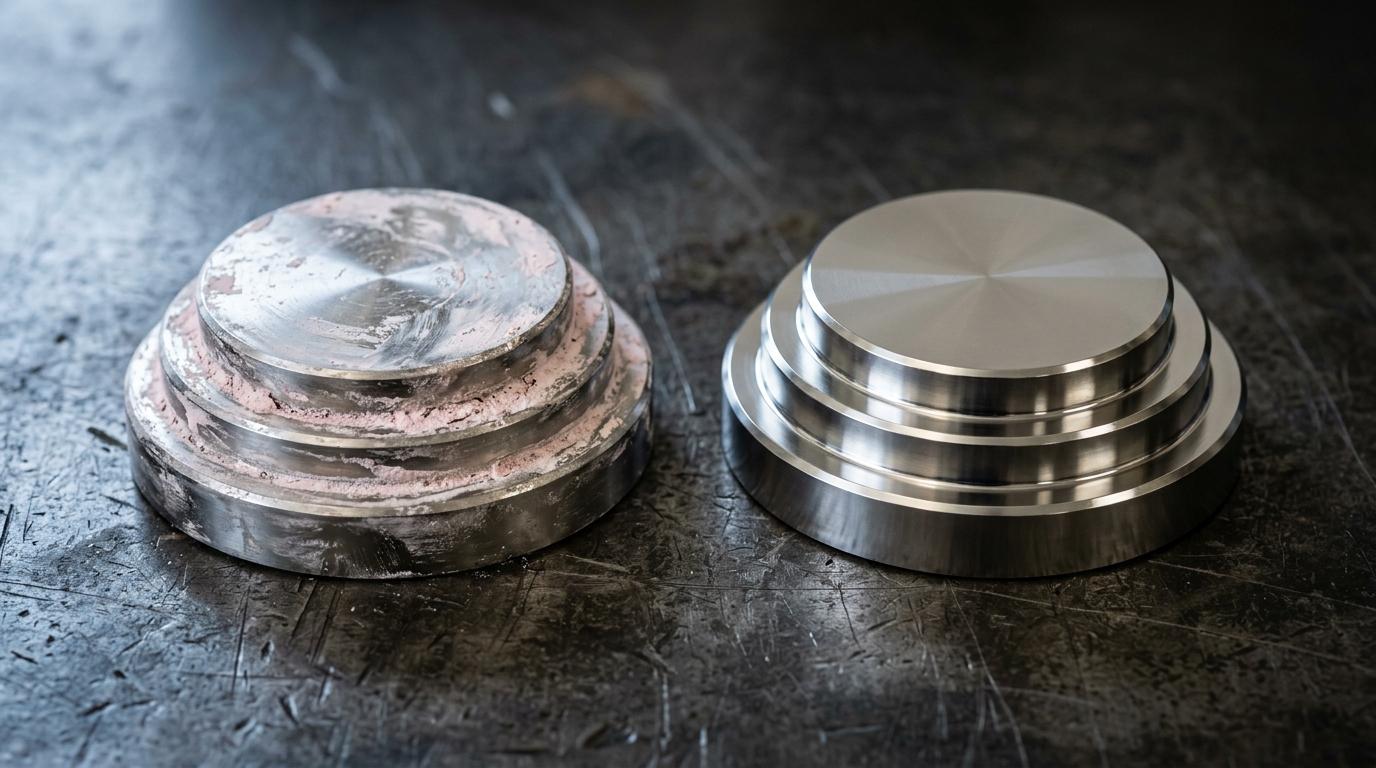
Polishing compound is the abrasive-in-binder residue left by lapping, buffing and CMP — cerium oxide, alumina, colloidal silica or diamond paste in a wax or grease carrier. It is engineered to adhere and it dries into a film. Warm detergent plus 40 to 80 kHz cavitation removes it without touching the surface.
- Recommended frequency
- 40 / 80 kHz
A polishing compound is two contaminants pretending to be one. The abrasive — cerium oxide, alumina, colloidal silica, diamond — is a hard particle in the sub-micron to few-micron range, which is precisely the size that a polished surface will not let go of. The carrier is a wax, soap, tallow or grease chosen because it holds the abrasive against the work and does not fly off the wheel. Removing the carrier without removing the abrasive leaves a scratch source; removing the abrasive without removing the carrier leaves a film.
Two things make it stubborn. It is designed to adhere: cerium oxide slurry on glass forms a genuine chemical attachment, which is part of how cerium oxide polishes at all. And it dries. A part that leaves the polishing station wet is carrying a dispersion; the same part an hour later is carrying a hard, bound film that has shrunk into every pore, joint line and lettering recess on the surface. That is why polished work goes into a pre-rinse still wet, and why a plant that lets baskets queue in front of the washer creates a cleaning problem it did not have.
The consequence is almost always cosmetic-plus-functional at once. Compound left in a lettering recess, a chamfer or a knurl is visible on the finished part and no amount of downstream polishing removes it. Abrasive left on an optical face scatters light. On a plated or coated part the residue causes de-wetting, pinholes and adhesion failure; on a lapped bearing or seal face it becomes third-body wear the moment the assembly turns; on a semiconductor wafer it is a defect, full stop. Buffing compound on jewellery and hardware is the classic example of a part that is finished but not sellable.
This is one of the applications ultrasonic cleaning is genuinely best at, for one reason: a polished surface cannot be wiped. Every contact is a scratch risk, and a scratch on a finished face is the defect the whole polishing sequence existed to avoid. Ultrasonic cleaning delivers all of its mechanical work through the liquid, so nothing touches the surface. A warm alkaline or neutral detergent softens and emulsifies the wax carrier; cavitation lifts the released abrasive off the surface and into the bath, where filtration has to take it out or the next basket is polished with it.
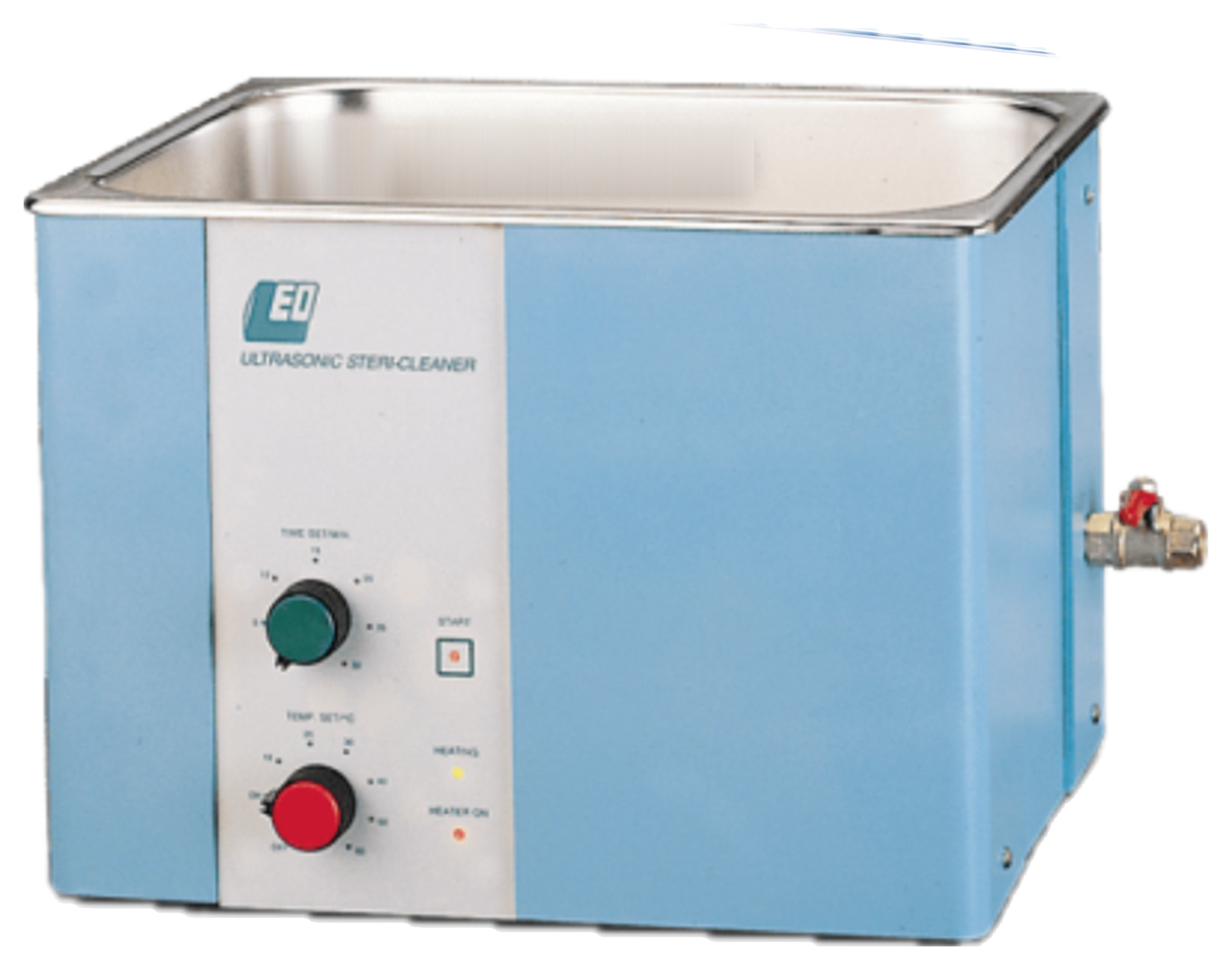
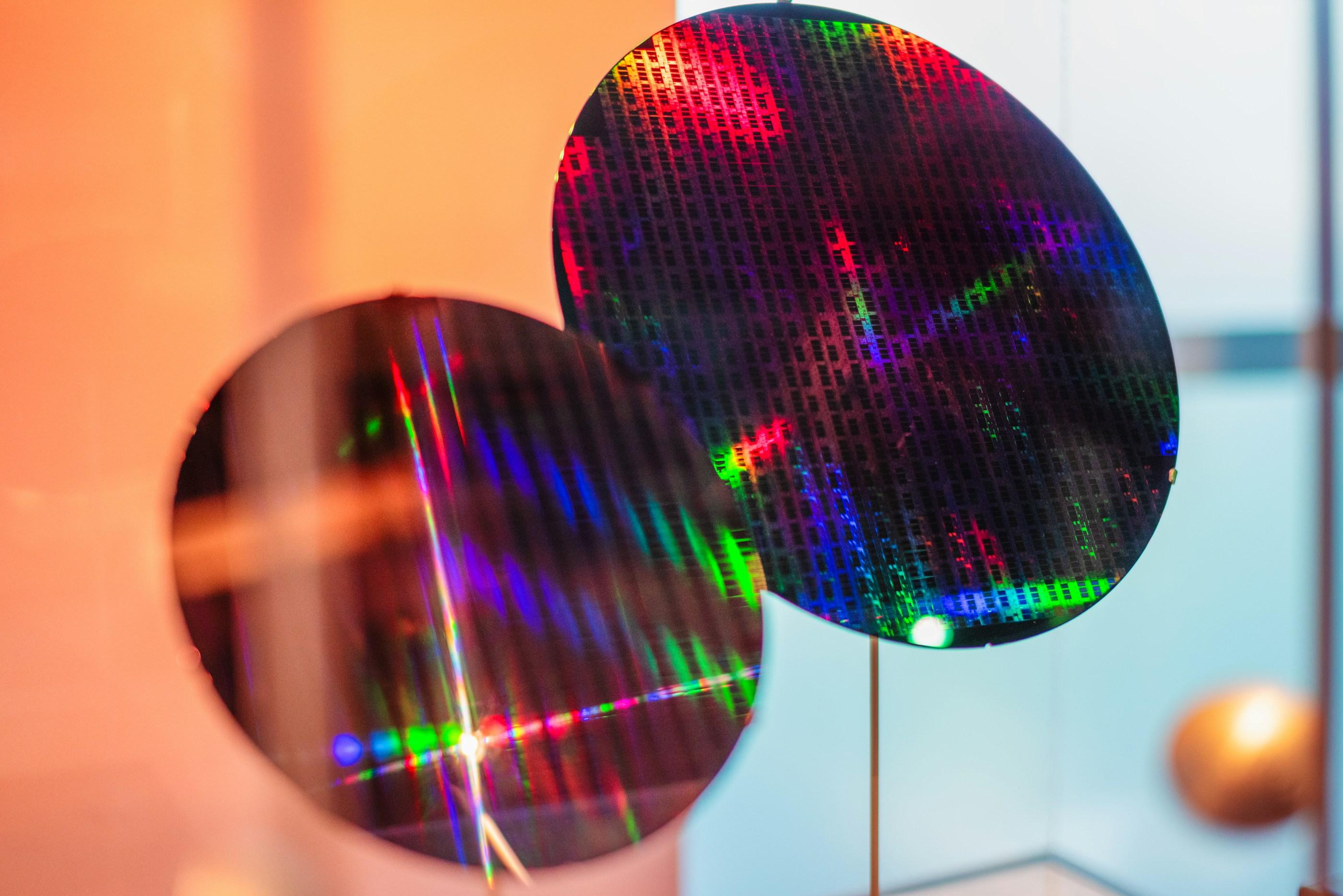
Frequency is chosen by what is being protected. Optical glass, hard-plated steel and buffed hardware take 40 kHz, and the extra energy is welcome on a bound wax film. Finished optical faces, resin lenses with a hard coat or an anti-reflective stack, polished medical implants and dental prostheses go to 80 kHz. Semiconductor lapping, dicing and CMP residue goes to 120 kHz, where cavitation is gentle enough for a device surface and the particles being removed are sub-micron anyway. LEO builds three-frequency tanks covering 40, 80 and 120 kHz for exactly this spread of duty.
Process
The process chain
- Step
Pre-rinse while the slurry is still wet
Parts go from the polishing station to a pre-rinse before the compound dries. Wet slurry is a dispersion and rinses; dried slurry is a bound film that has shrunk into every recess. This one scheduling decision changes the difficulty of everything that follows.
- Step
Ultrasonic wash in warm detergent
A warm alkaline or neutral cleaner emulsifies the wax, soap or grease carrier while cavitation releases the abrasive it was holding. The chemistry breaks the binder, cavitation does the mechanical work — neither is effective alone on a bound compound.
- Step
Ultrasonic rinse over active filtration
Released abrasive is now loose in the bath, and loose abrasive re-deposits on the next part. The rinse stage has to run over a filter sized for sub-micron media, otherwise the tank slowly turns into the polishing slurry it was meant to remove.
- Step
DI cascade final rinse
On optical, plated and medical surfaces the last water decides the finish. A deionised cascade leaves no dissolved solids behind, which is what prevents the water spots and drying marks that on a polished face are indistinguishable from a defect.
- Step
Slow withdrawal or hot-air dry
Polished surfaces are never wiped dry. Either the basket is withdrawn slowly enough that surface tension pulls the water off in a sheet, or the part is dried in heated circulating air. Both leave the surface untouched, which is the whole point of cleaning it this way.

Frequently asked questions
Cavitation itself does not scratch — nothing solid touches the part. Two real risks exist and both are process design, not physics. Loose abrasive circulating in an unfiltered bath will be driven against the next part, so filtration is not optional here. And parts loaded so they can knock against each other or against the basket will mark themselves; fixtures that hold each piece separately are standard for polished work. Prolonged high power on a soft metal can also erode the surface, which is why frequency and power are set to the surface being protected.
Because it changes state. Wet, it is abrasive particles dispersed in a liquid carrier and a rinse carries the whole dispersion away. As it dries, the carrier shrinks and consolidates, the abrasive packs together, and what is left is a bound film keyed into the surface texture and into every recess. Cerium oxide on glass additionally forms a chemical attachment. The practical answer is a pre-rinse at the polishing station rather than a stronger chemistry at the washer.
It depends on what is underneath, not on the compound. 40 kHz removes buffing and lapping compound faster and is the right choice for glass, plated steel and hardware. 80 kHz is the normal setting for finished optical faces, coated resin lenses and polished implants, where the coating is thinner than the soil. 120 kHz belongs to semiconductor lapping, dicing and CMP residue, where the particles are sub-micron and the surface is a device. LEO builds three-frequency tanks so a plant that does more than one of these does not need three machines.
Request a Quote
Tell us what you need cleaned
Send us the part, the contaminant and your cycle time. Our engineers size the tank, the frequency and the process chain — and reply with a sized specification for your line.