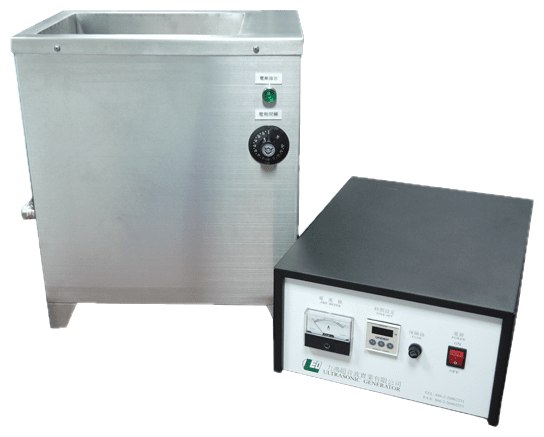
Precision Machining & Metal Stamping
Ultrasonic cleaning for stamped parts, machined components, bearings, motor housings and steel tube — single tanks through to nine-stage automated lines with air-knife blow-off and drying.
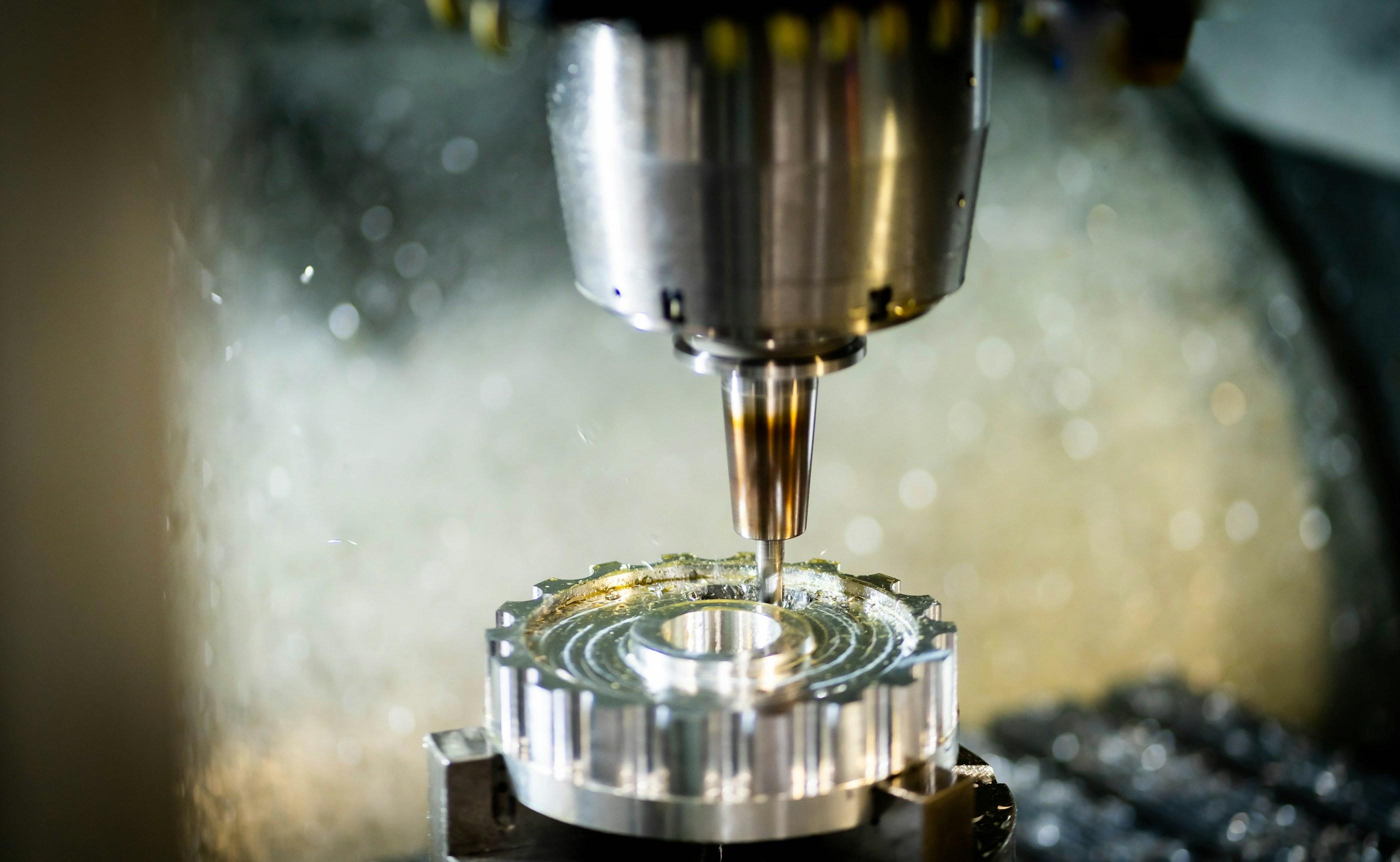
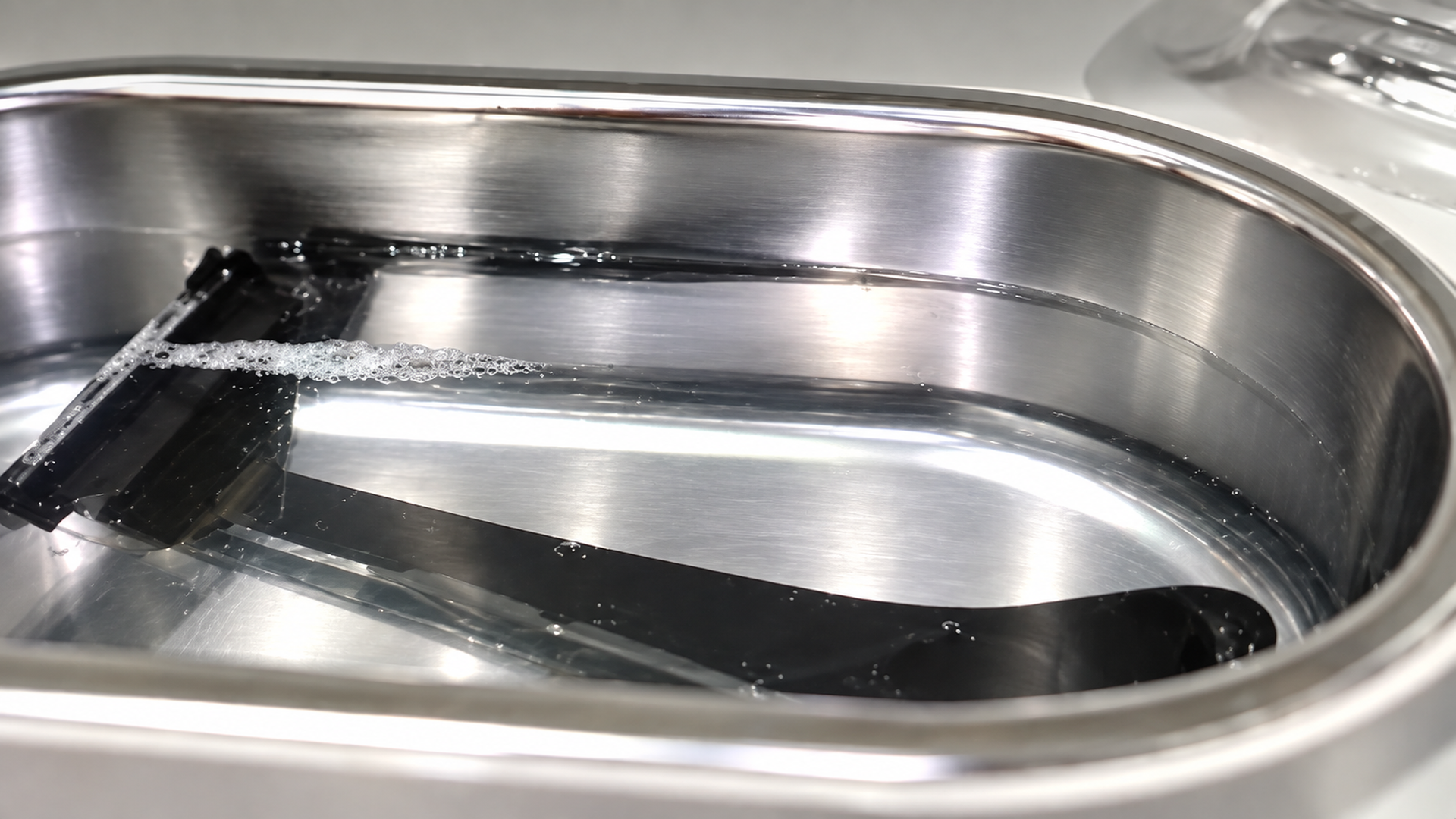
LEO builds ultrasonic cleaning equipment for metal parts manufacturing: stamped and machined components, bearings, motor and servo housings, steel tube, zips, pen nibs and hand tools. Cavitation removes stamping and cutting oil, drawing compound, metal fines and polishing compound before plating, coating, assembly or packing — at 28 kHz for heavy oil, 40 kHz for general work.
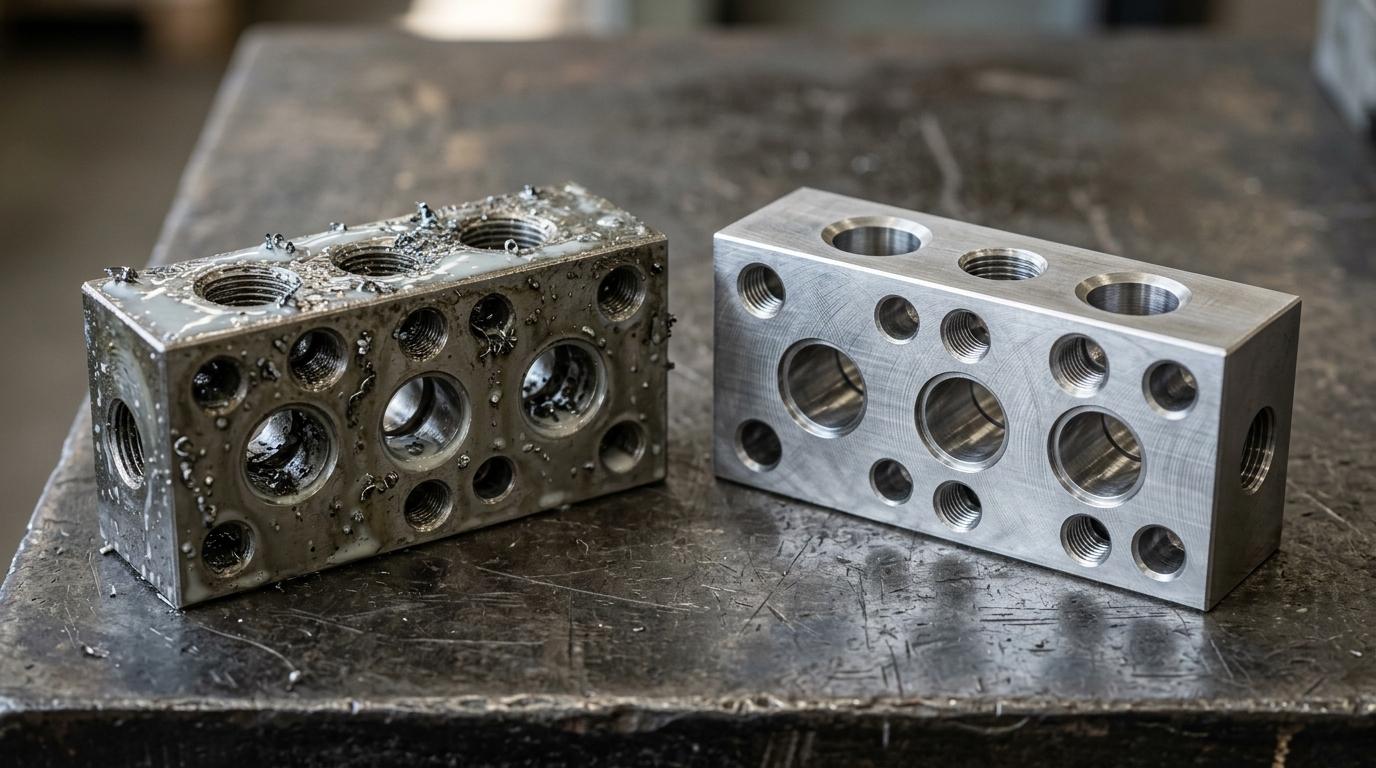
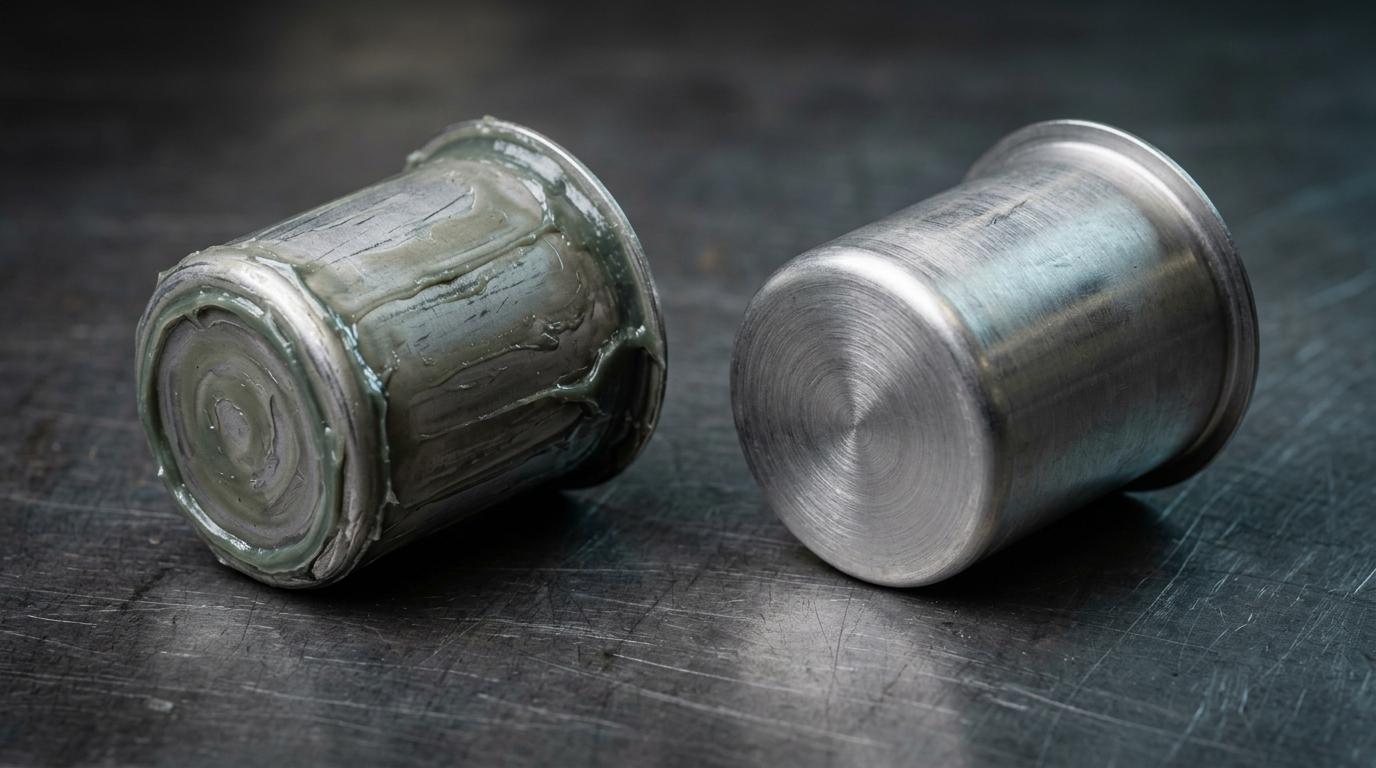
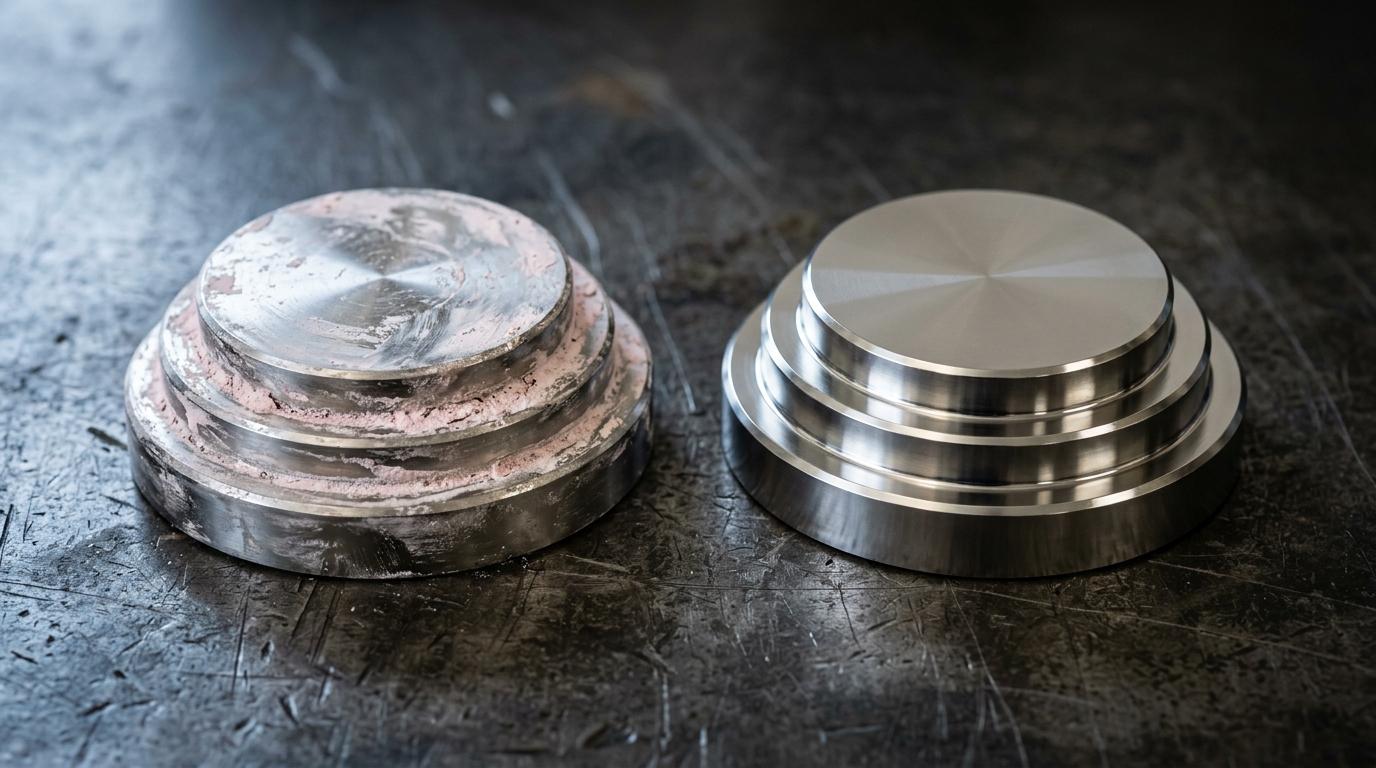
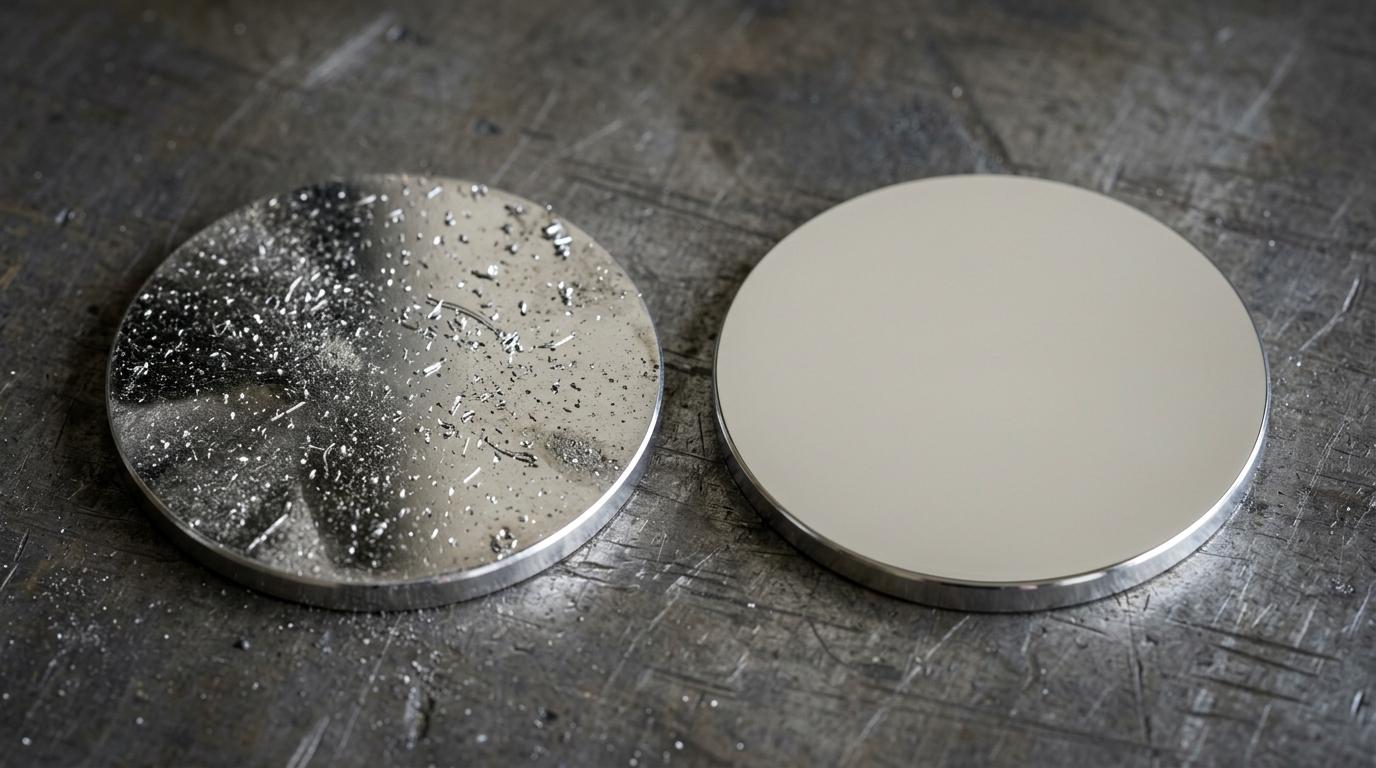
Every forming and cutting process leaves something behind. Stamping leaves press oil and drawing compound; machining leaves cutting fluid and swarf packed into a thread or a cross-drilling; grinding and buffing leave abrasive compound embedded in the surface finish. None of it is a problem until the next step — plating, painting, welding, assembly, packing — where it becomes an adhesion failure, a rejected weld or a customer complaint.
Choosing the frequency
This is the sector where the coarse end of the band actually belongs. 28 kHz produces large, energetic cavitation bubbles that cut through heavy forming oil and loosen scale on robust steel parts faster than anything gentler. 40 kHz is the general-purpose choice and handles most machined and stamped work. Move up to 80 kHz only for fine, precision-turned parts where surface finish matters more than throughput.
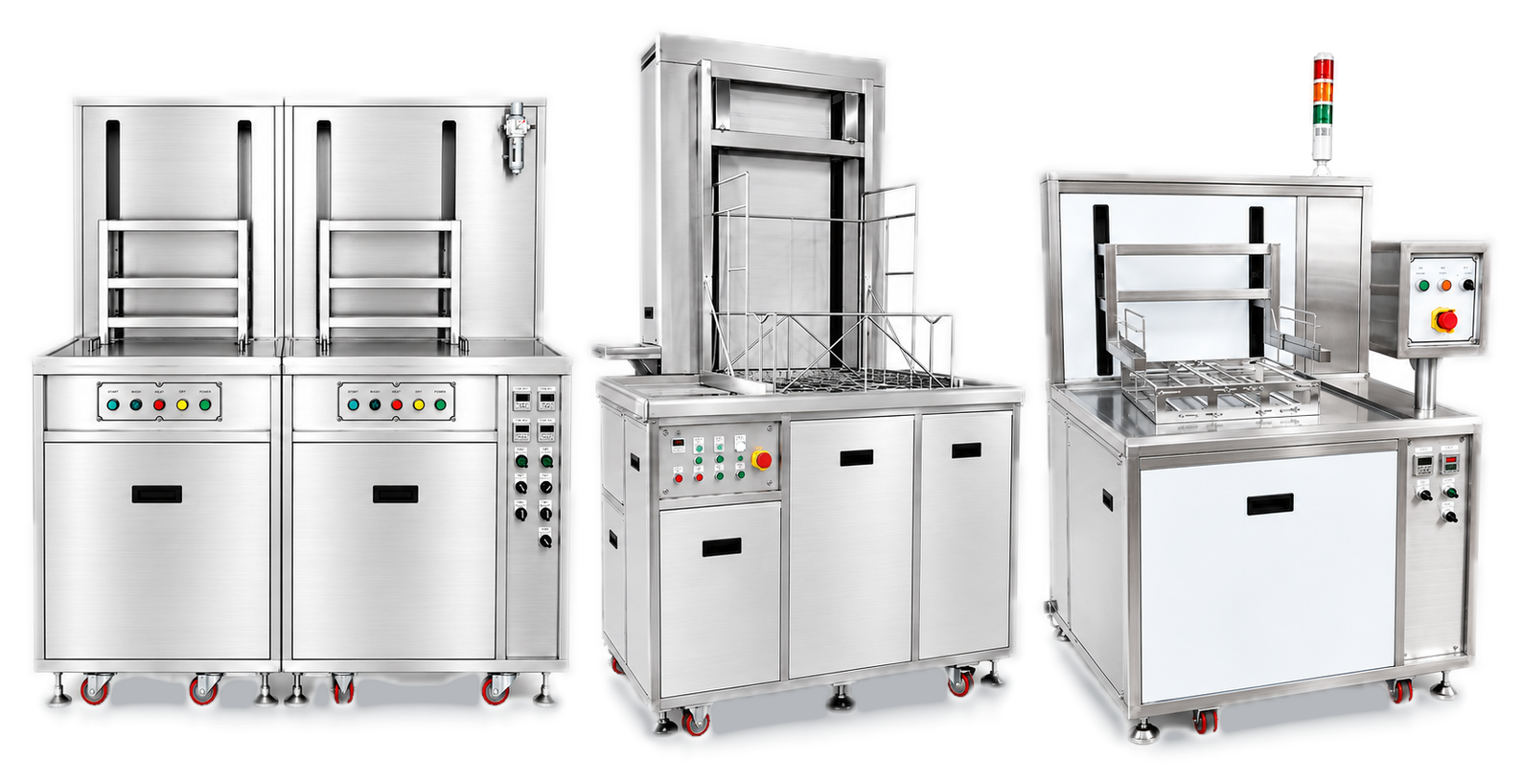
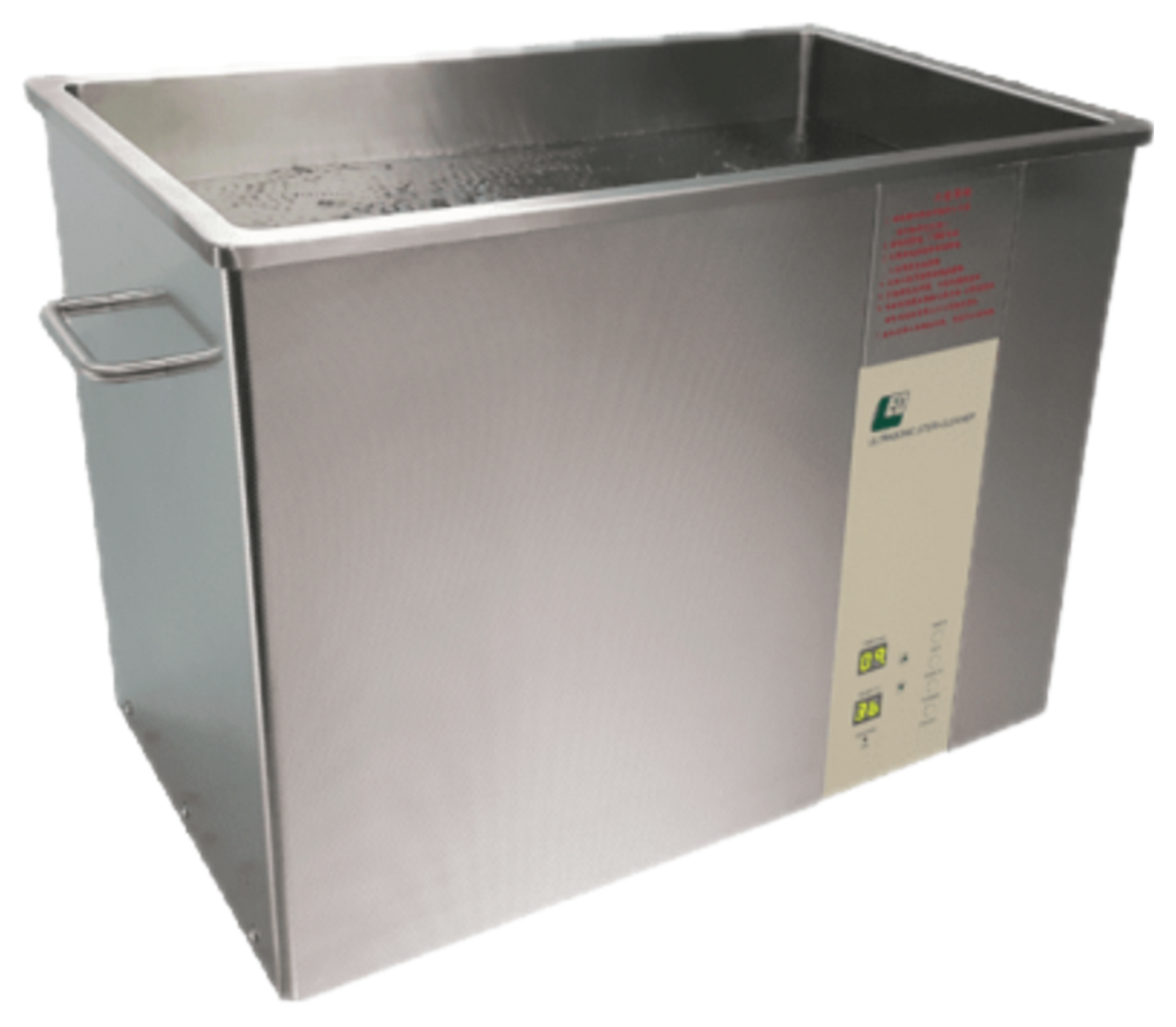
LEO’s single-tank industrial machines run 28 or 40 kHz in tank sizes from 40 to 132 litres; the dual-frequency versions pair 28/40 kHz in one tank so a coarse pass and a finishing pass need only one machine.
The process chain
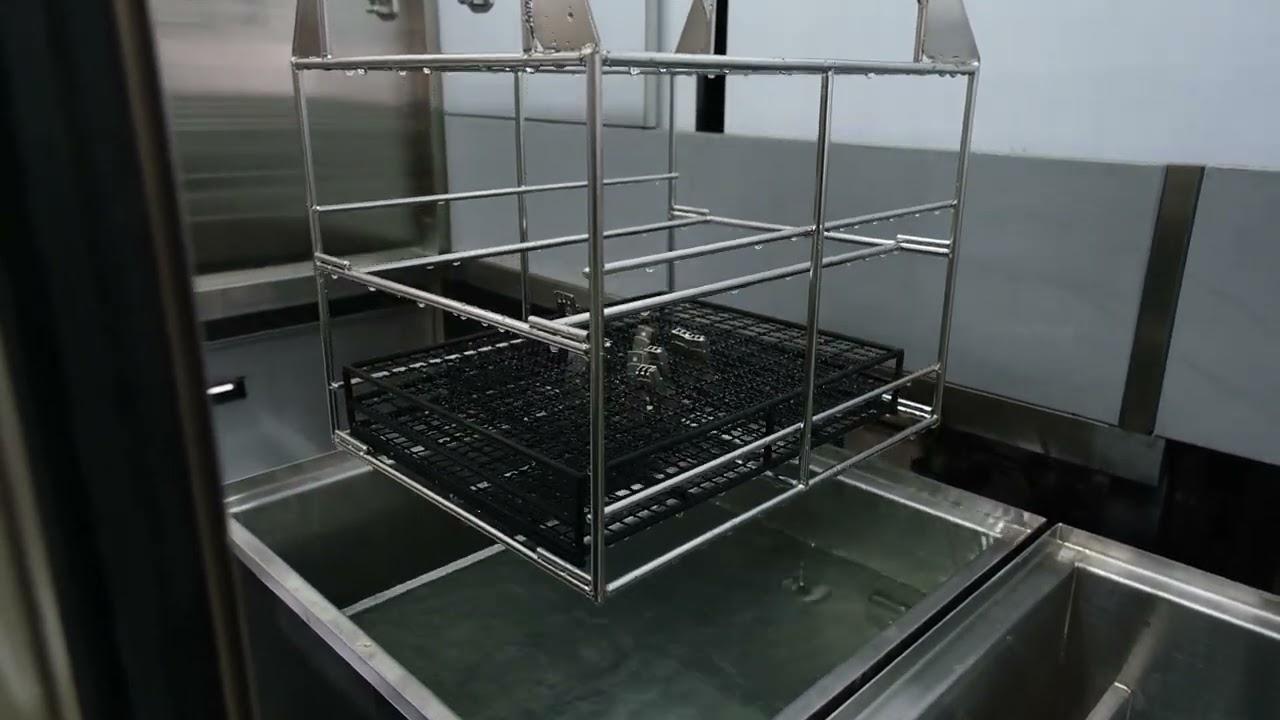
The full automatic lines LEO builds for this sector run loading through unloading without a manual transfer:
- Load — parts in baskets or on a conveyor, hoisted and traversed by PLC
- Ultrasonic wash in heated detergent, 28 or 40 kHz
- Ultrasonic rinse, then a cascade rinse to carry detergent away
- Aeration or agitation to shift fines out of blind holes
- Air-knife blow-off, then hot-air or tunnel drying
- Rust-preventive dip where the part will sit before the next operation
Where solvent rather than water is the right medium — heavy oil, parts that must come out bone dry, no rinse water permitted — LEO has built vapour-phase and vacuum machines for this sector too.
Machines LEO has built for this sector
Each of these was designed around one customer’s part, soil and throughput. The captions are the machines as built.
Machinery components
Fully automatic five-tank motor shell cleaning machine with drying 
Single-cantilever automatic motor shell cleaning machine 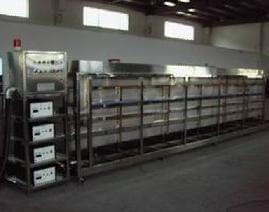
Large steel pipe cleaning machine 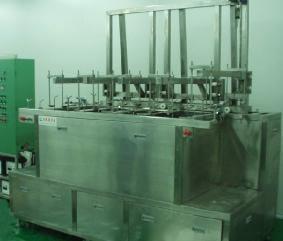
Fully automatic four-tank electronic steel pipe cleaning machine 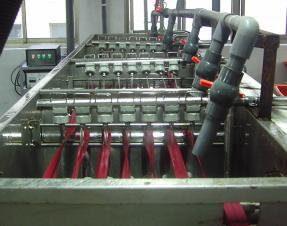
Zip cleaning machine 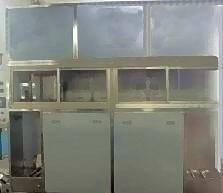
Pen nib and pen tip cleaning machine 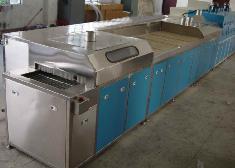
Fully automatic conveyor-type bearing parts cleaning machine 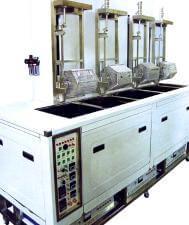
Drum-type cleaning machine 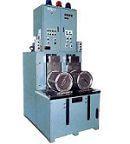
Drum-type cleaning machine
Metal stamping and coated parts
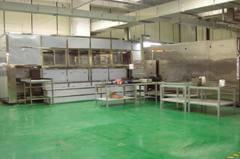
Fully automatic five-tank servo motor cleaning machine 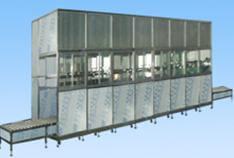
Fully automatic nine-tank metal stamping parts cleaning machine 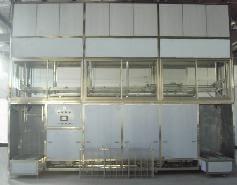
Fully automatic six-tank vapour-phase stamping parts cleaning machine 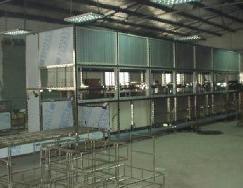
Fully automatic nine-tank case shell cleaning machine 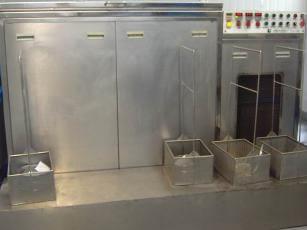
Manual four-tank vapour-phase cleaning machine 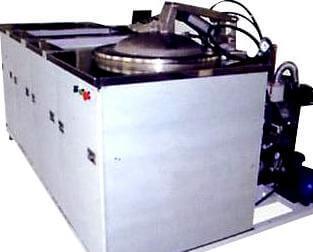
Manual vacuum cleaning machine
The drum-type machines are worth a note: small parts in bulk are tumbled through the ultrasonic field rather than racked, so nothing sits in a shadow and nothing has to be handled individually.
Workpieces & contamination
Contaminants
- Stamped metal partsStamping oilDrawing compoundMetal fines28 / 40 kHz
- CNC-machined componentsCutting fluidSwarf and chipsBurr debris40 kHz
- Bearings and bearing componentsAssembly greaseRunning-in debrisPreservative oil40 kHz
- Motor and servo motor housingsMachining oilCasting finesBuffing compound28 / 40 kHz
- Steel tube and pipeDrawing lubricantRust-preventive oilMill scale28 kHz
- Zips and small hardwarePolishing compoundWaxPlating salts40 kHz
- Pen nibs and micro-turned partsMachining oilBrass and steel finesPolishing compound40 / 80 kHz
- Hand toolsGreaseOxide and light rustWorkshop grime28 / 40 kHz
- Parts before plating or coatingForming oilFingerprintsOxide film40 kHz
- Enclosures and case shellsBuffing compoundMachining oilAluminium fines28 / 40 kHz
Products
Recommended equipment
Case Studies
Proof in the field
Precision Machining & Metal Stamping
Fully Automatic Seven-Tank Ultrasonic Cleaning Machine - Cleaning Precision Stamped Parts
Read more
Precision Machining & Metal Stamping
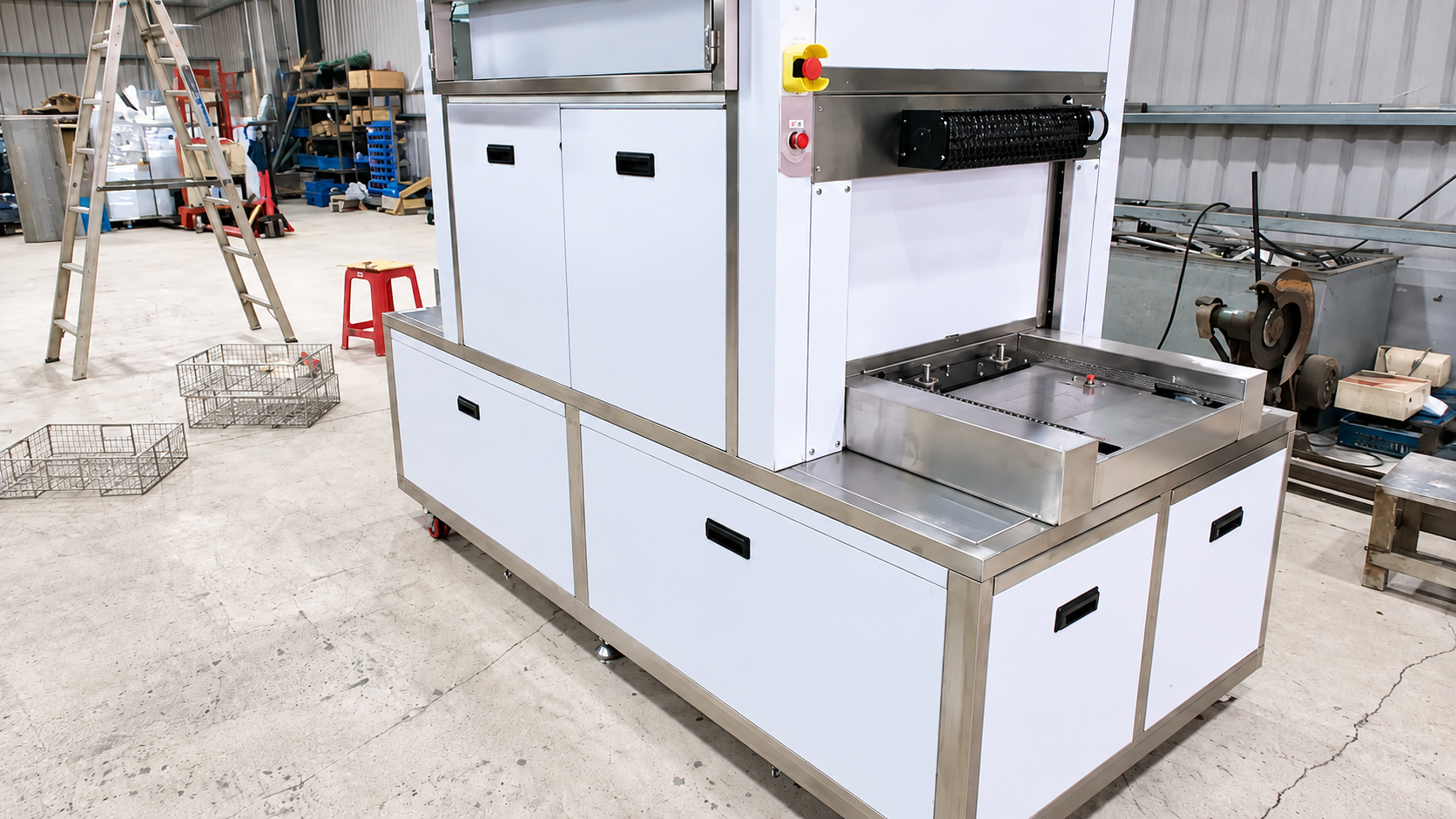
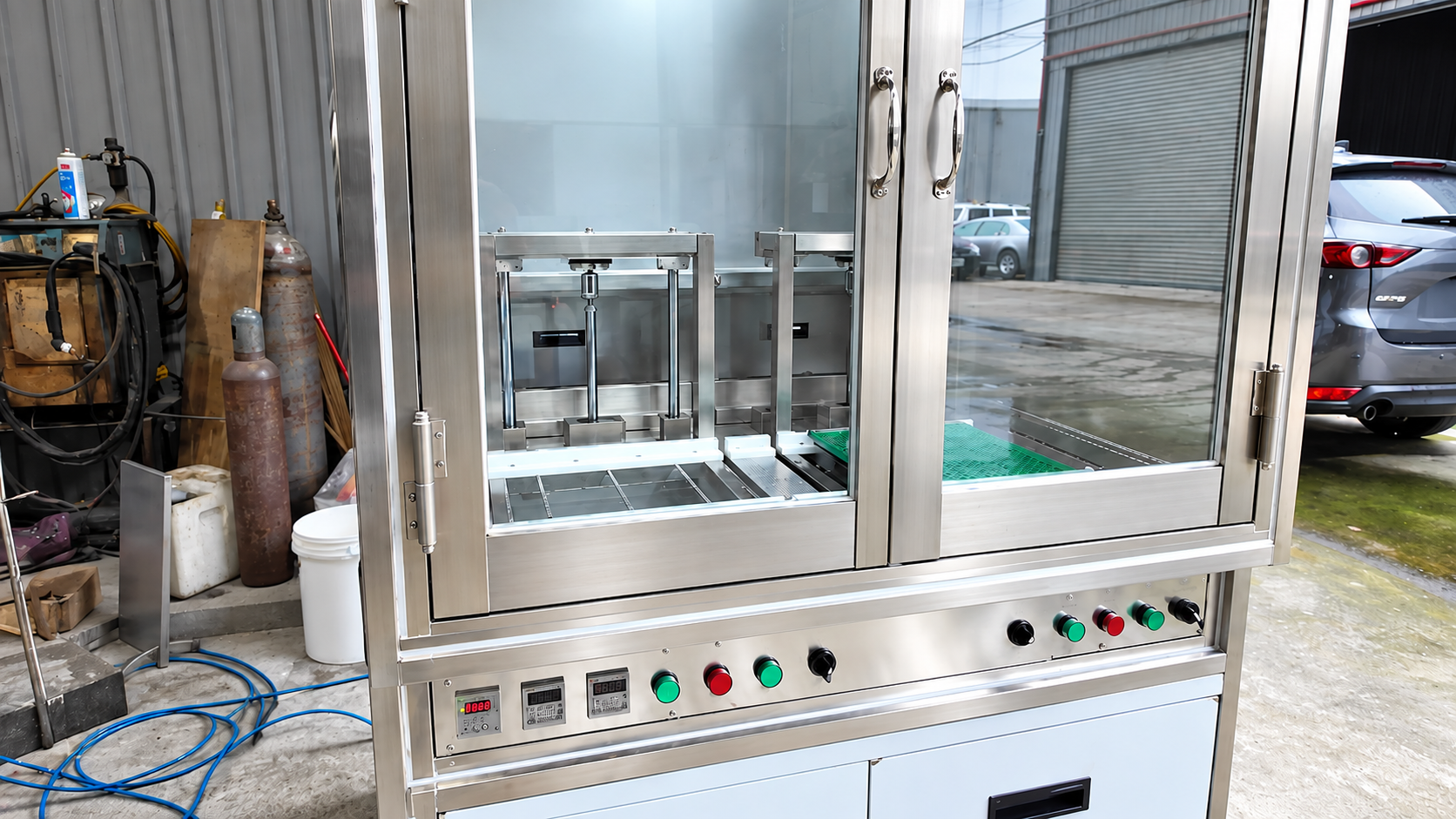
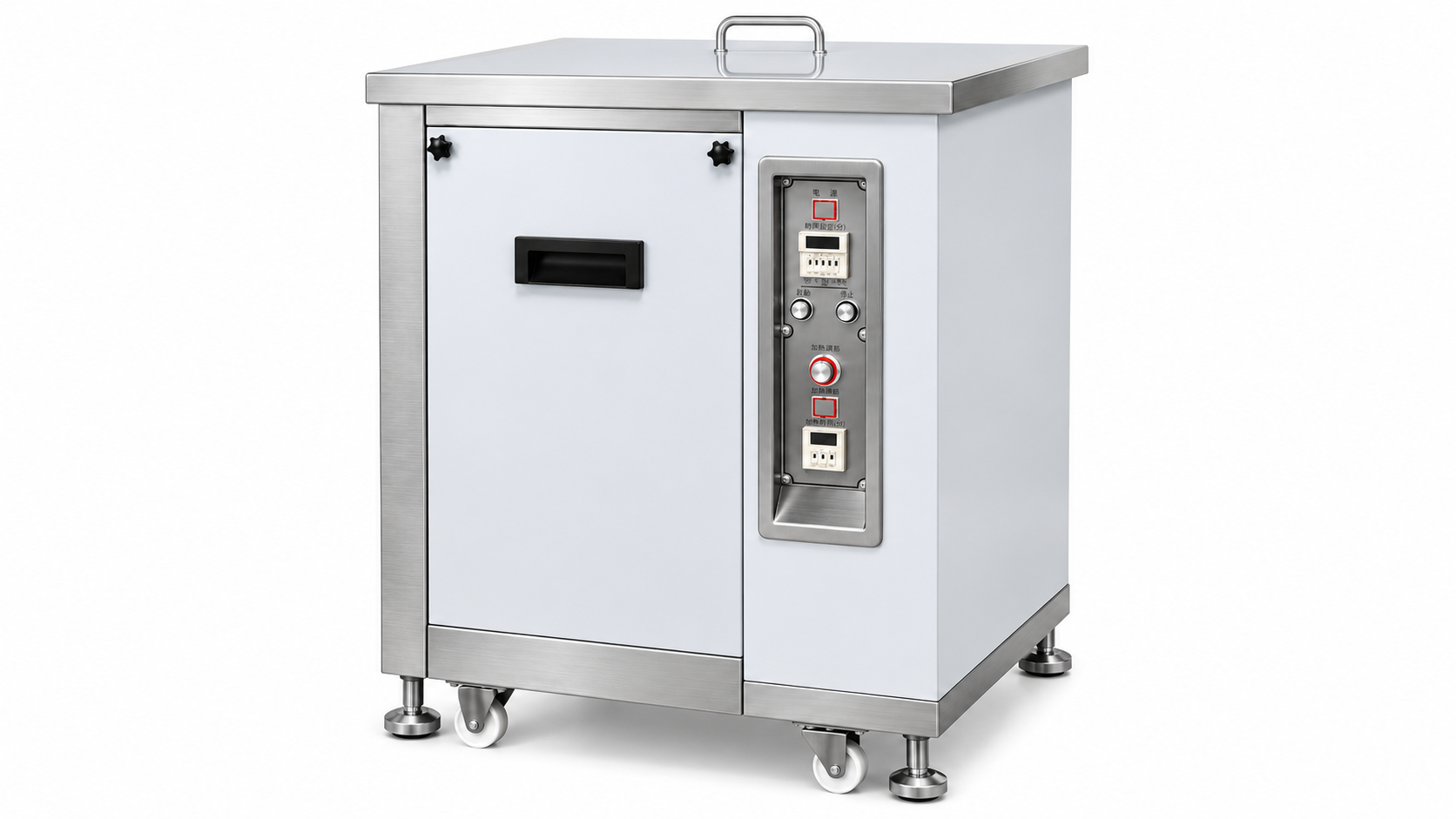
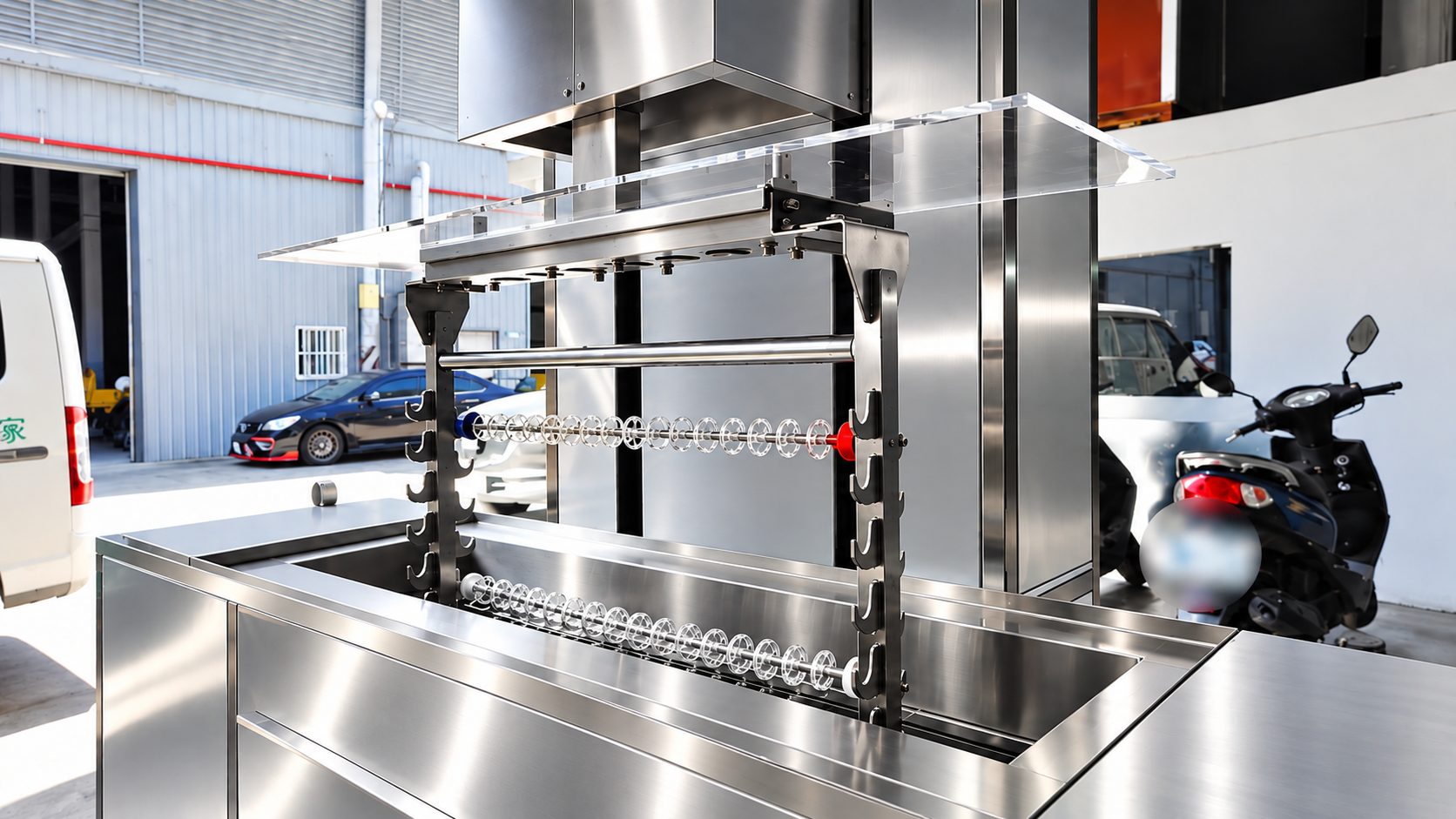
Dual-Tank Automatic Lifting Ultrasonic Cleaning Machine
Read more
Precision Machining & Metal Stamping
LEO Roller Lift-Type Dual-Frequency Ultrasonic Cleaning Machine
Read more
Frequently asked questions
When the part is robust and the soil is heavy — steel tube with drawing lubricant, castings, motor housings, weld scale. 28 kHz produces larger, more energetic cavitation bubbles that cut through thick forming oil faster. Keep it away from thin sheet, polished finishes and precision-turned parts.
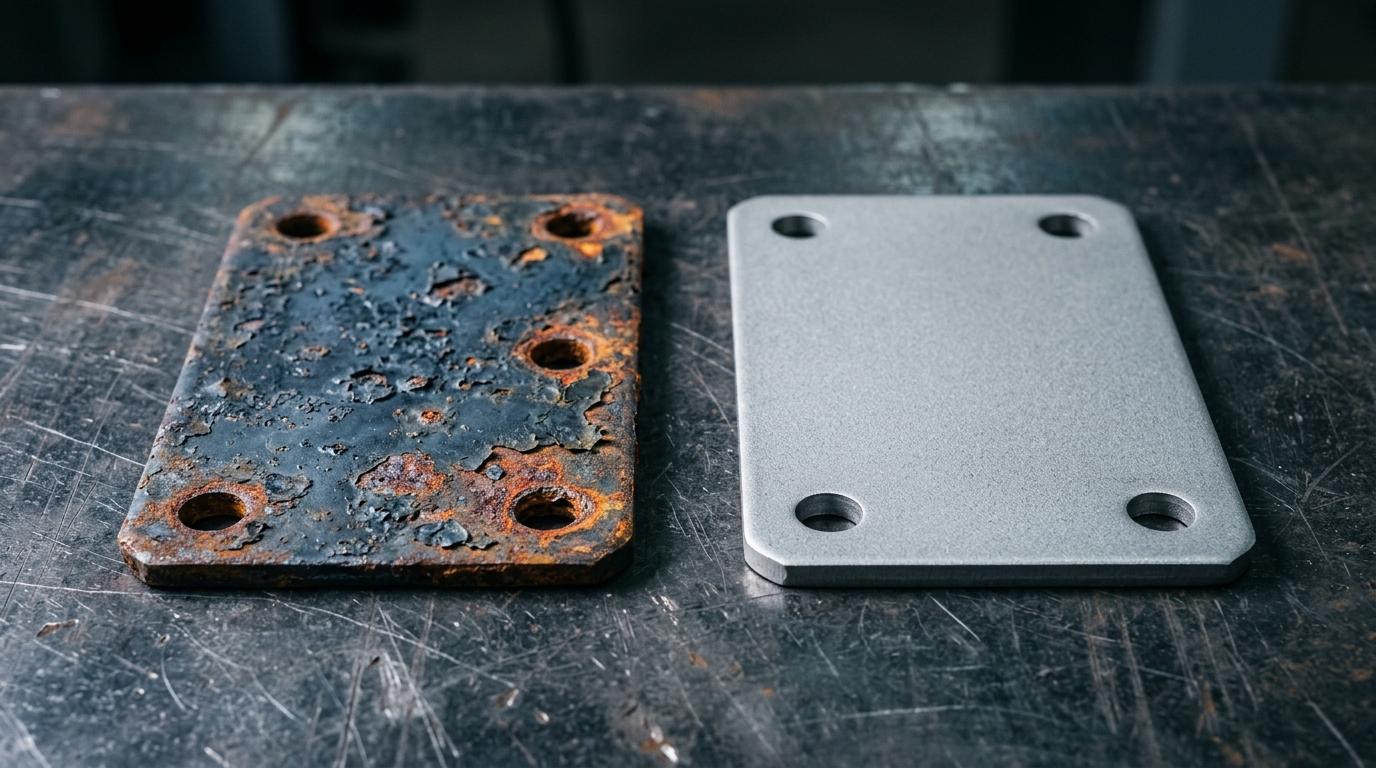
Because cleaning removed the oil that was protecting them. A properly cleaned steel surface is bare, and bare steel starts to corrode in humid air within minutes. The fix is in the line, not the tank: air-knife blow-off, hot-air drying and, where the part will wait, a rust-preventive dip as the last stage.
It is set by the number of rinse and dry stages, not the wash. A seven-tank line for precision stamped parts runs load, ultrasonic wash, water blow-off, drying and unload as one sequence; nine tanks adds ultrasonic rinsing, aeration and air-knife stages for tighter cleanliness targets.
Water-based covers most stamped and machined work and is the cheapest to run. Vapour-phase and vacuum cleaning are for parts that must come out completely dry, that trap rinse water in blind features, or that carry oil a water-based detergent will not shift. LEO has built machines of all three kinds for this sector.
Request a Quote
Tell us what you need cleaned
Send us the part, the contaminant and your cycle time. Our engineers size the tank, the frequency and the process chain — and reply with a sized specification for your line.