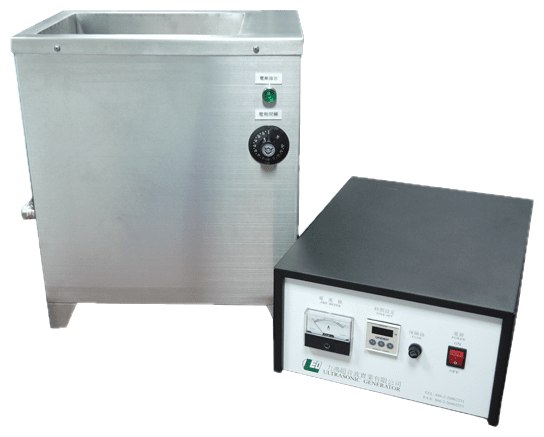
Cutting fluid and machining oil
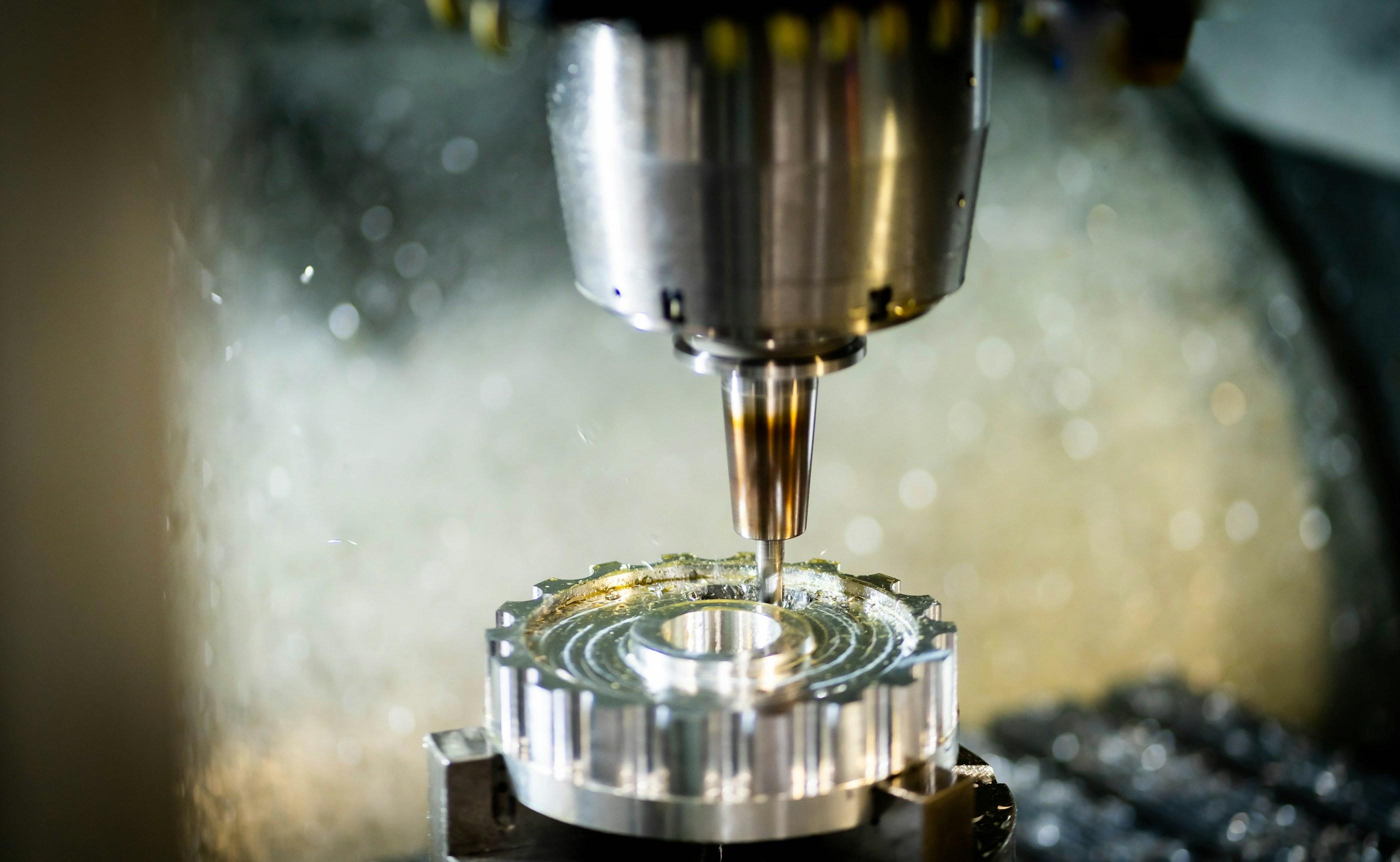
The neat oil, soluble emulsion or synthetic coolant that turning, milling, drilling, grinding and honing leave on a part, together with the swarf it carries.
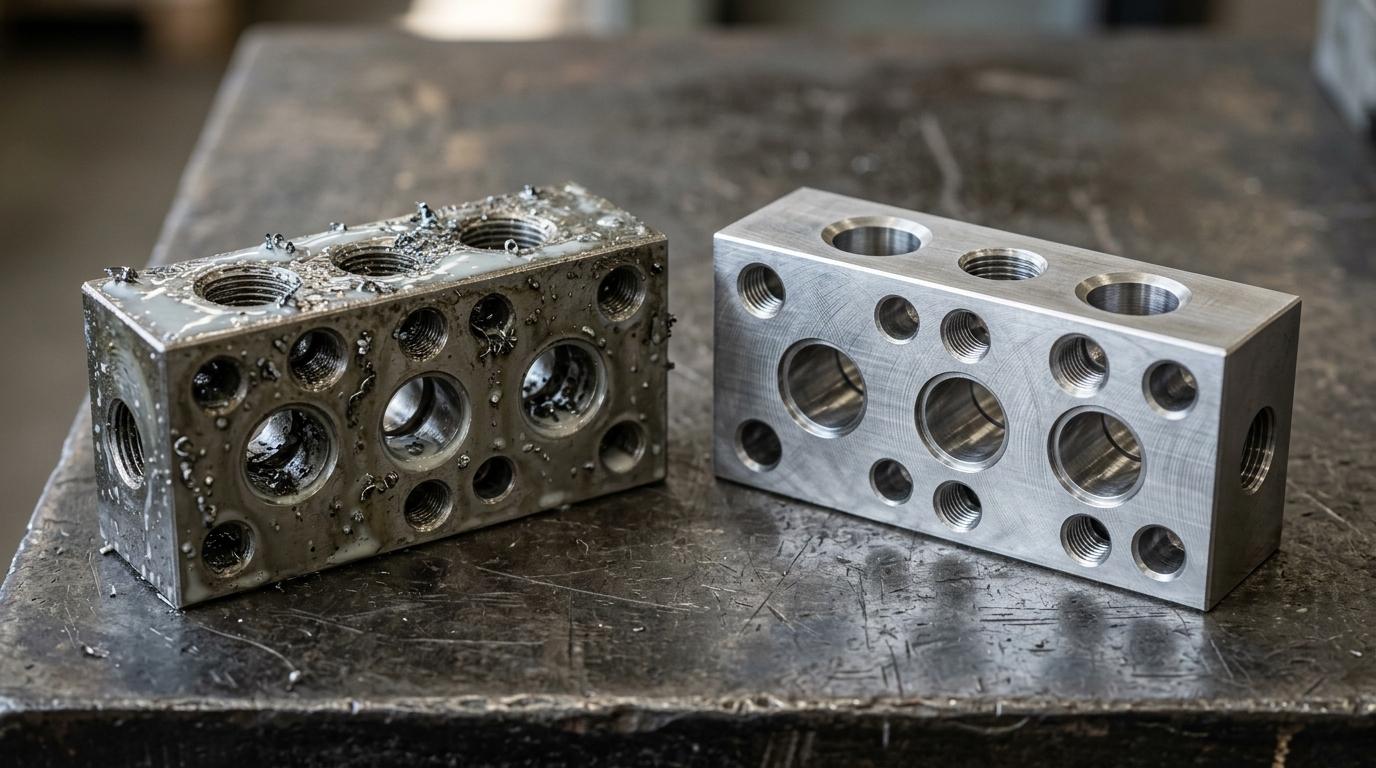
Cutting fluid is the oil, emulsion or synthetic coolant left on parts after turning, milling, grinding or honing. Its extreme-pressure additives bond to fresh metal and it carries swarf into every recess. Ultrasonic cleaning at 28 to 40 kHz in a warm alkaline degreaser lifts both the film and the chips.
- Recommended frequency
- 28 / 40 kHz
Cutting fluid is doing three jobs at the point of cut: it lubricates, it cools, and it flushes chips out of the way. All three depend on it clinging to metal, and modern formulations are engineered to cling well. Neat oils carry chlorinated, sulphurised or phosphorus extreme-pressure additives that react with freshly exposed metal at the tool tip and form a chemically bonded boundary layer. That layer is not a film sitting on the surface; it is attached to it.
What makes it a cleaning problem rather than a degreasing problem is the swarf. Fluid and chips leave the machine together, and the mixture packs into cross-holes, blind holes, keyways, thread roots, internal splines and the honed bore of a hydraulic body. Wiping reaches the outside. A parts washer with a spray bar reaches the outside. The chip lodged in the intersection of two drilled passages does not move, and the oil holding it there does not either, because the oil is thicker and stickier than the solvent film a spray leaves behind.
Left on the part, cutting fluid fails downstream rather than immediately. Plating and painting de-wet or blister over it. Adhesive bonds and welds fail. Heat treatment bakes it into a carbonised varnish that then has to be removed as a much harder soil. Emulsions go rancid in storage and stain the surface. Worst of all, a chip that survives cleaning survives assembly: it ends up in a hydraulic valve, a bearing race or a fuel gallery, where it is the initiating particle of a field failure. That is why cleanliness in this sector is specified as particle count and gravimetric residue, not as an appearance.
Ultrasonic cleaning attacks the mechanical half of the problem directly. Cavitation collapse at a surface generates the local shear that peels a bonded boundary layer, and it does it inside a blind hole just as well as on a flat face, because the liquid carries the energy everywhere it can wet. A warm alkaline degreaser does the chemical half — saponifying and emulsifying the oil so that what cavitation releases stays released and does not re-deposit. Machined steel, cast iron and structural parts run at 28 kHz where the soil is heavy and the part is robust; small precision components, thin-wall parts and non-ferrous work move to 40 kHz.
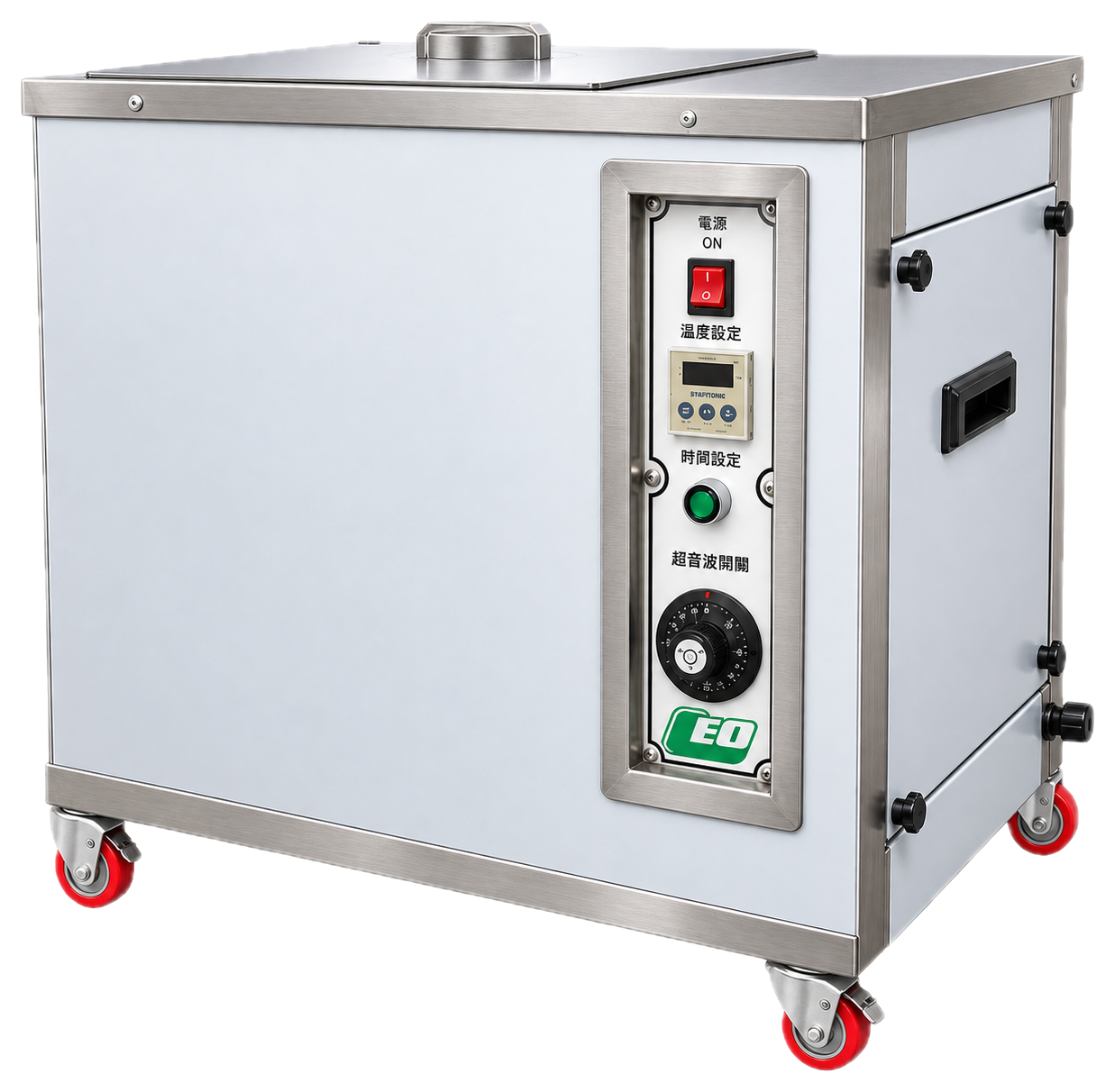
Two process details decide whether it works in production. Filtration: the whole point is to get chips out of the part, so the tank needs enough flow through a filter to take them out of the bath as well, or the next basket is rinsed in the last basket’s swarf. And oil separation: free oil floats, and a part lifted through a floating oil layer is re-contaminated on the way out. LEO builds the lift, the filtration and the weir into the machine rather than around it, and supplies the water-based degreaser and the post-cleaning rust preventive as part of the same process.
Process
The process chain
- Step
Drain and pre-wash to shed loose swarf
Baskets are drained and given a coarse pre-wash before they reach the ultrasonic tank. Bulk chips and free oil removed here never enter the main bath, which is what keeps the cleaning chemistry alive and the filter from blinding within a shift.
- Step
Ultrasonic wash in a warm alkaline degreaser
A water-based degreaser at 50–65 °C saponifies the oil while cavitation shears the extreme-pressure boundary layer off the metal and drives chips out of cross-holes and thread roots. 28 kHz for heavy soil on robust parts, 40 kHz for small precision work.
- Step
Ultrasonic rinse with oil skimming
The rinse removes the degreaser and the oil it now carries. A weir or skimmer takes the floating oil off the surface continuously, because a part lifted through a floating oil layer is re-contaminated on its way out of the tank.
- Step
Rust-preventive dip on ferrous work
Clean bare steel and cast iron start to flash-rust within minutes of leaving an aqueous bath. A water-displacing or water-soluble rust preventive is applied before drying, matched to how long the part waits and to whatever comes next — plating, painting or assembly.
- Step
Hot-air dry through the bore
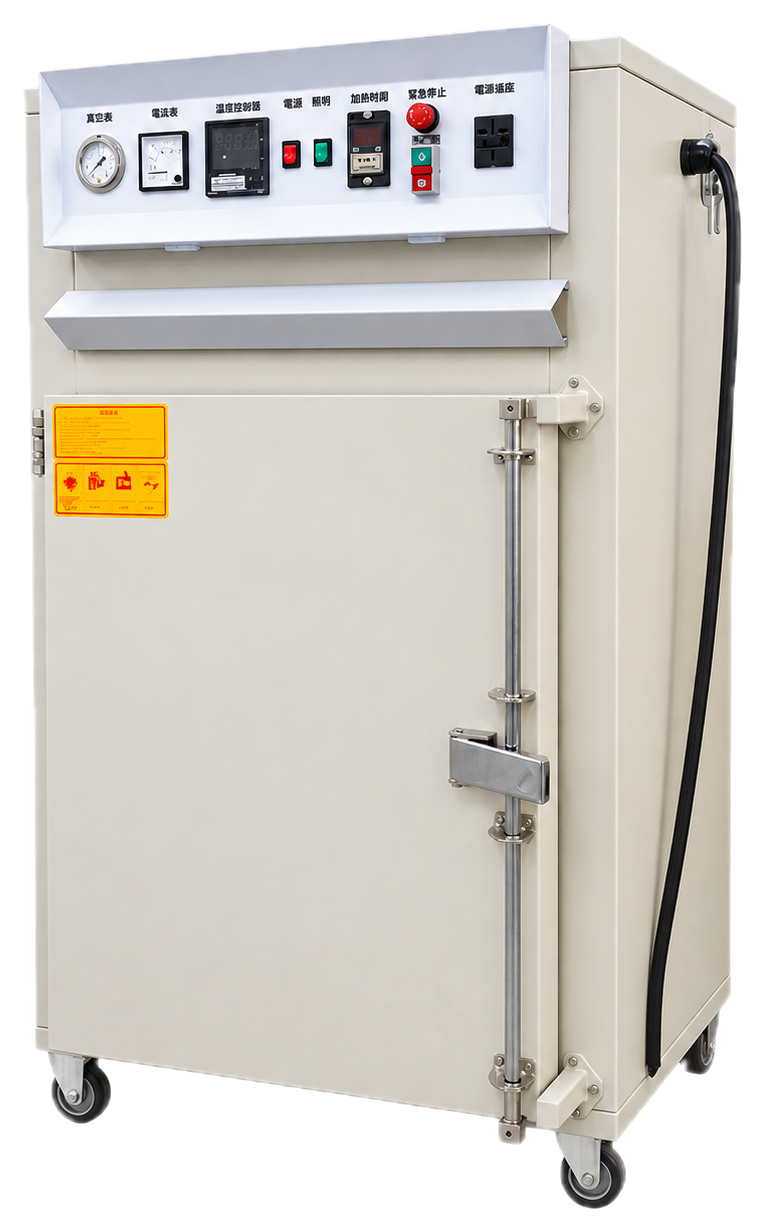
Blind holes and honed bores hold water after the surface looks dry. Heated circulating air, held long enough to dry the part through its section, is what prevents staining and corrosion inside features that no one will inspect after assembly.




Frequently asked questions
Higher frequencies clean finer, not harder. Cavitation bubbles at 80 or 120 kHz are small and collapse gently, which is what fine features and delicate surfaces need — and it is not enough to shear a chemically bonded extreme-pressure layer or to dislodge a packed chip. 28 kHz produces larger, more energetic bubbles that do exactly that. The rule is soil-and-part, not soil alone: heavy oil on robust steel goes low, the same oil on a thin-wall aluminium part goes to 40 kHz to avoid erosion.
Yes, but they load the bath differently and that decides the maintenance design. Neat oil floats and is taken off by a weir or skimmer, so the tank needs oil separation. A soluble emulsion is already dispersed and will stay dispersed in the cleaning bath, loading the chemistry rather than the surface, so it needs a bath-life and top-up strategy instead. A plant running both usually wants two tanks — which is what the double-tank and multi-tank configurations are for.
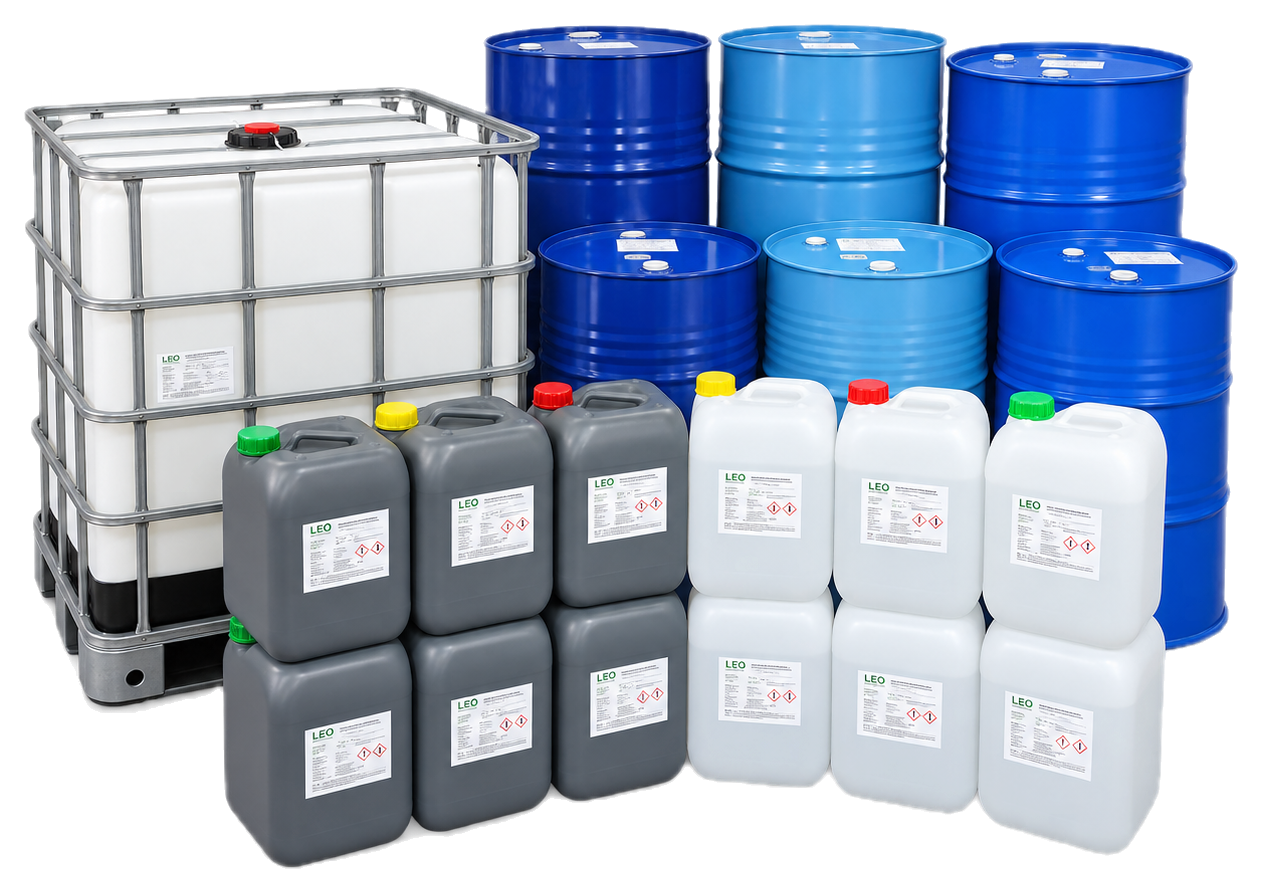
Flash rust is a timing problem, not a cleaning failure — bare steel that has just had every trace of oil removed is at its most reactive. The fix is a rust-preventive stage between the final rinse and drying, and a drying stage hot enough and long enough to take water out of blind holes. LEO supplies a metal rust-preventive series alongside the water-based degreasers so the two are matched to each other rather than bought separately.
Request a Quote
Tell us what you need cleaned
Send us the part, the contaminant and your cycle time. Our engineers size the tank, the frequency and the process chain — and reply with a sized specification for your line.