Optics, Glass & Lenses
Ultrasonic cleaning for optical glass, resin spectacle lenses, contact lenses, phone cover glass and camera modules — and the pre-ovens, drying ovens and hardening machines around them.
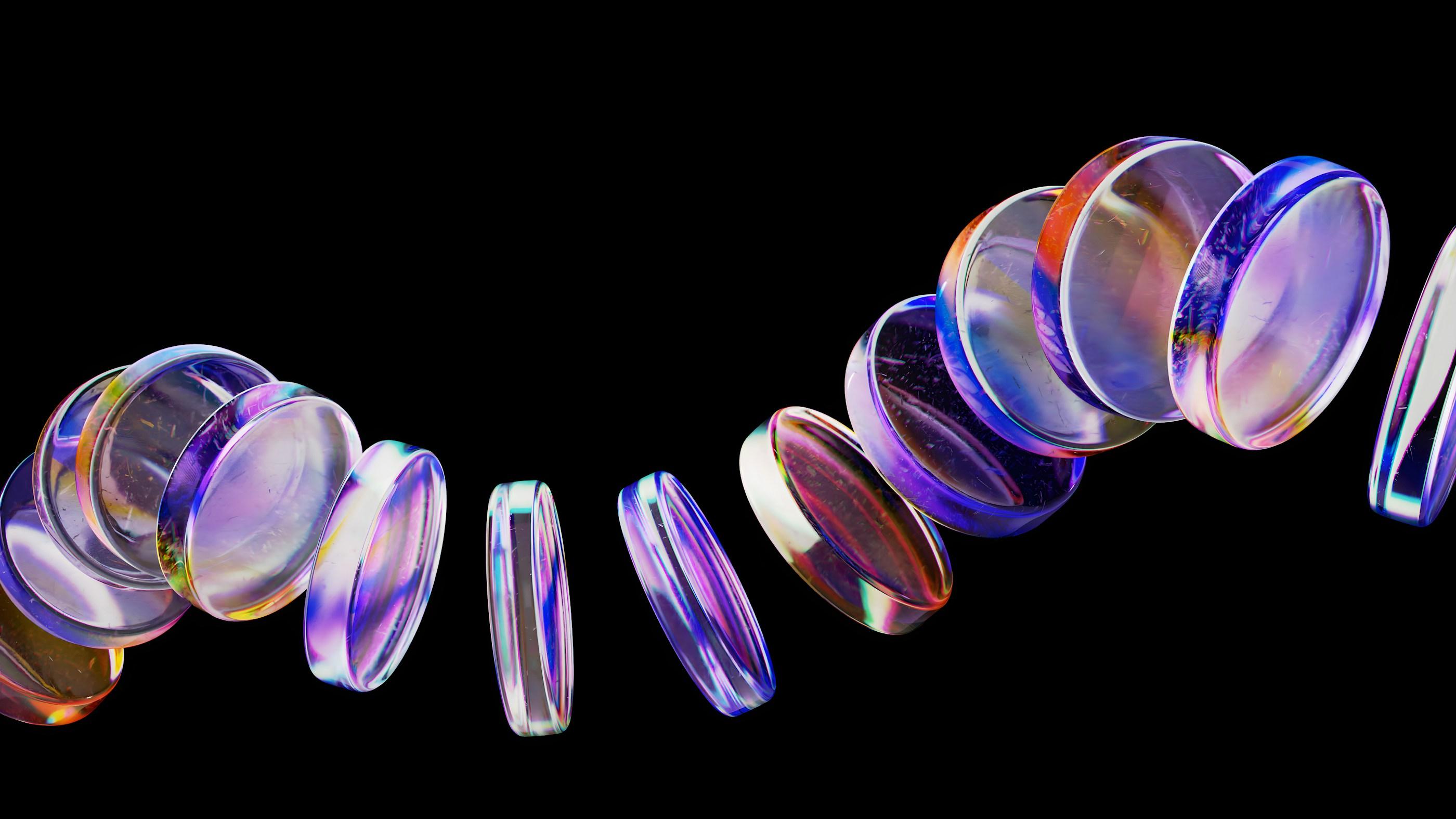
LEO builds ultrasonic cleaning equipment for optics: optical and resin lenses, contact lenses, LCD and mobile phone cover glass, camera lens barrels and lens moulds. Cavitation removes cerium-oxide polishing compound, blocking wax, mould release and sub-micron particulate by non-contact cleaning — typically 40 kHz for glass, 80–120 kHz for finished optical faces.
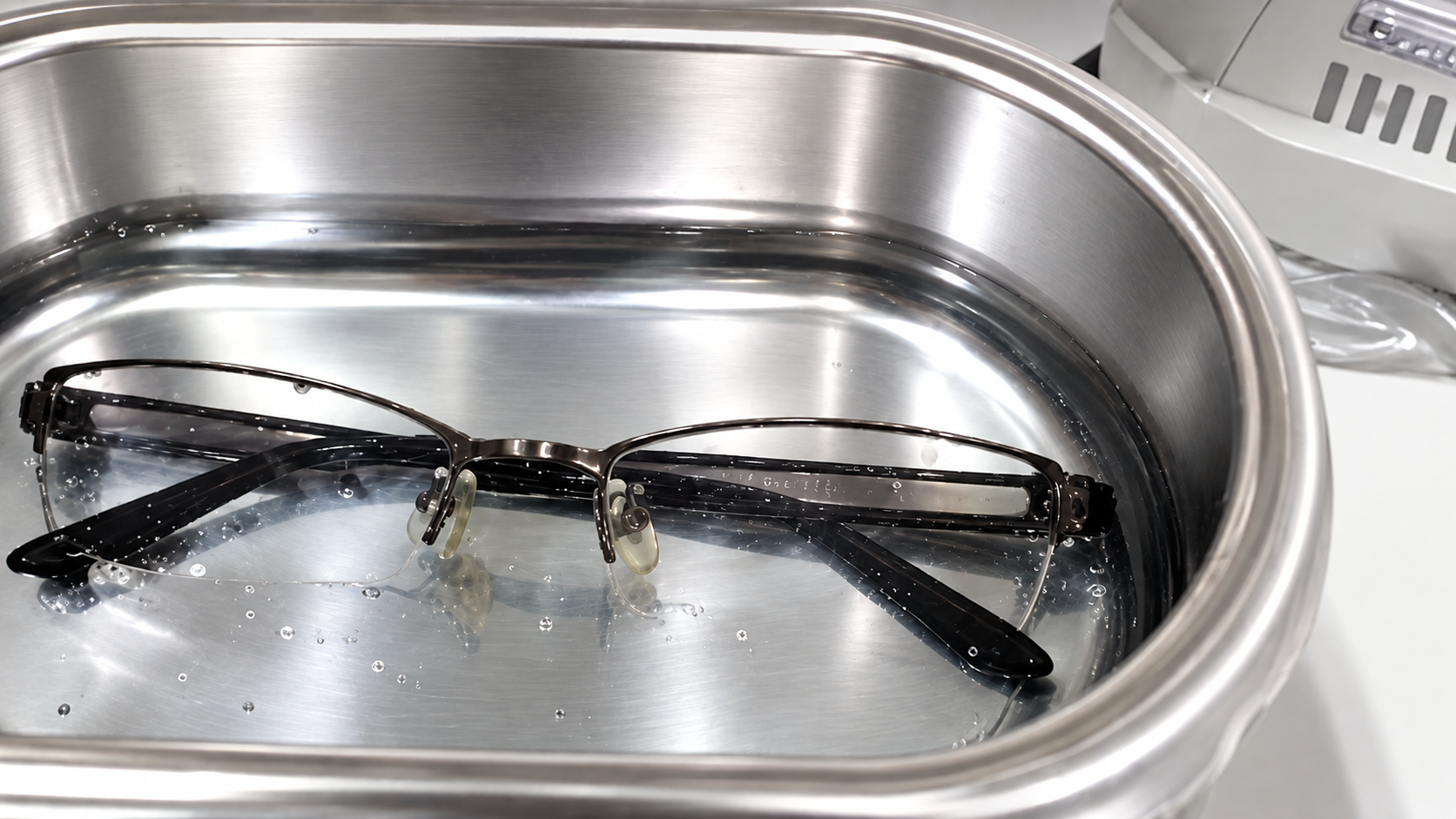
An optical surface cannot be wiped. Every contact is a scratch risk, and a scratch on a finished lens face is not a cosmetic problem — it scatters light, which is the one thing the part exists not to do. Ultrasonic cleaning is used throughout this industry for exactly that reason: the cleaning action is delivered by the liquid, so nothing touches the surface at all.
What has to come off
Polishing compound first — cerium oxide, alumina, colloidal silica — which is engineered to stick to glass and does. Then blocking pitch, wax or low-melt alloy from the holding stage; mould release and unreacted monomer on cast resin lenses; protective-film adhesive on cover glass; and the dust and fingerprints that arrive between every operation. Slurry that is allowed to dry stops being a particle problem and becomes a film problem, which is why lenses go into a pre-rinse wet.
Glass and resin each need their own process
Optical glass is hard and takes 40 to 80 kHz comfortably. Resin lenses — CR-39, polycarbonate, the coated versions of both — are soft, and a hard coat or an anti-reflective stack is thinner than the contamination you are trying to remove from it. Resin gets a higher frequency, lower power and a shorter cycle, and a bath temperature that stays well clear of anything that would relax the coating.
The process chain
A lens line normally runs:
- Pre-rinse while the slurry is still wet
- Ultrasonic wash in heated detergent to break the polishing compound’s grip
- Ultrasonic rinse, then a DI cascade so the last water is the cleanest
- Slow withdrawal or hot-air drying — no wiping, no spotting
- Pre-oven, hardening and coating stages where the plant runs them in line
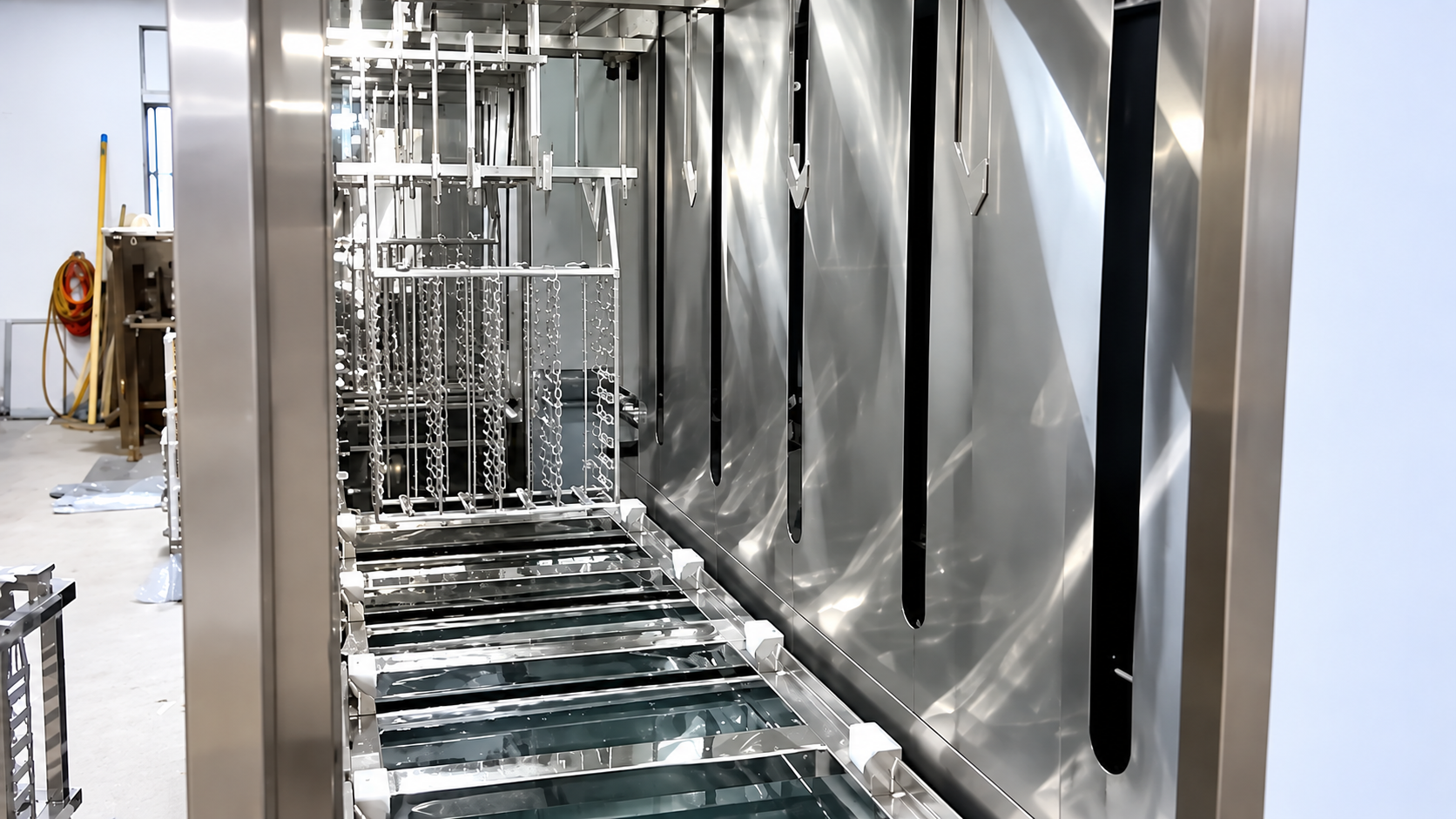
LEO has built the surrounding equipment as well as the cleaning tanks: pre-ovens, hot-air circulation drying ovens and hardening machines, supplied as lens plant equipment rather than as standalone washers.
Machines LEO has built for this sector
Each of these was designed around one customer’s part, coating and throughput. The captions are the machines as built.
Optical glass, panel glass and camera optics
14-inch LCD glass automatic cleaning machine 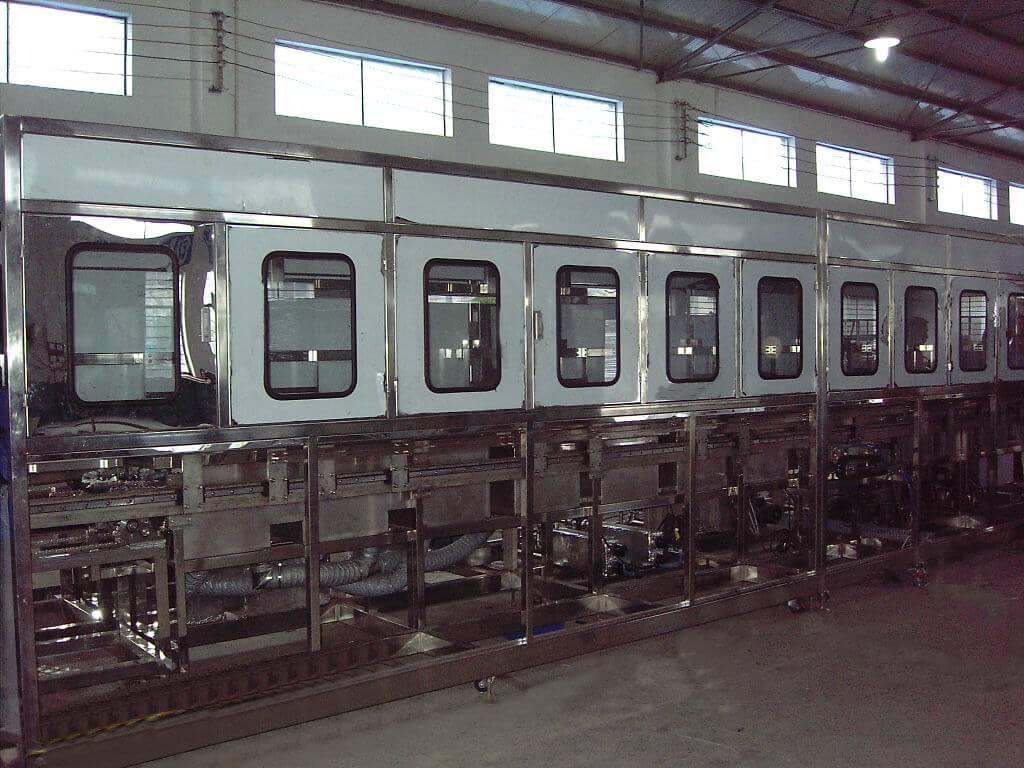
Fully automatic nine-tank optical lens cleaning machine 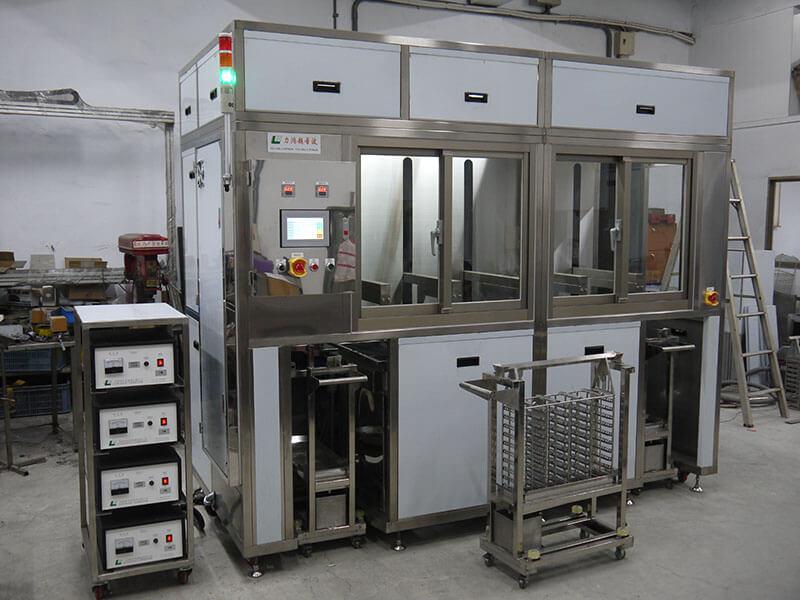
Fully automatic four-tank contact lens cleaning machine 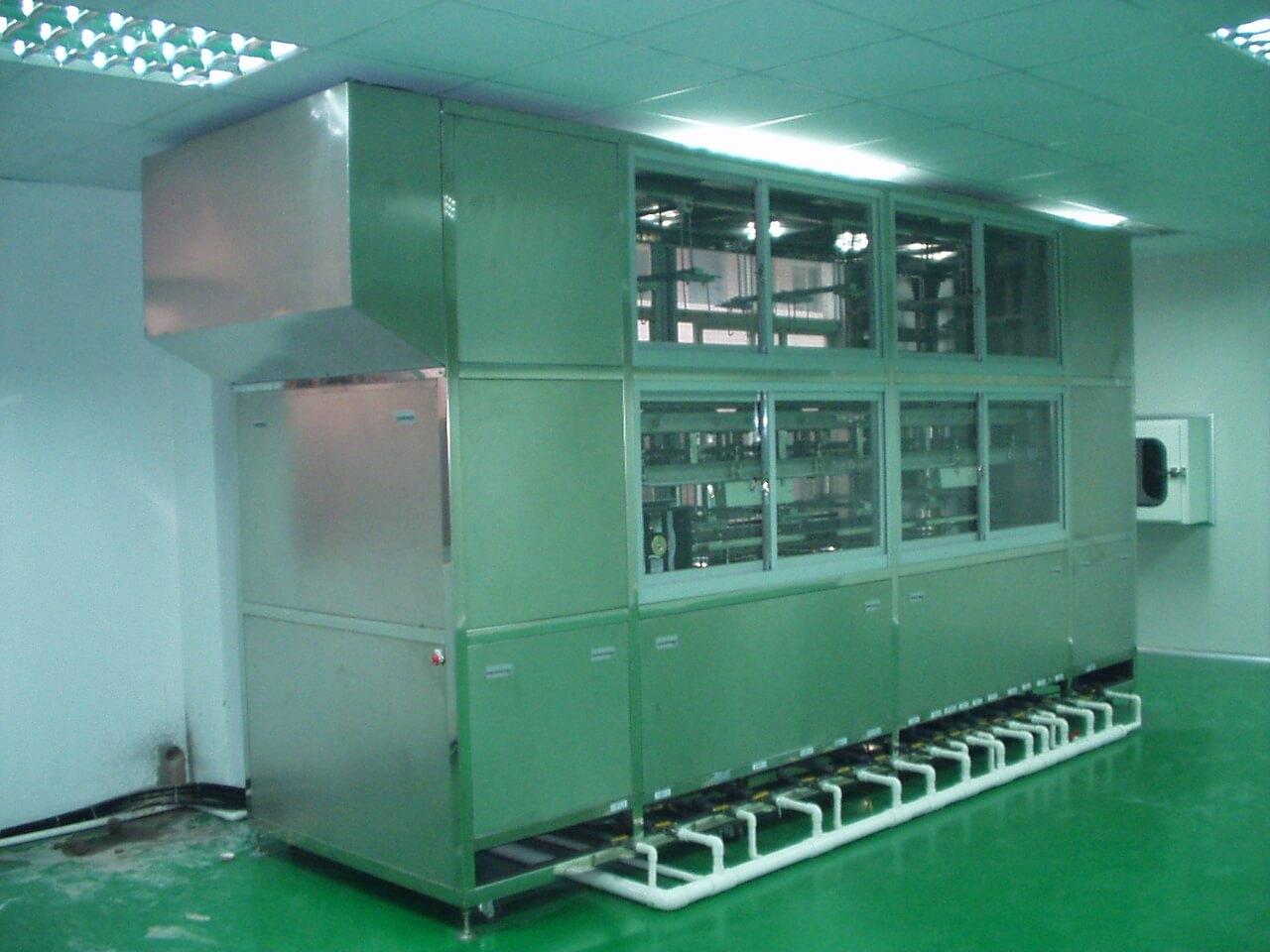
Fully automatic six-tank lens cleaning machine 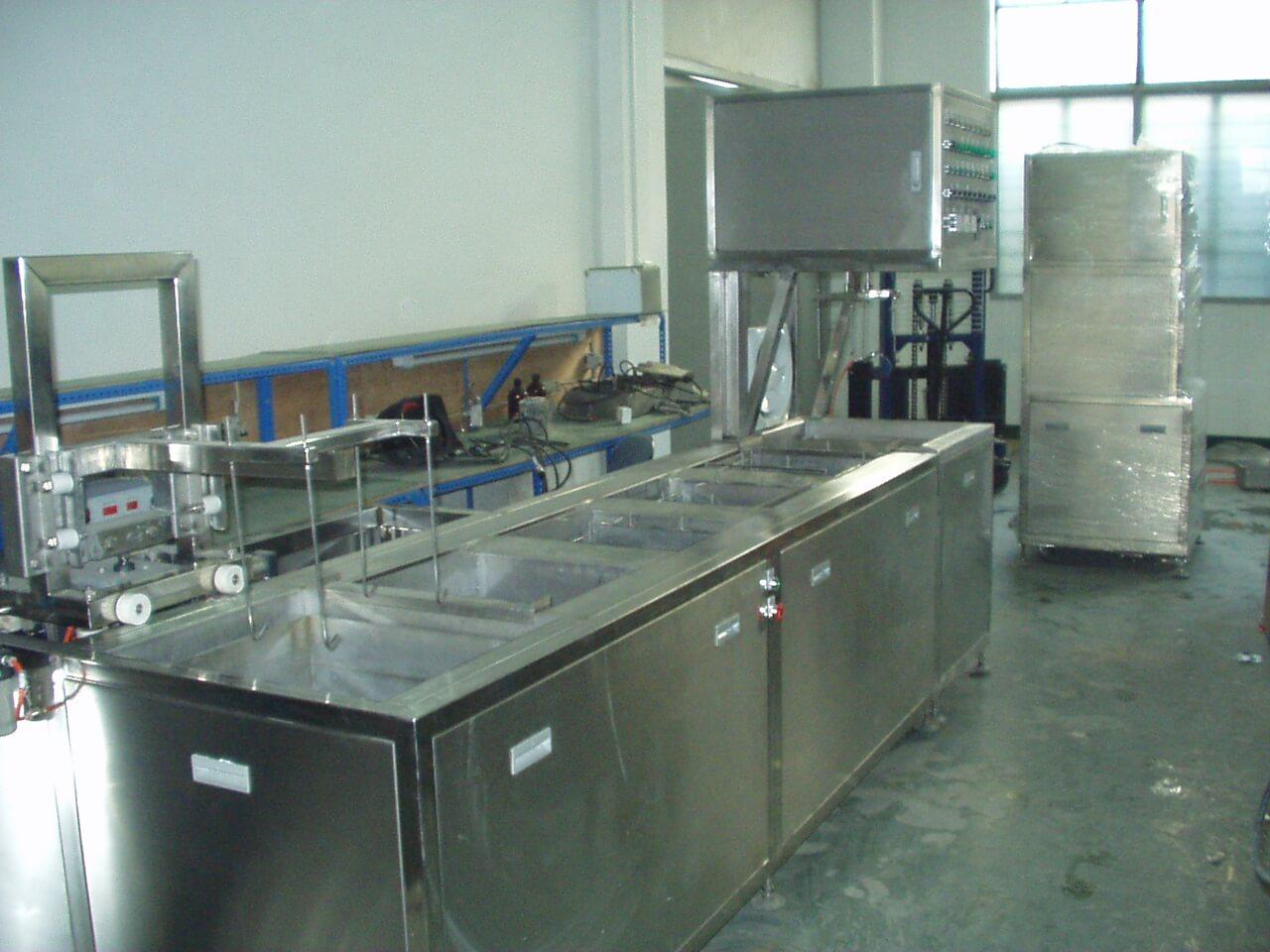
Lens plant equipment — semi-automatic six-tank cleaning machine 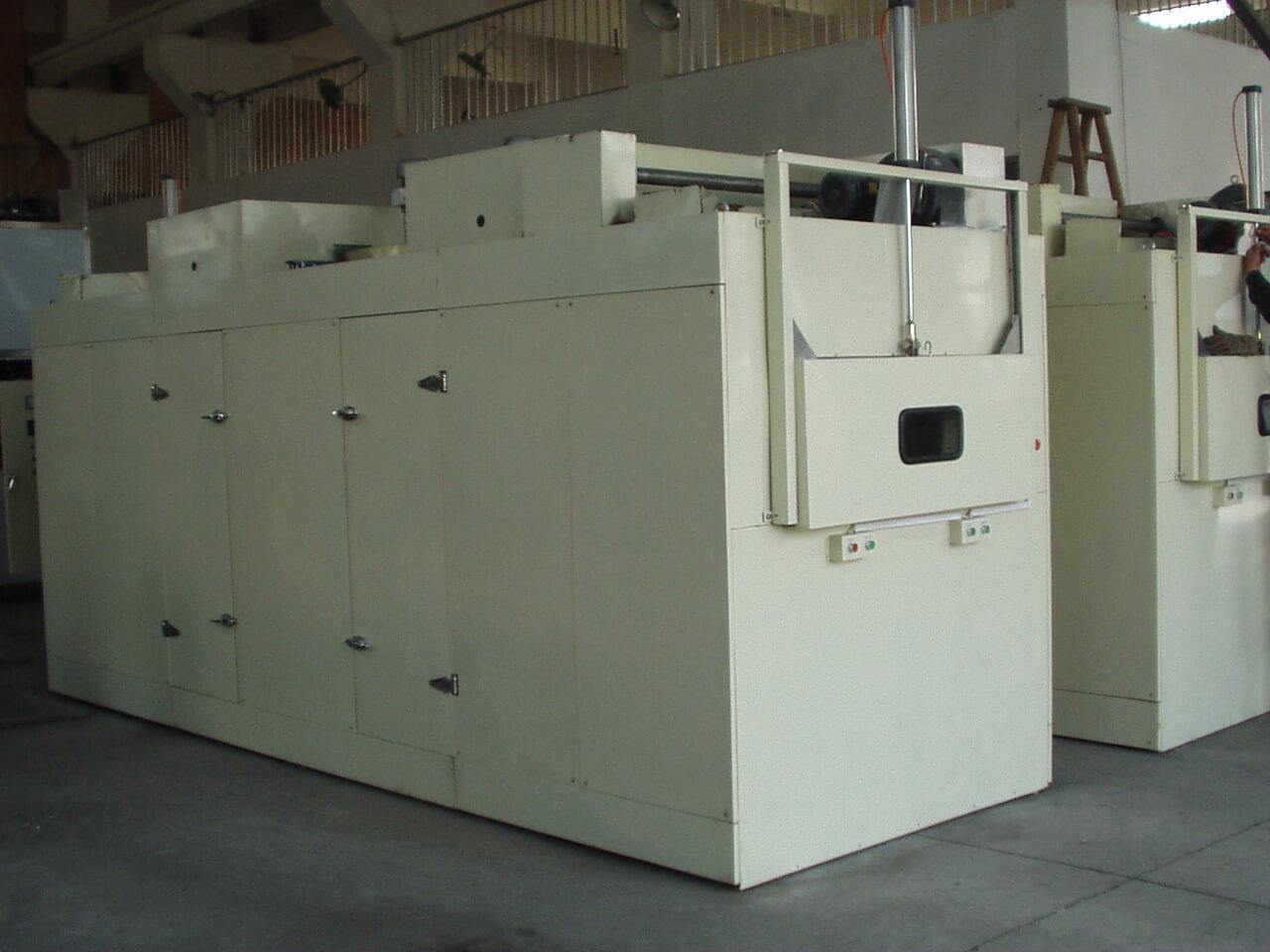
Lens plant equipment — hot air circulation drying oven 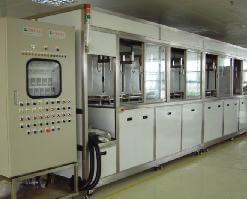
Fully automatic eleven-tank mobile phone glass cleaning machine 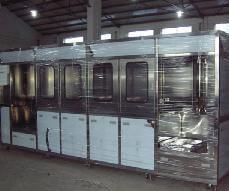
Fully automatic four-tank mobile phone lens cleaning machine 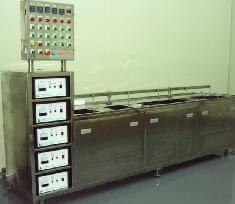
Semi-automatic five-tank camera lens cleaning machine 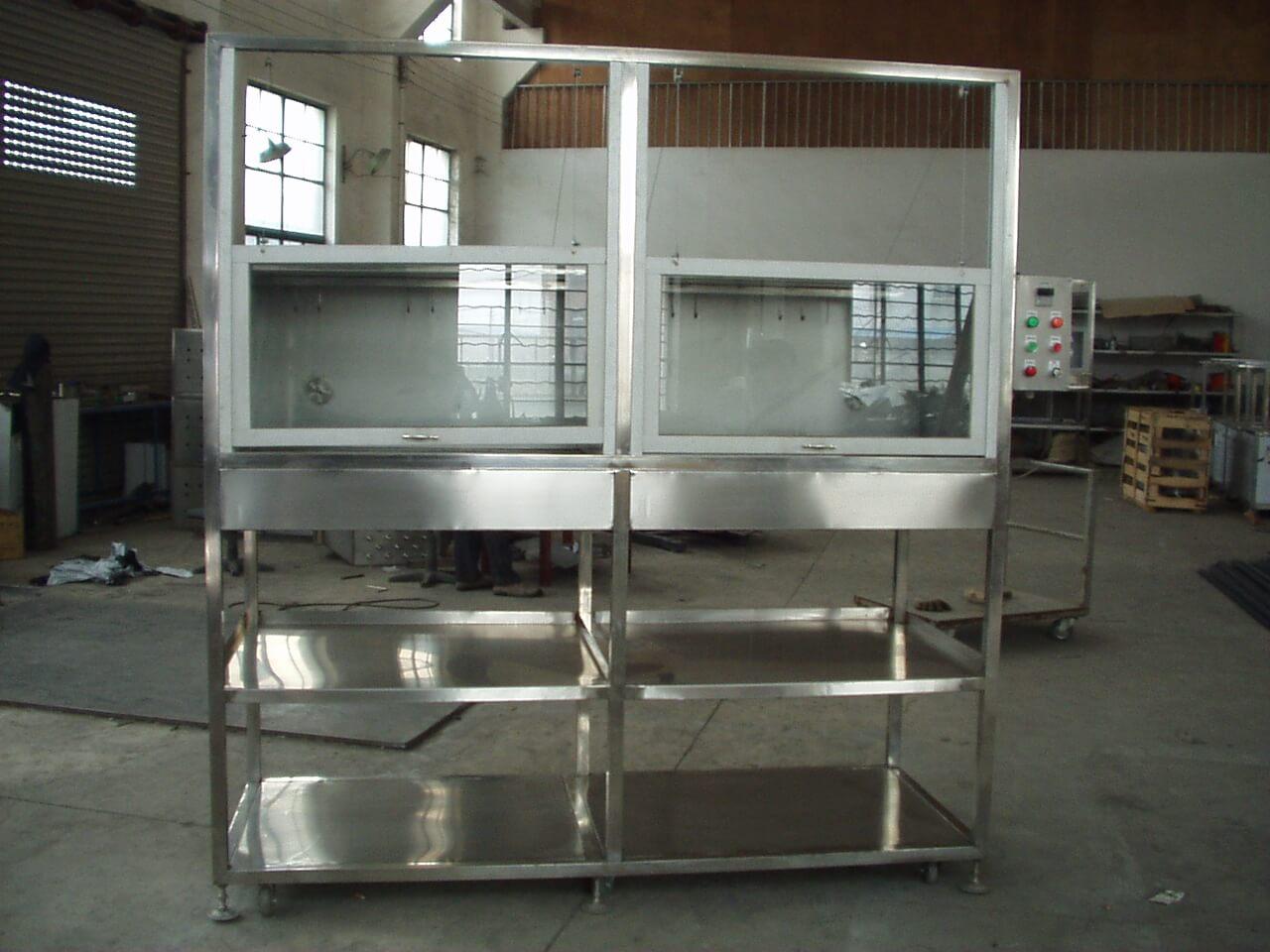
Lens plant equipment — pre-oven 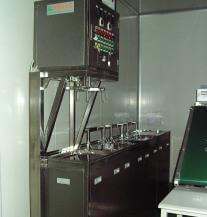
Optical lens cleaning machine 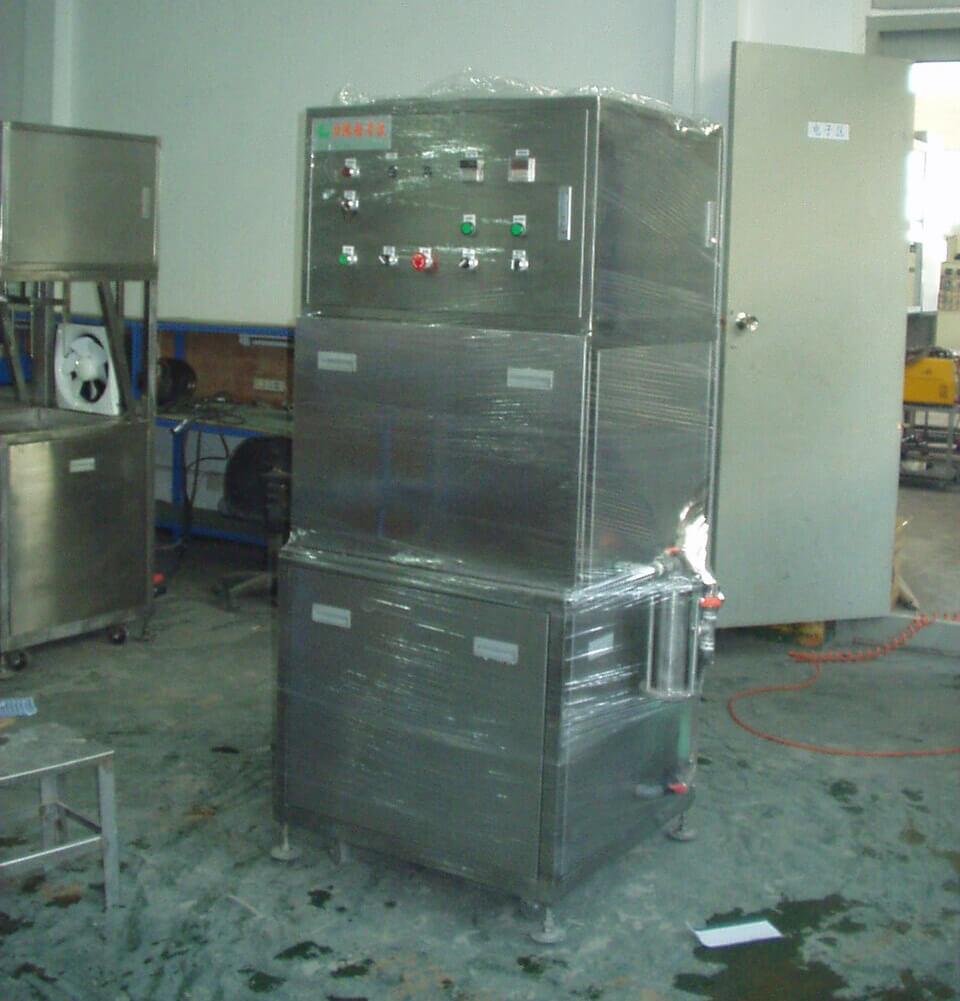
Lens plant equipment — hardening machine
Resin lenses and nameplates
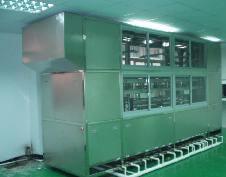
Fully automatic six-tank lens cleaning machine 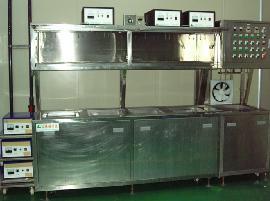
Lens plant equipment — manual five-tank cleaning machine 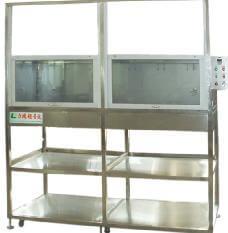
Plant equipment — pre-dryer 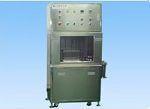
Plant equipment — hardening machine
The tank counts on these machines are worth reading as a specification: nine and eleven stages are not extra washing, they are extra rinsing and drying, which is what a surface has to have before it can be coated.
Workpieces & contamination
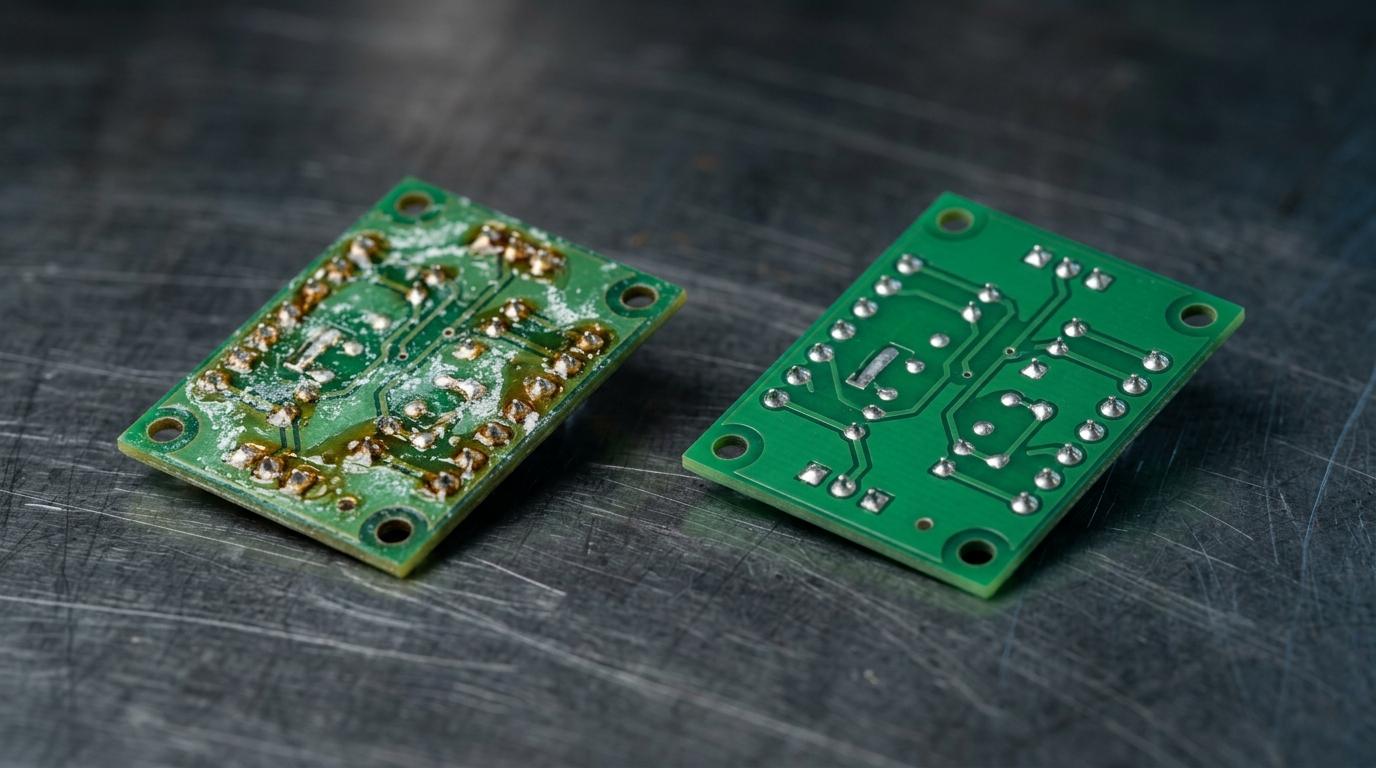
Contaminants
- Optical glass lensesCerium oxide polishing compoundBlocking pitch and waxGrinding swarf40 / 80 kHz
- Resin spectacle lenses (CR-39, polycarbonate)Polishing slurryBlocking alloy and waxHandling oil40 / 80 kHz
- Contact lensesLathe swarfMould releaseUnreacted monomer80 / 120 kHz
- Mobile phone cover glassProtective film adhesiveGlass finesDust and fingerprints40 / 120 kHz
- Camera and phone lens barrelsMachining oilPlastic and metal finesDust40 / 80 kHz
- LCD and panel glassProcess residueParticulateHandling grease40 kHz
- Lens mouldsMould release agentCured monomerPolishing compound40 kHz
- Nameplates and printed panelsInk residueForming oilDust40 kHz
- Spectacle framesPolishing compoundSkin oilSolder flux40 kHz
Products
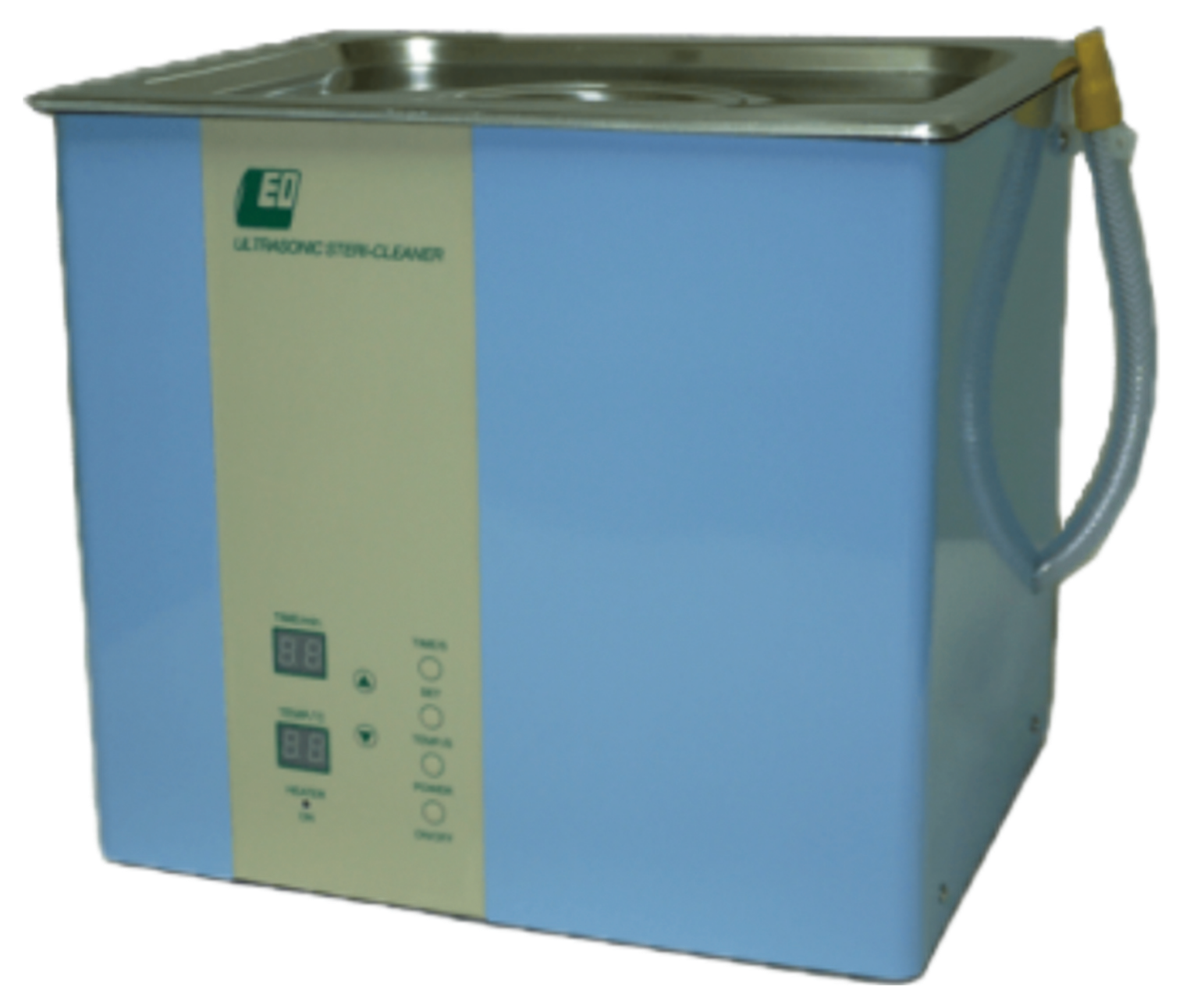
Recommended equipment
Contaminants
Cleaning applications
Case Studies
Proof in the field
Frequently asked questions
Not at the right settings. Damage to coatings comes from too low a frequency, too much power, too long a cycle or too hot a bath — not from ultrasonic cleaning as such. Coated resin lenses are run at 80 kHz or above, at reduced power, on a short cycle.
Because it is formulated to cling to glass — that is what makes it polish. Rinsing alone leaves a haze, and wiping an optical surface is how a lens gets scratched. Cavitation lifts the compound off without contact, which is the only mechanism that satisfies both requirements.
Drying and heat. LEO supplies lens plant equipment rather than standalone washers: pre-ovens, hot-air circulation drying ovens and hardening machines alongside the cleaning line, so the lens moves from wash to coating without an operator handling a wet optical surface.
Request a Quote
Tell us what you need cleaned
Send us the part, the contaminant and your cycle time. Our engineers size the tank, the frequency and the process chain — and reply with a sized specification for your line.