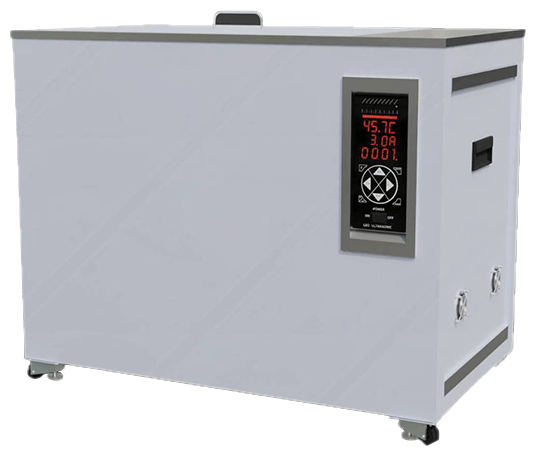
Medical, Dental & Surgical Instruments
Ultrasonic cleaning for surgical instruments (including da Vinci instruments), dental and orthopaedic implants, device components and glass vials — from 6 L benchtop units to nine-stage automated lines.
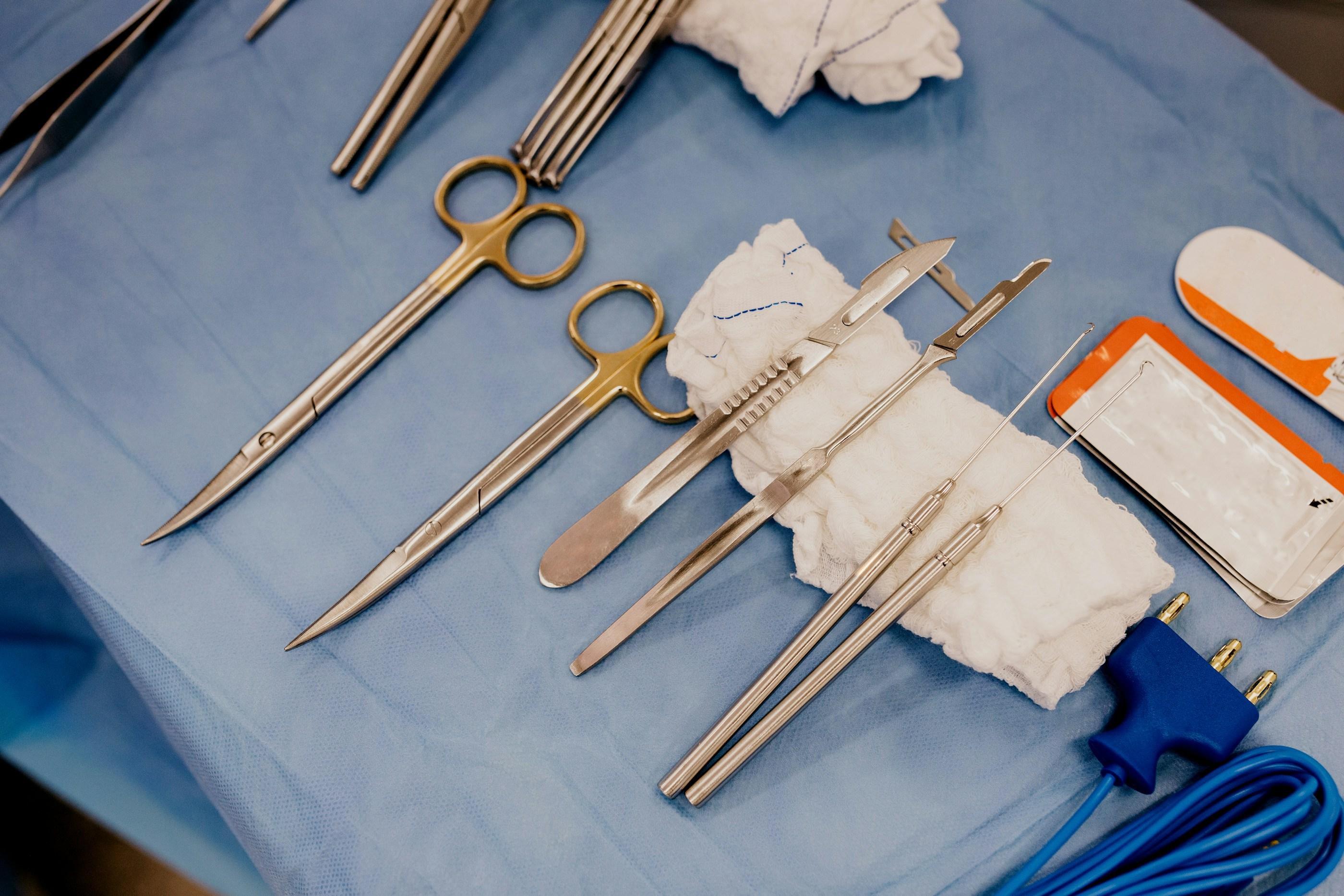
LEO builds ultrasonic cleaning equipment for medical device manufacturers and instrument reprocessing: surgical instruments, scalpel blades, dental and orthopaedic implants, device housings and glass vials. Cavitation lifts protein residue, machining oil, polishing compound and metal fines out of box joints, threads and lumens that a brush cannot reach. For cleaning da Vinci surgical instruments, hospitals generally choose a single-tank machine.
Medical manufacturing and instrument reprocessing share one problem: the soil sits where a brush cannot reach. The box joint of a pair of forceps, the thread of a bone screw, the lumen of a cannula, the serrations on a needle holder. Ultrasonic cavitation reaches those surfaces because it is carried by the liquid rather than applied by hand — every wetted surface is cleaned at once, and to the same standard, whether an operator can see it or not.
What has to come off
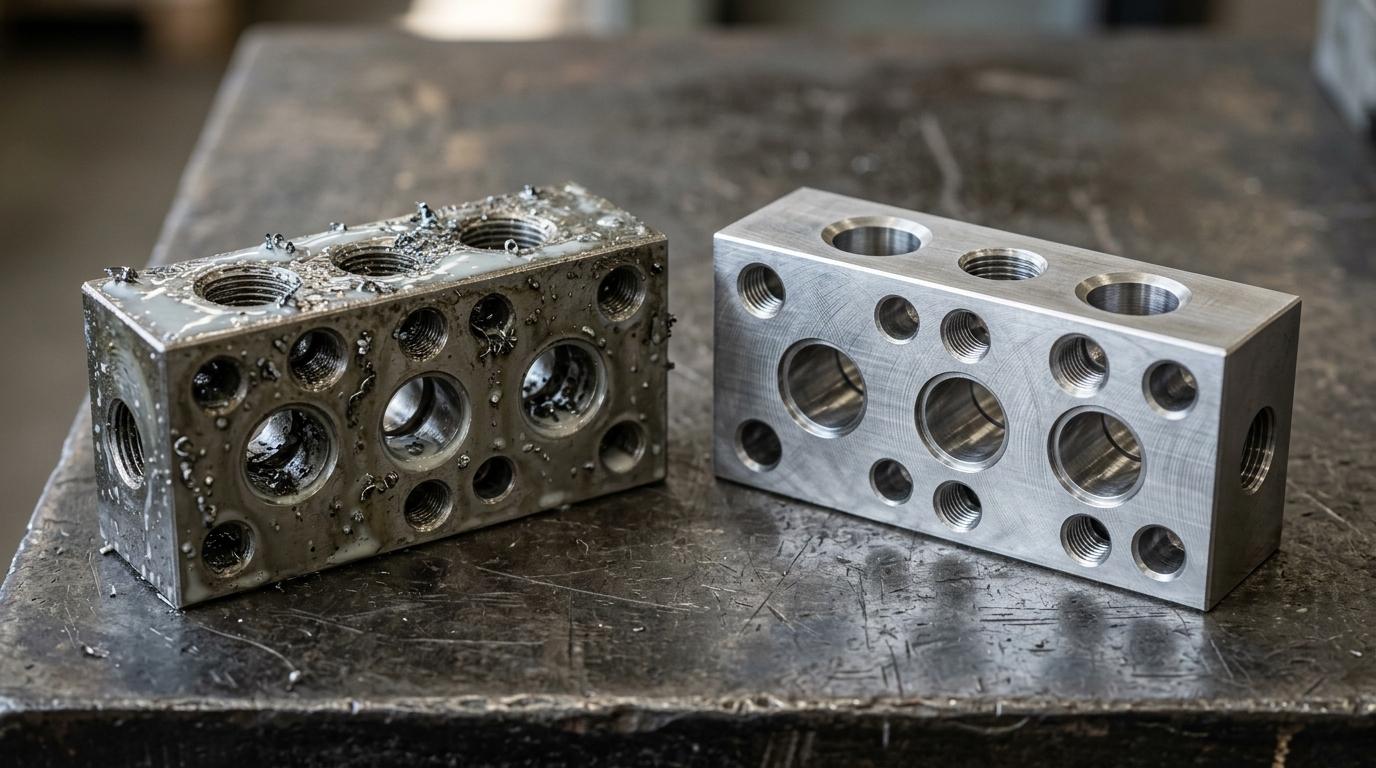
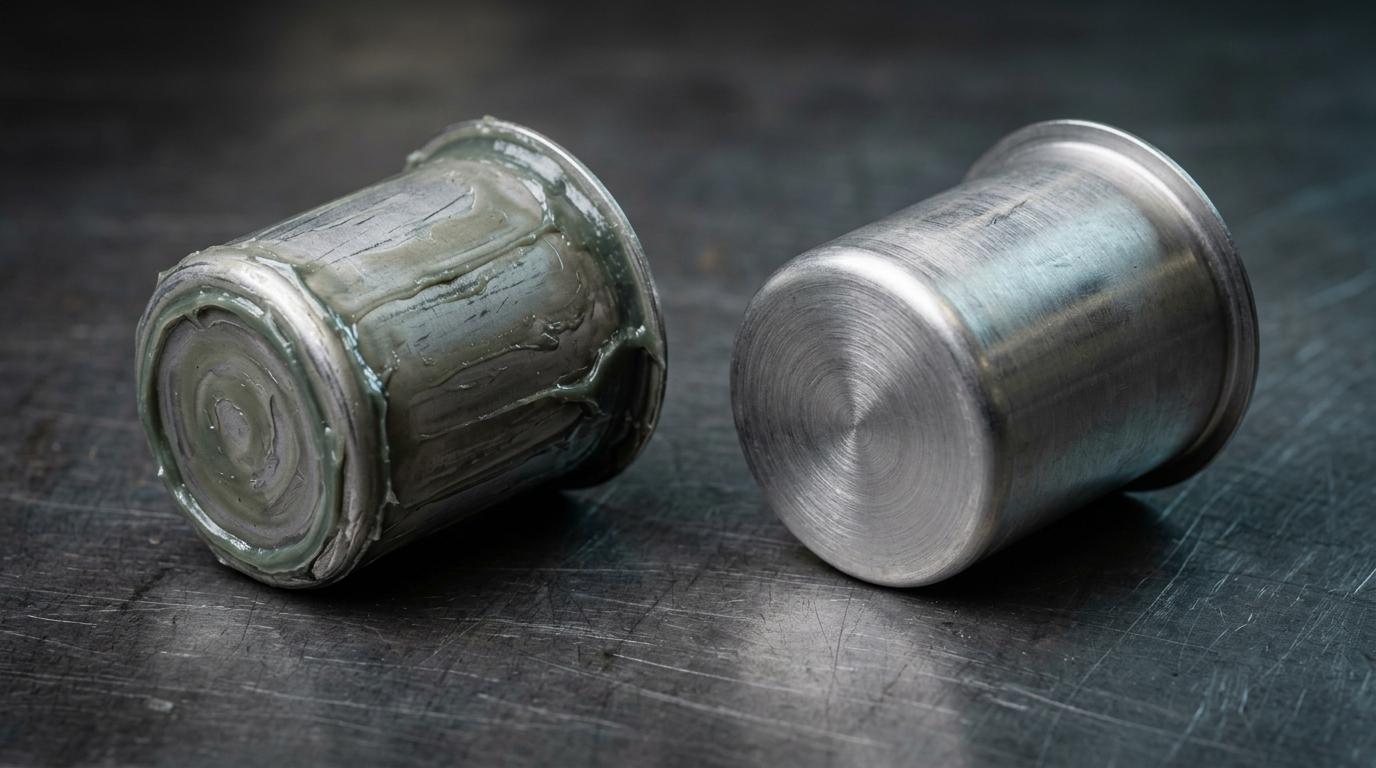
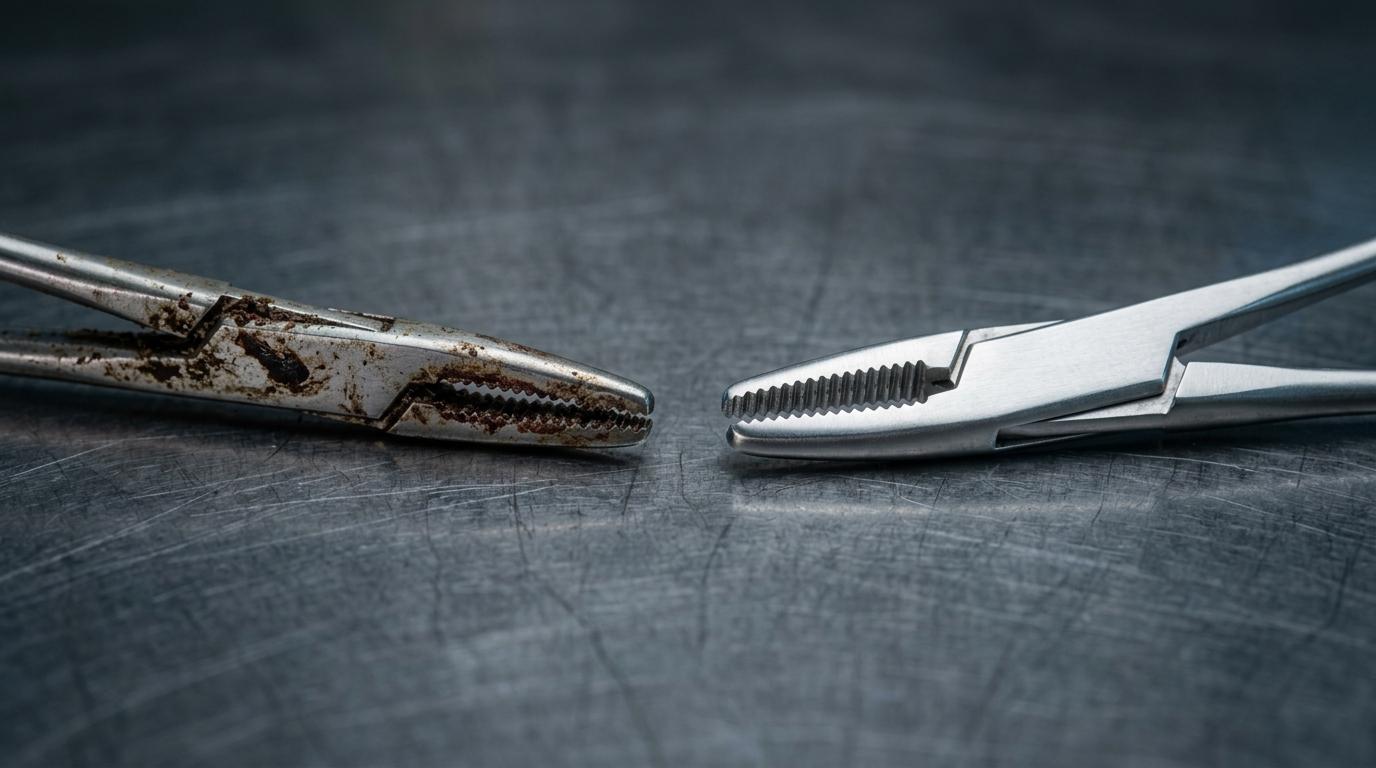
Two very different soils, depending on where in the chain the part sits. On the manufacturing side it is machining and stamping oil, drawing compound, polishing and buffing compound, and the metal fines that grinding leaves in a thread or a blind hole — all of which have to be gone before passivation, coating or packaging. On the reprocessing side it is blood, tissue and protein residue, bone cement and dental composite, which set hard once an instrument is allowed to dry.
Ultrasonic cleaning is a cleaning step, not a sterilisation step. It is what makes sterilisation work: an instrument still carrying protein soil cannot be reliably sterilised, so the cleaner sits ahead of the autoclave, never instead of it.
The process chain
Hospitals cleaning da Vinci surgical instruments generally choose a single-tank machine. On the device manufacturing side a line is rarely a single tank; the sequence LEO is most often asked for is:
- Pre-wash or enzymatic soak, to soften set protein and lift bulk soil
- Ultrasonic wash at 40 kHz in a heated detergent bath
- Ultrasonic rinse, then a cascade rinse in DI water to carry the detergent away
- Aeration or directed spray for lumens, threads and blind features
- Hot-air or vacuum drying, so nothing is left behind to spot or to corrode
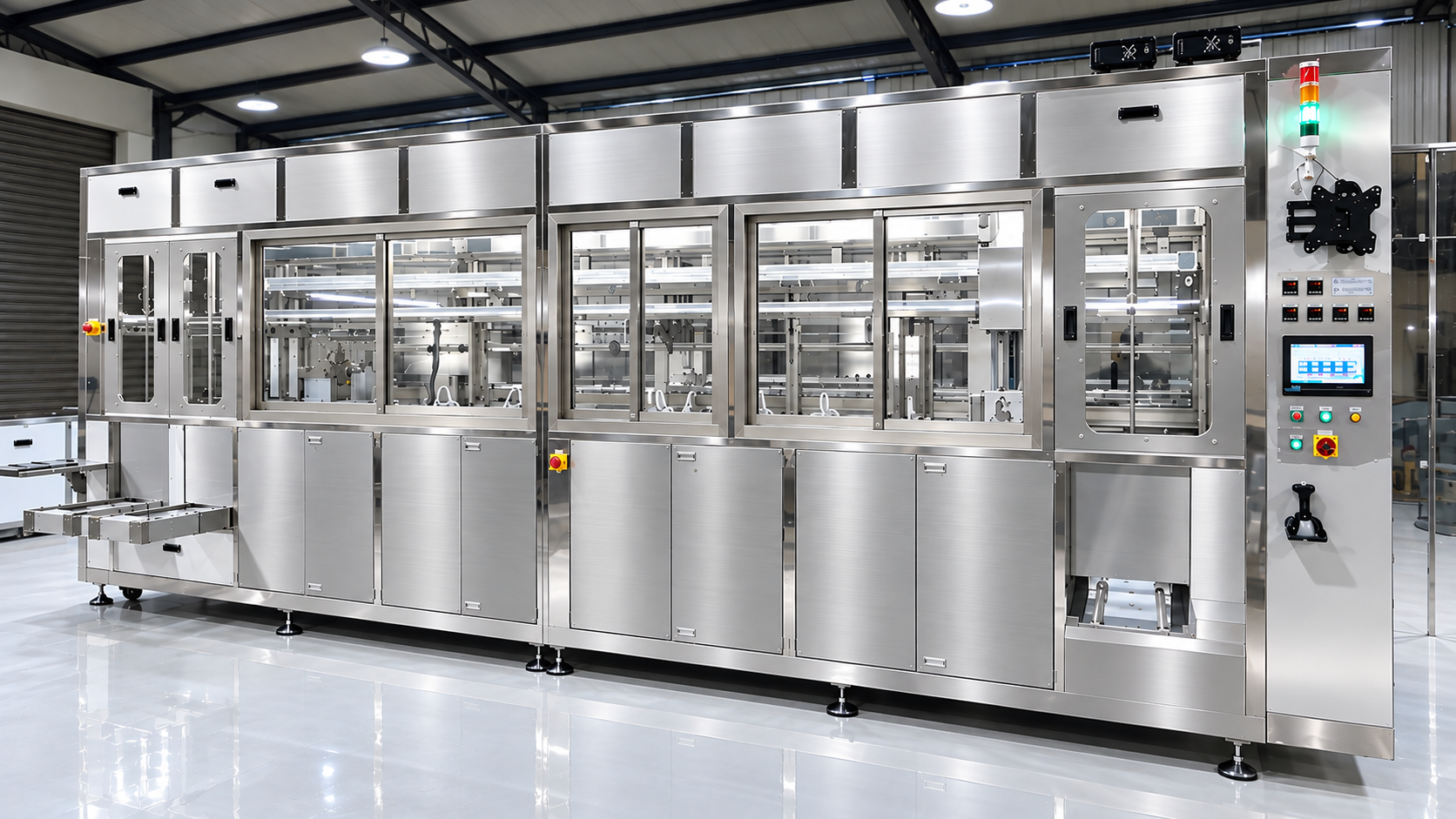
Where the cleanliness target is tight it is the rinse and dry stages that multiply, not the wash stages — which is how a line arrives at seven or nine tanks. LEO has built a nine-stage automated line for surgical instruments, dental implants and orthopaedic components; it is documented under the cases below.
Machines LEO has built for this sector
Each of these was designed around one customer’s part, soil and throughput. The captions are the machines as built.
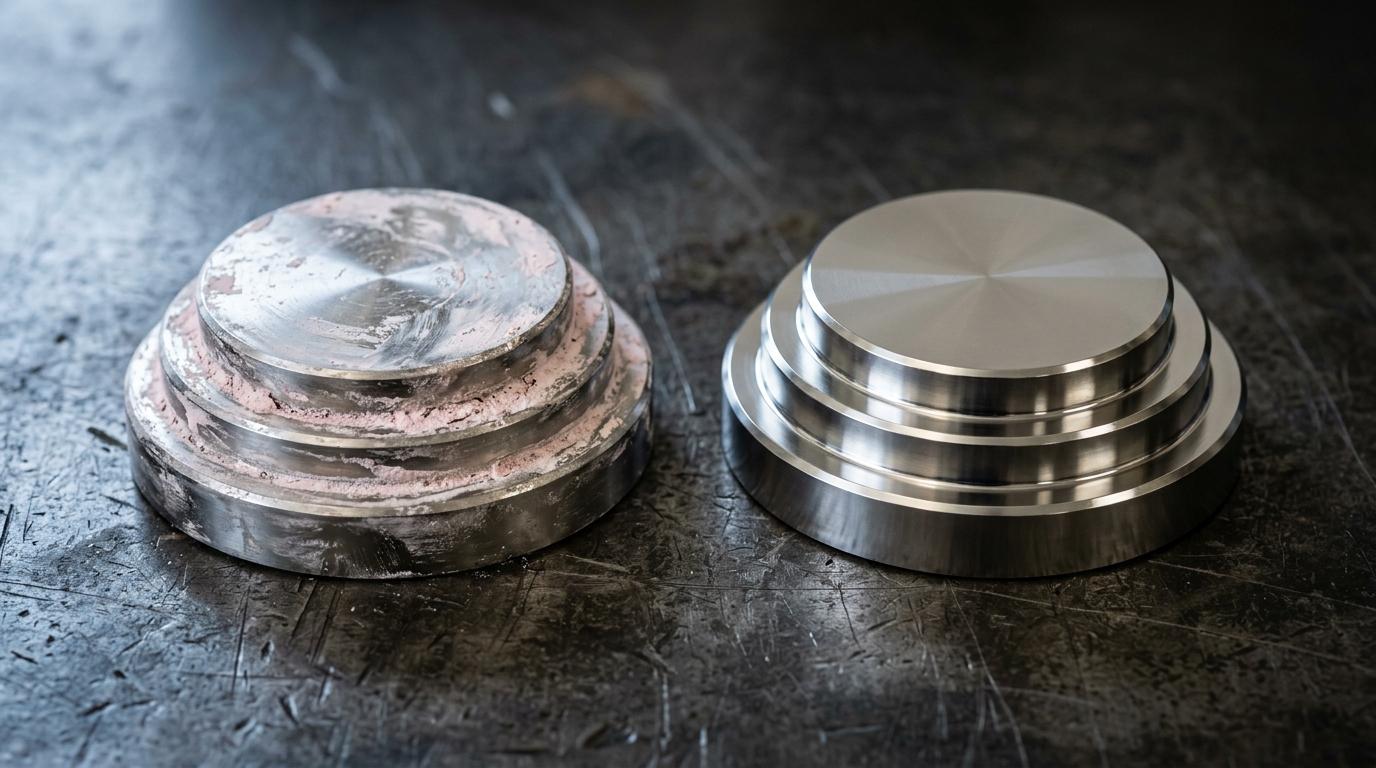
Fully automatic eleven-tank ultrasonic cleaning machine for medical device components 
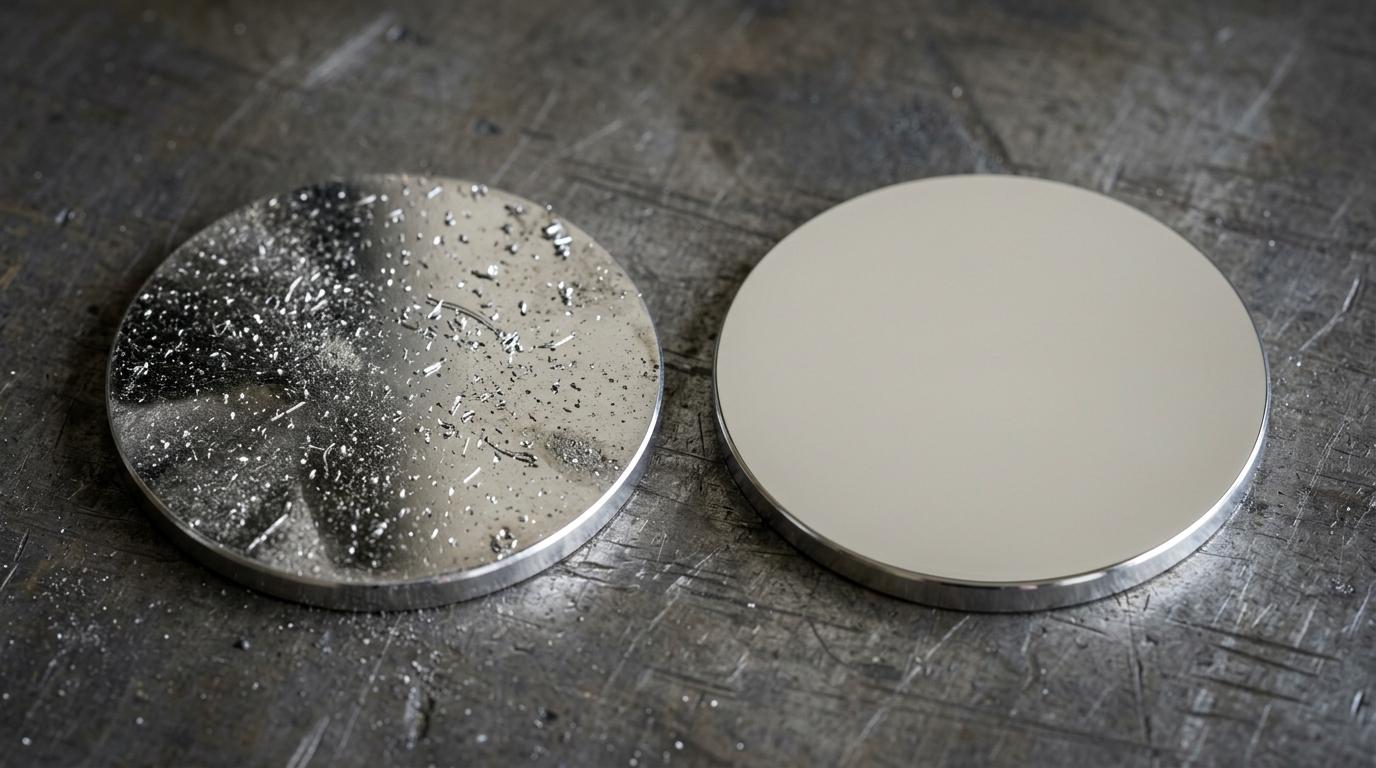
Fully automatic ultrasonic cleaning machine for scalpel blades 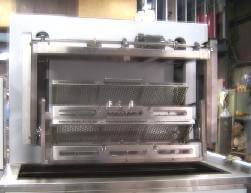
Ultrasonic cleaning machine for pharmaceutical glass bottles
Tell us the instrument, the soil and the batch size, and LEO will specify the tank count, the frequency and the fixtures around it — rather than fitting the part to a standard machine.
Workpieces & contamination
Contaminants
- Surgical instruments (forceps, scissors, retractors)Blood and tissue residueProtein soilInstrument lubricant40 kHz
- Scalpel and microtome bladesGrinding swarfHoning oilProtective coating40 / 80 kHz
- Dental instruments and handpiecesCement and composite residueAlginate impression materialPolishing paste40 / 120 kHz
- Dental and orthopaedic implantsMachining oilTitanium and cobalt-chrome finesPolishing compound80 / 120 kHz
- Cannulae and lumened instrumentsProtein soilBiofilmIrrigation residue40 kHz
- Medical device housings and stamped componentsStamping oilDrawing compoundMetal fines28 / 40 kHz
- Glass vials and pharmaceutical bottlesGlass finesDustFilling residue40 kHz
- Instrument trays and sterilisation containersDetergent filmWater scaleHandling grease28 / 40 kHz
Products
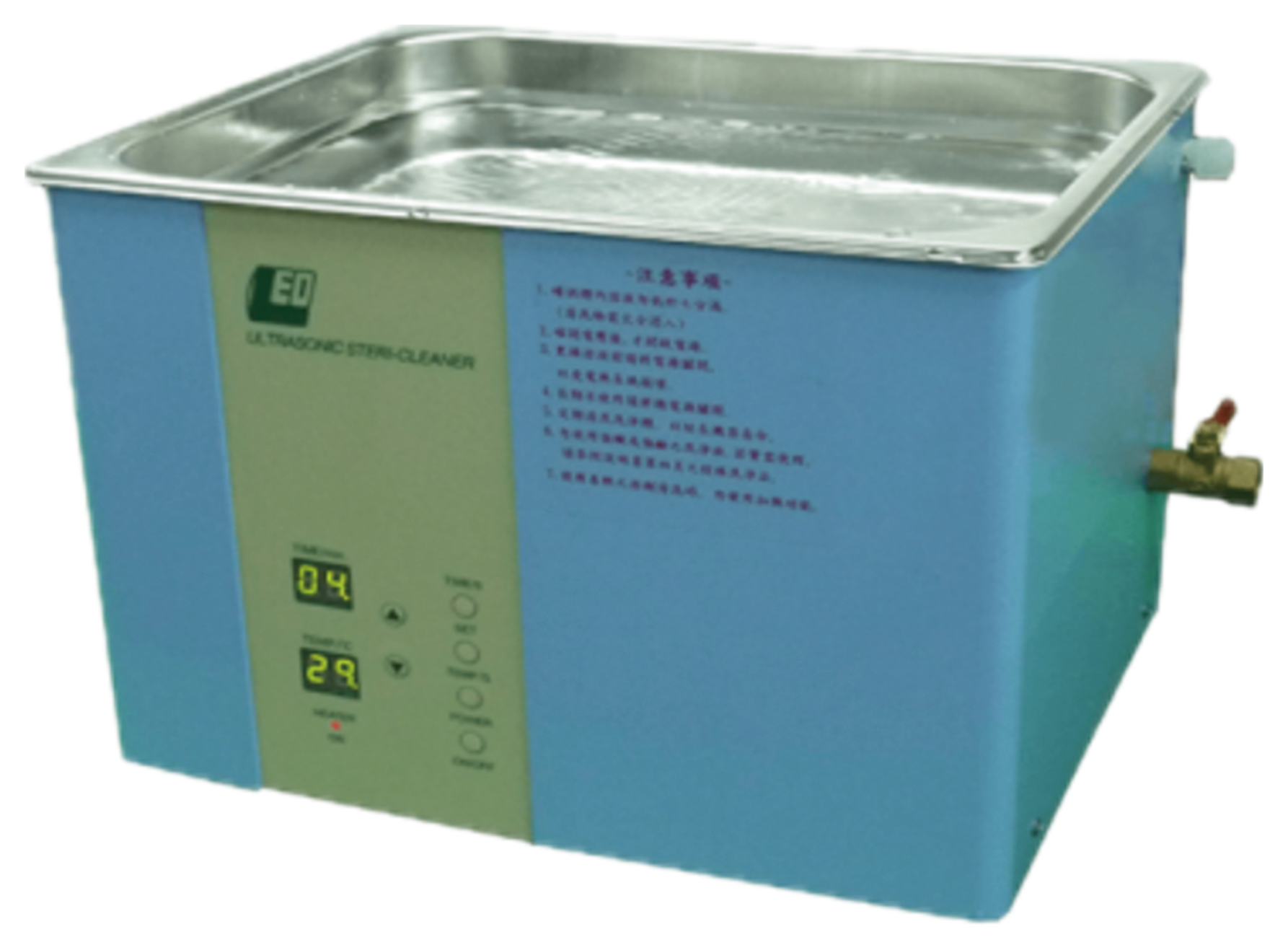
Recommended equipment
Case Studies
Proof in the field
Medical, Dental & Surgical Instruments
Automatic Nine-Tank Ultrasonic Cleaning Machine for Medical Devices
Read more
Frequently asked questions
No. Ultrasonic cleaning removes soil; it does not sterilise. It is the step that makes sterilisation reliable, because an instrument still carrying blood, tissue or protein residue cannot be sterilised through that residue. The cleaner belongs ahead of the autoclave, not in place of it.
40 kHz is the general-purpose band for stainless instrument sets and trays. Move up to 80 or 120 kHz for implants, polished surfaces and fine features, where smaller cavitation bubbles lift sub-micron particulate without eroding the finish. 28 kHz is reserved for robust stamped and machined components carrying heavy forming oil.
Not when the frequency, power and fixture are chosen for the part. Damage in practice comes from three things: too low a frequency on a delicate finish, instruments loose in a basket knocking together, and running dry or overheated. Fixtures that hold each instrument apart solve most of it.
It depends on the cleanliness target rather than the soil. For instrument reprocessing in a hospital or clinic, such as da Vinci surgical instruments, a single-tank machine is the usual choice: one heated ultrasonic tank plus drying. Implant and device manufacturing usually needs pre-wash, ultrasonic wash, ultrasonic rinse, one or more DI cascade rinses and drying — which is how LEO’s lines reach seven or nine stages.
Request a Quote
Tell us what you need cleaned
Send us the part, the contaminant and your cycle time. Our engineers size the tank, the frequency and the process chain — and reply with a sized specification for your line.