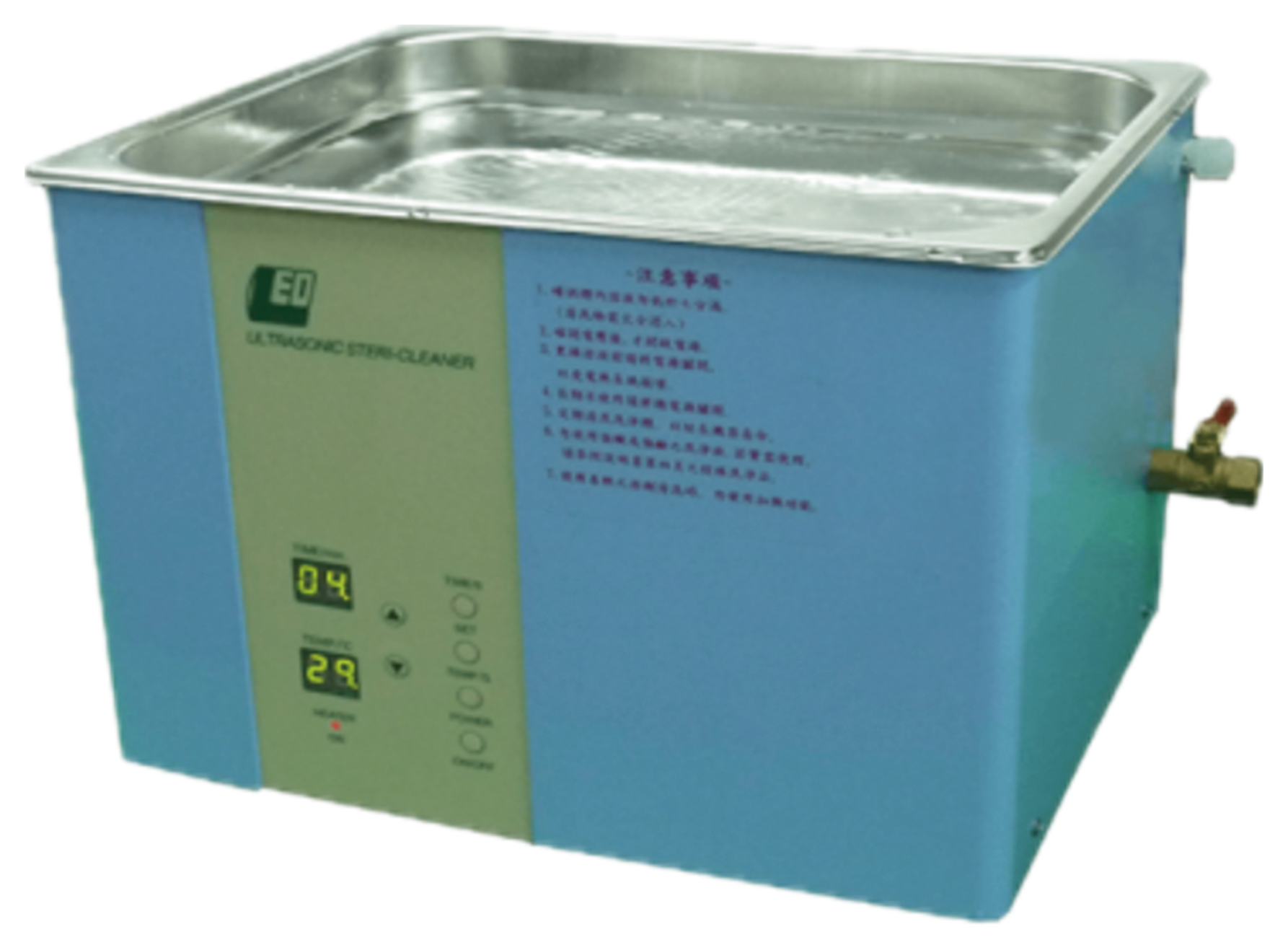
Protein and biological soil
Blood, tissue, egg, dairy, starch, cooked-on fat and biofilm — organic soils that denature when heated or dried and then bond hard to the surface.
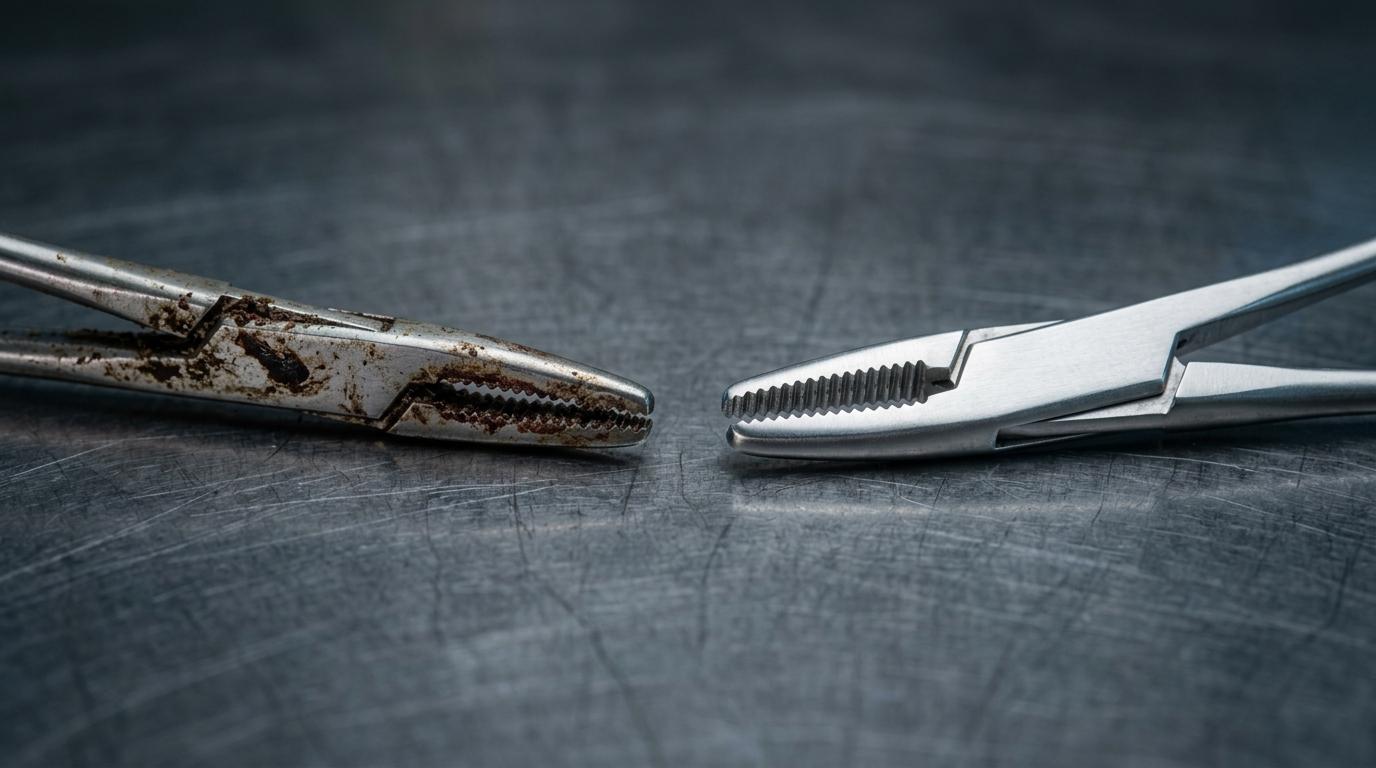
Protein soil is blood, tissue, egg, dairy, starch and biofilm — organic matter that denatures when heated or dried and then bonds to the surface. Once fixed it resists detergent. Enzymatic or mildly alkaline chemistry at 40 kHz and below 45 °C removes it before it sets.
- Recommended frequency
- 40 kHz
Protein soil behaves unlike every other contaminant on this site, and the difference is one property: it sets. Oil stays oil whether the part is hot or cold, but a protein is a folded molecule held in shape by weak bonds, and heat, drying, alcohol or an aggressive alkali unfolds it. The unfolded chains then tangle with each other and bond to the surface, and what was a soft, water-soluble film becomes an insoluble, adherent layer. Every process decision on this page follows from that one fact.
The practical consequence is that the clock starts when the part comes out of service, not when it reaches the washer. Blood and tissue drying on a surgical instrument, egg or dairy baking onto a plate, starch gelatinising in a hot pan, alginate setting in the crevices of a dental tray — all of these are the same event. It is also why hot water is the wrong first instinct: a rinse above about 45 °C fixes protein rather than removing it, and a cleaning attempt that starts hot makes the job permanently harder.
Biofilm is the same soil after it has had time. Bacteria on a wet surface secrete an extracellular polymer matrix that anchors them and shields them, and once it is established it is far more resistant to both cleaning and disinfection than the same organisms free in solution. In food equipment and water-contact hardware, biofilm is the reason a surface that looks clean fails a swab. On marine hardware, biofouling residue is the macroscopic version of the same problem.
The geometry makes it a cleaning problem rather than a wiping problem. Hinged and box-lock instruments, cannulated shafts, lumens, dental burs, sieve baskets, filler nozzles, plate heat exchangers and slicer blades all hold soil where a brush does not go, and on a serrated jaw or a burr flute a brush is also the thing that damages the working surface. Cavitation reaches the hinge, the lumen and the serration, and it does so with the instrument open and unloaded rather than under a brush.
The process itself is deliberately mild. An enzymatic or mildly alkaline cleaner does the chemistry — proteases and amylases cut the protein and starch into fragments that dissolve, rather than trying to blast an intact film off — and 40 kHz supplies enough cavitation to reach the geometry without being aggressive on the thin instrument sections and delicate tips involved. Temperature is held in the enzyme’s working band and below the fixing threshold, which for most enzymatic chemistries means roughly 35 to 45 °C. One thing has to be said plainly: this is cleaning, not sterilisation. Ultrasonic cleaning removes the soil that would otherwise shield organisms from a disinfection or sterilisation step, which is why cleaning always precedes those steps and never replaces them.
Process
The process chain
- Step
Cold pre-rinse — never hot
Gross soil comes off in cold or lukewarm water, below about 45 °C. Hot water denatures protein and bonds it to the surface, so a hot first rinse converts a straightforward cleaning job into a fixed-soil job that no later stage fully recovers.
- Step
Enzymatic soak with instruments open
Proteases and amylases cut the soil into soluble fragments instead of trying to lift an intact film. Hinges are opened, cannulae are flushed and lumens are filled, because an enzyme cannot work on a surface it has not reached and a closed box-lock is a sealed pocket.
- Step
Ultrasonic wash at 40 kHz, 35–45 °C
Cavitation reaches the hinge, the serration, the lumen and the flute — the features a brush either misses or damages. The temperature band is chosen twice over: it is where the enzymes work, and it is below the point at which protein sets.
- Step
Thorough rinse, final rinse on treated water
Enzyme and detergent residue is itself a contaminant and, on food-contact and patient-contact surfaces, a finding. Lumens are flushed rather than dipped, and the final rinse uses treated water so dissolved minerals do not dry as scale on the clean surface.
- Step
Dry — then disinfect or sterilise separately
Drying stops the wet surface that biofilm needs to re-establish. Cleaning is the step that makes a subsequent disinfection or sterilisation process effective by removing the soil that would shield organisms from it; ultrasonic cleaning does not sterilise and is not a substitute for that step.
Industries
Industries this serves



Frequently asked questions
No. Ultrasonic cleaning removes soil; it does not sterilise, and it should never be described or purchased as if it did. What it does is make the sterilisation step work: organisms embedded in dried blood, tissue or biofilm are physically shielded from a disinfectant or from steam, so an instrument that has not been properly cleaned cannot be reliably sterilised. Cleaning always comes first, and it is a separate process with a separate purpose.
Because heat is what fixes it. A protein holds its shape through weak bonds; heat breaks those, the chains unfold and tangle, and the result bonds to the surface and stops being water-soluble. Above roughly 45 °C you are no longer cleaning, you are cooking the soil onto the part. The same applies to alcohol and to strongly alkaline chemistry used too early. Cold pre-rinse, then enzymatic chemistry in its working band, is the sequence that works.
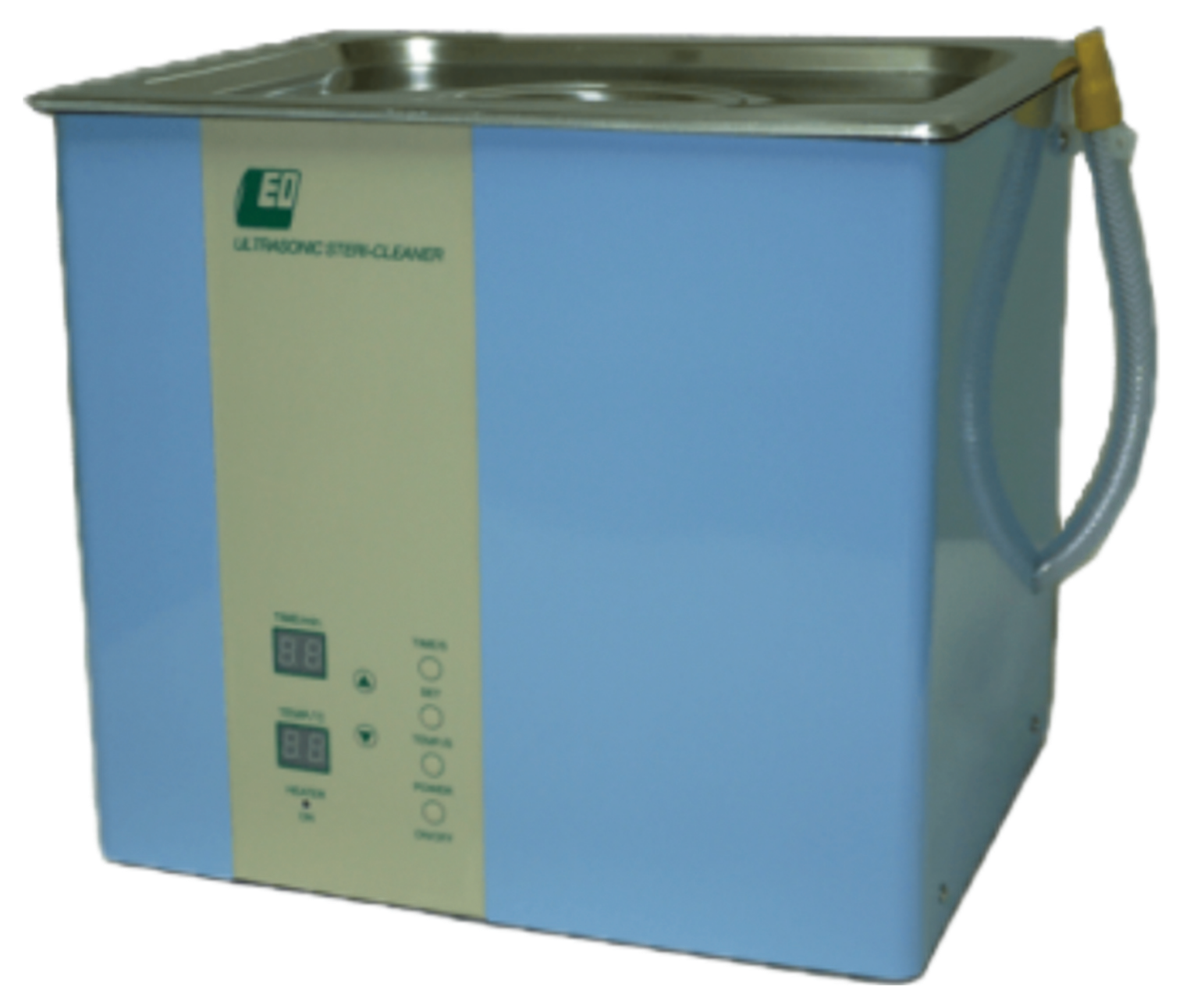
40 kHz is the working setting for the great majority of instrument cleaning — enough cavitation to reach a box-lock hinge, a cannula or a bur flute, gentle enough for thin sections and fine tips. Very delicate items such as micro-instruments, fine burs and small dental components are often better at a higher frequency, and LEO builds tabletop units offering 40 and 120 kHz for that reason. Loading matters as much as frequency: instruments must be open, unstacked and not resting against the tank floor.
Request a Quote
Tell us what you need cleaned
Send us the part, the contaminant and your cycle time. Our engineers size the tank, the frequency and the process chain — and reply with a sized specification for your line.