Marine
What ultrasonic cleaning does for marine engineering — mainly filter elements, plus carbon, salt scale and oil sludge off engine components, heat exchangers and fuel system parts.

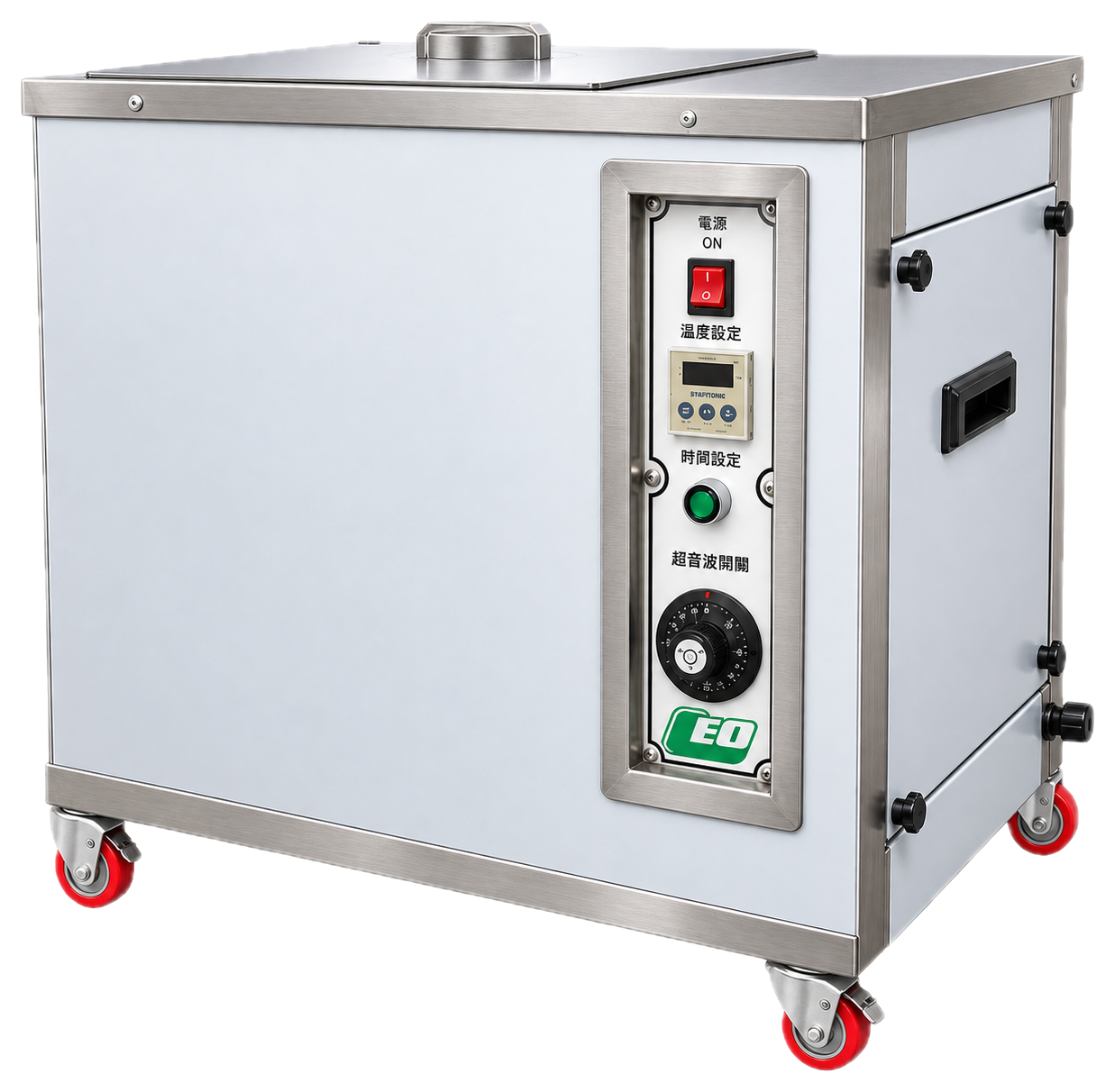
In marine work, ultrasonic cleaning is used mainly on filter elements. It also removes combustion carbon, salt scale, oil sludge and corrosion products from engine components, heat exchanger plates and tube bundles, injectors, pumps and valves. LEO builds the equipment class this needs: 28–40 kHz industrial tanks from 40 to 132 litres, immersible transducer packs for oversized parts, and custom-built machines.
In marine work, filter elements are the main job; other parts follow. Marine engineering cleaning is heavy work on unforgiving parts. What accumulates is combustion carbon and oil coking on anything downstream of a cylinder, salt scale and biofouling residue on anything that has seen seawater, and sludge in every filter, strainer and cooler core. It is hard deposit on robust metal — which is the case ultrasonic cleaning handles best, and at the coarse end of the frequency range.
Why 28 kHz
Low-frequency cavitation produces large, energetic bubbles whose collapse carries real mechanical energy. On thin sheet or a polished optical surface that is a liability; on a cast-iron liner, a steel tube bundle or a turbocharger nozzle ring carrying baked-on deposit, it is exactly what is wanted. 40 kHz covers the lighter work — injectors, small hardware, electronics — and the two are frequently specified as a dual-frequency tank so one machine covers both.
Chemistry does at least half of it. Baked carbon and salt scale are softened by a hot alkaline or descaling bath and then removed by cavitation; neither stage is effective alone on this class of deposit. LEO formulates its own industrial cleaning agents — water-based degreasers, hydrocarbon solvents, descalers and rust preventives — because the medium and the machine have to be specified together.
The size problem, and the answer to it
Marine components are frequently larger than any standard cleaning tank. LEO’s single-tank industrial range runs from 40 to 132 litres, which covers injectors, filters, small pumps, valves and heat exchanger plates — but not a cylinder liner or a full tube bundle.
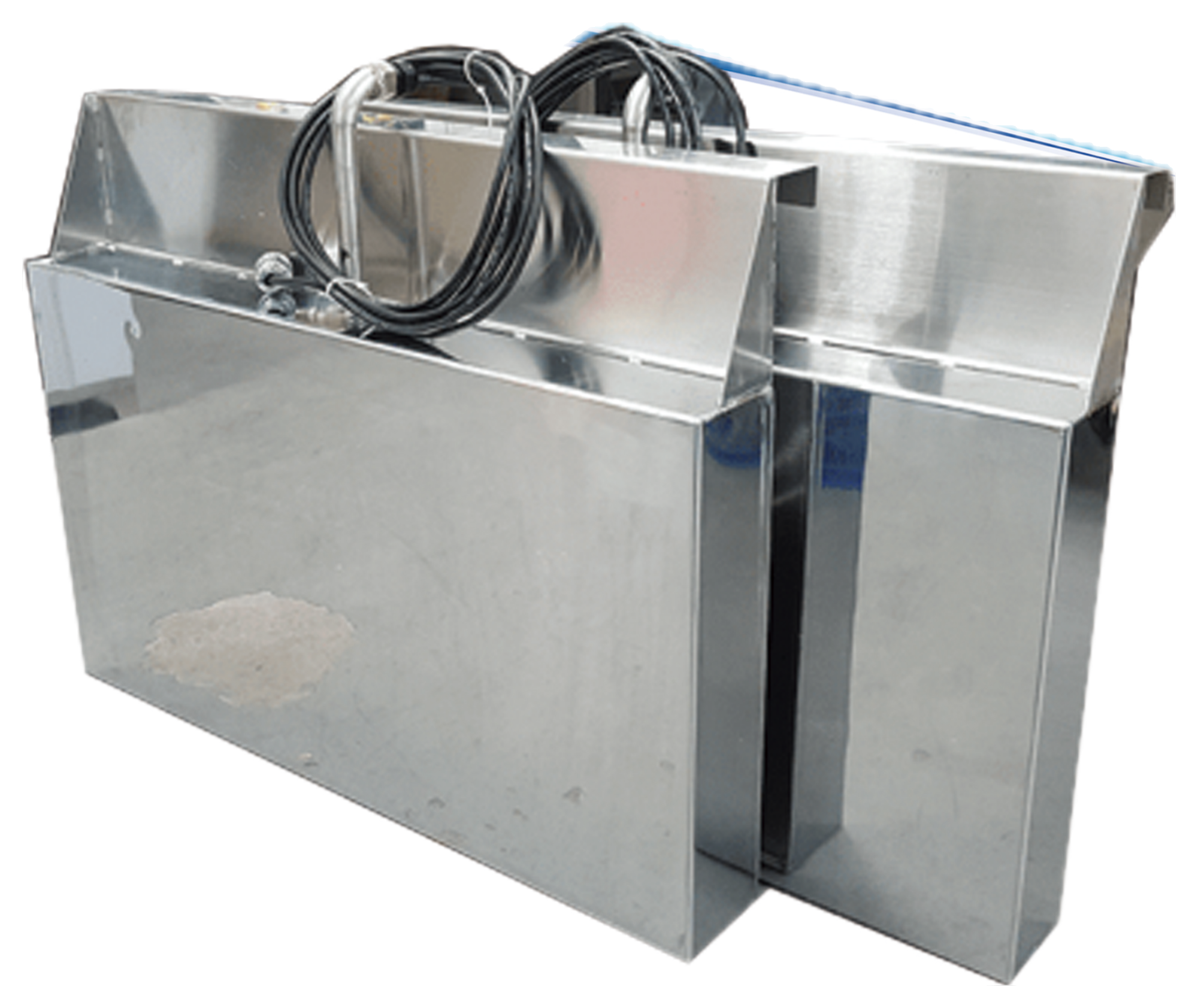
For those there are two routes. The first is an immersible transducer pack: a sealed transducer box and generator that drops into a tank the yard already has and converts it into an ultrasonic cleaner, available from 300 W to 1800 W at 28 or 40 kHz, mounted on the bottom or the side. The second is a custom build — LEO has designed and manufactured large-format machines for other sectors, including a cleaning machine for large steel pipe, and quotes oversized tanks to the part.
The process chain
A workshop cleaning cell for marine components runs:
- Bulk removal — drain oil, scrape loose carbon, so the bath is not doing avoidable work
- Heated ultrasonic wash at 28 kHz in an alkaline degreaser or descaler
- Directed flow through tube bundles, cooler cores and galleries — sound alone will not clear a bore
- Rinse, then immediate hot-air drying
- Rust-preventive treatment before the part goes back into store or into a humid space
Send the part, the deposit and the dimensions, and LEO will specify the tank, the frequency and the cleaning agent — or the transducer pack that turns an existing tank into the machine.
Workpieces & contamination
Contaminants
- Filter elements, strainers and separator partsSludgeSedimentFibre and debris28 / 40 kHz
- Heat exchanger plates and tube bundlesSalt scaleOil sludgeBiofouling residue28 kHz
- Fuel injectors and injector nozzlesCarbon depositFuel gumSludge40 kHz
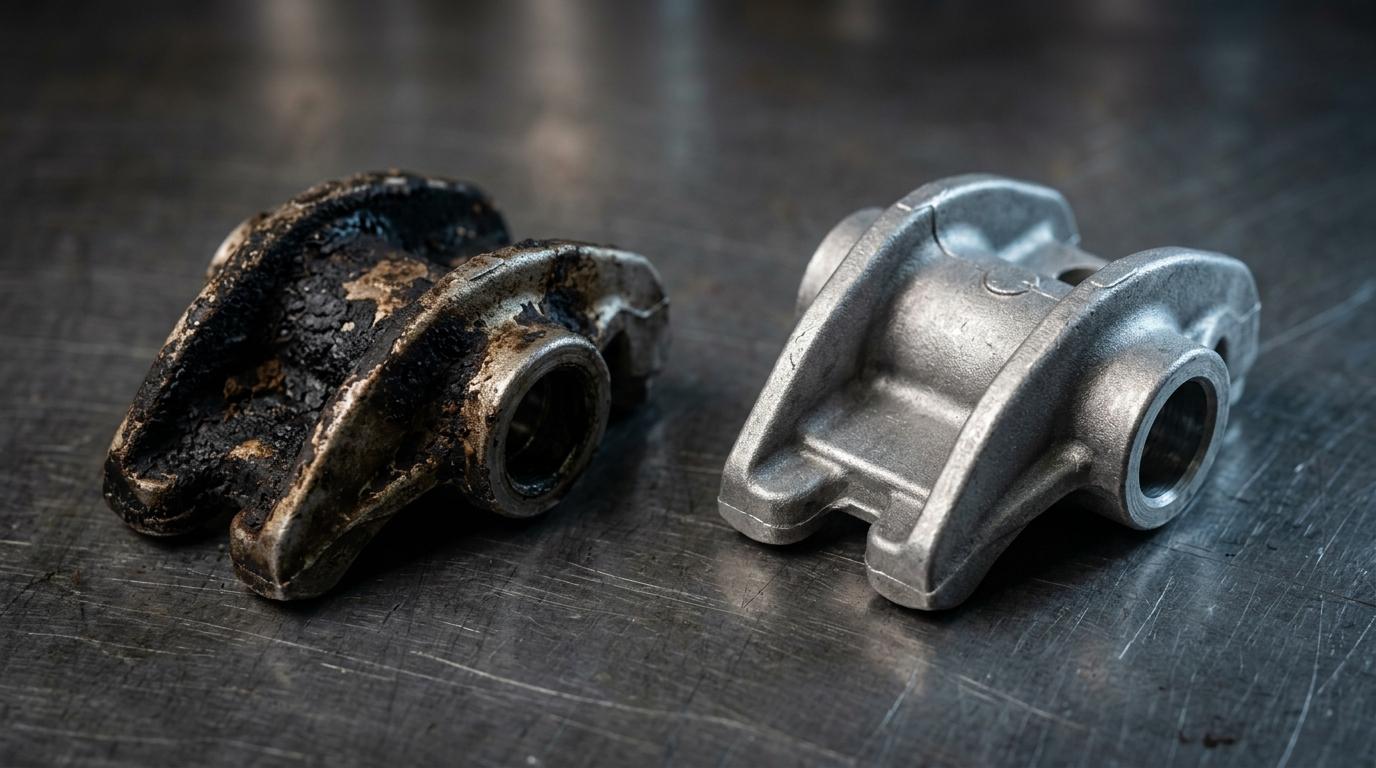
- Turbocharger rotors and nozzle ringsOil cokingExhaust depositCarbon28 / 40 kHz
- Pistons, liners and valvesCombustion carbonOil depositScale28 kHz
- Pumps, valves and pipe fittingsSalt depositCorrosion productsGrease28 / 40 kHz
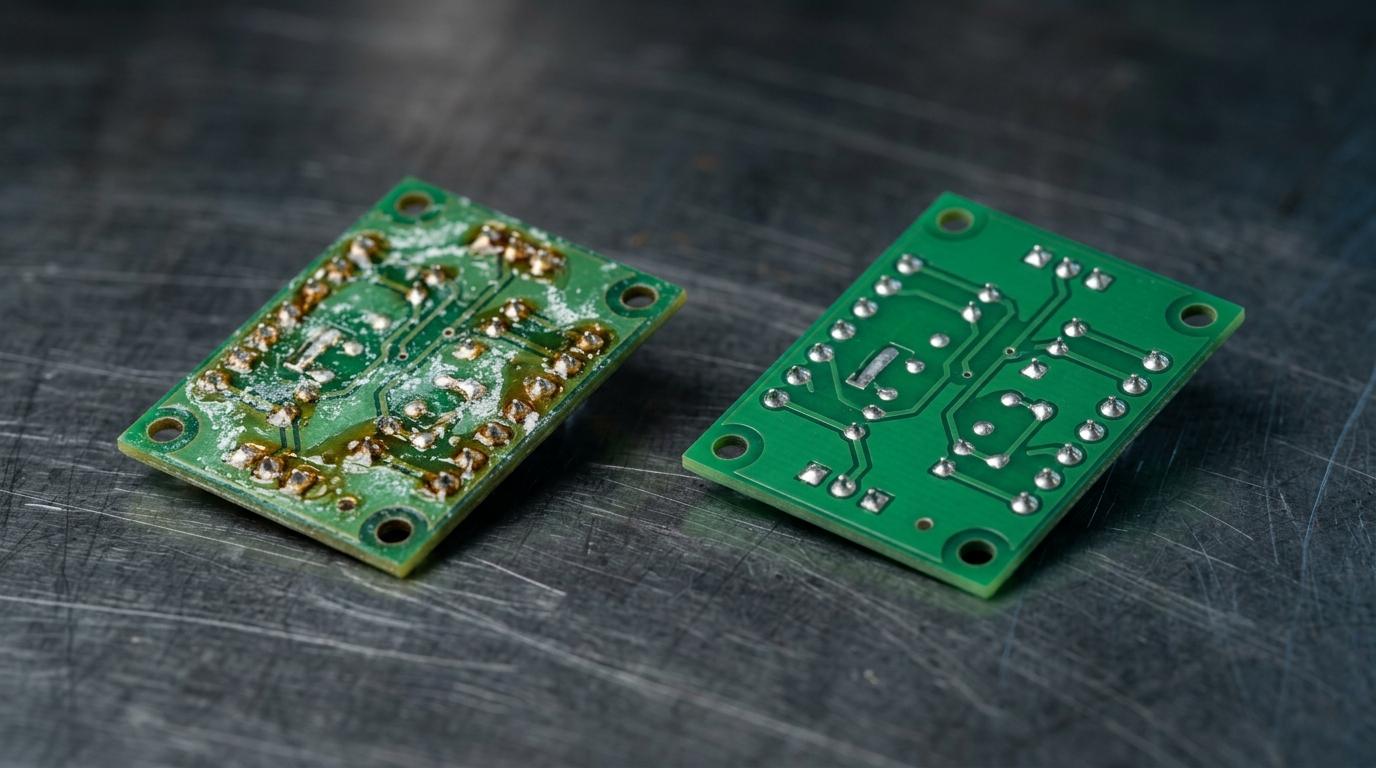
- Marine electronics and control boardsSalt residueCorrosion productsFlux residue40 kHz
- Shafting, gearbox and deck hardwareGreaseSalt and marine depositWear debris28 kHz
Products
Recommended equipment
Contaminants
Cleaning applications
Frequently asked questions
Two options. An immersible transducer pack — a sealed transducer box plus generator, 300 W to 1800 W at 28 or 40 kHz — drops into a tank you already have and converts it into an ultrasonic cleaner. Or LEO builds the tank to the part; large-format machines are a normal custom order.
No — the chemistry does the dissolving and cavitation does the removal. A descaling or hot alkaline bath breaks the deposit down; ultrasonic then lifts it out of tube interiors, fin gaps and threads where a soak alone would leave it in place.
28 kHz for robust cast and steel components carrying hard carbon or scale — pistons, liners, bundles, deck hardware. 40 kHz for injectors, small hardware and electronics. A dual-frequency 28/40 kHz tank covers both, which is usually the right specification for a mixed workshop.
Request a Quote
Tell us what you need cleaned
Send us the part, the contaminant and your cycle time. Our engineers size the tank, the frequency and the process chain — and reply with a sized specification for your line.