Moulds & Dies
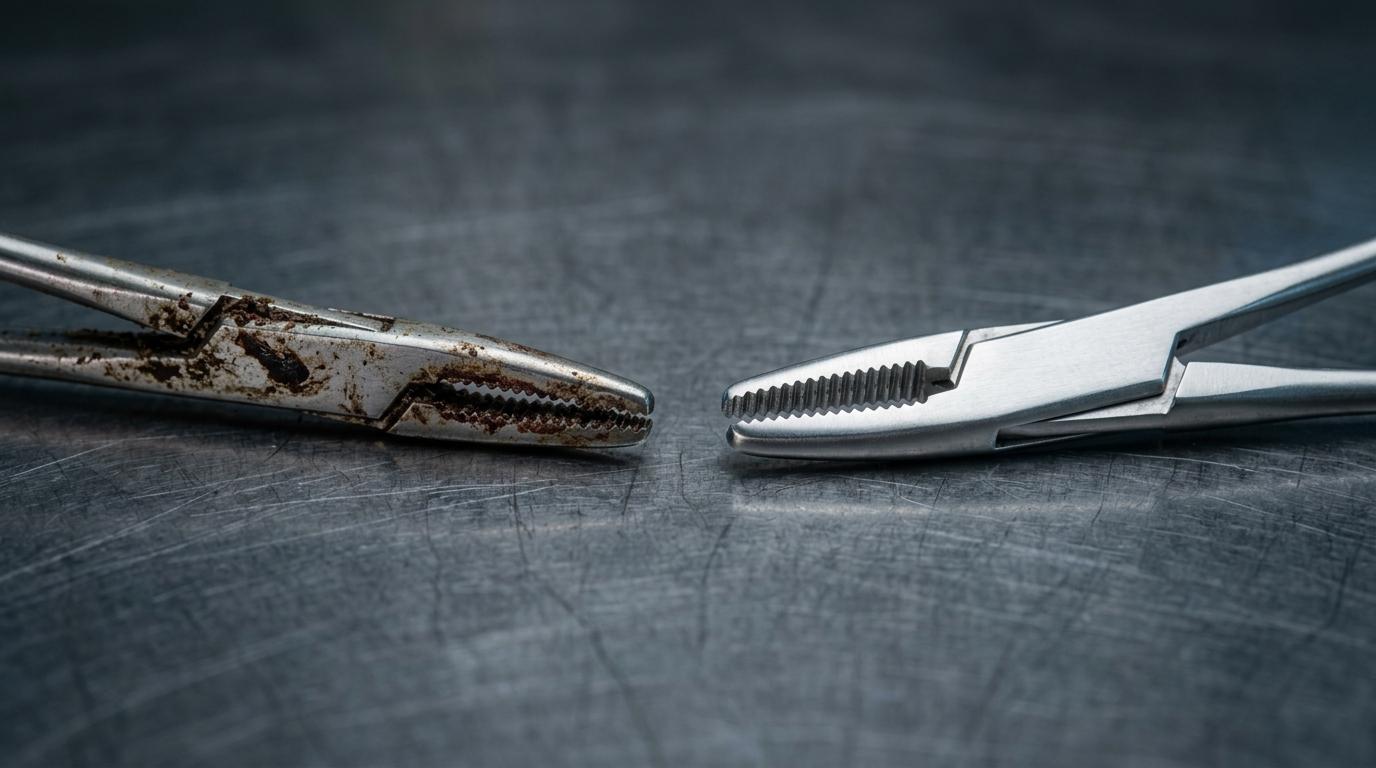
Ultrasonic and electrolysis cleaning for injection, die-cast, stamping and food moulds — carbon, gas residue, rust and release agent lifted off a cavity by non-contact cleaning.
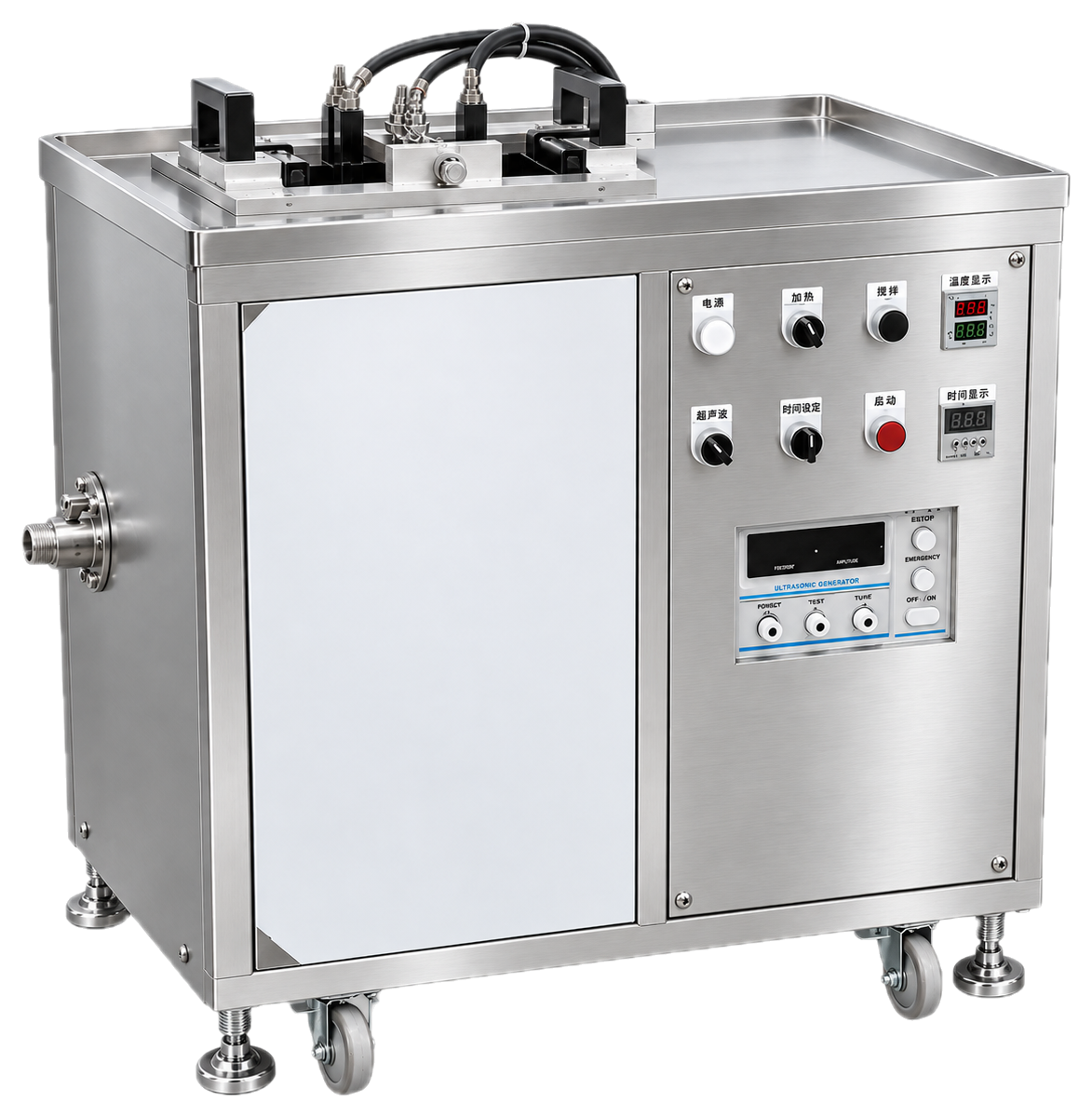
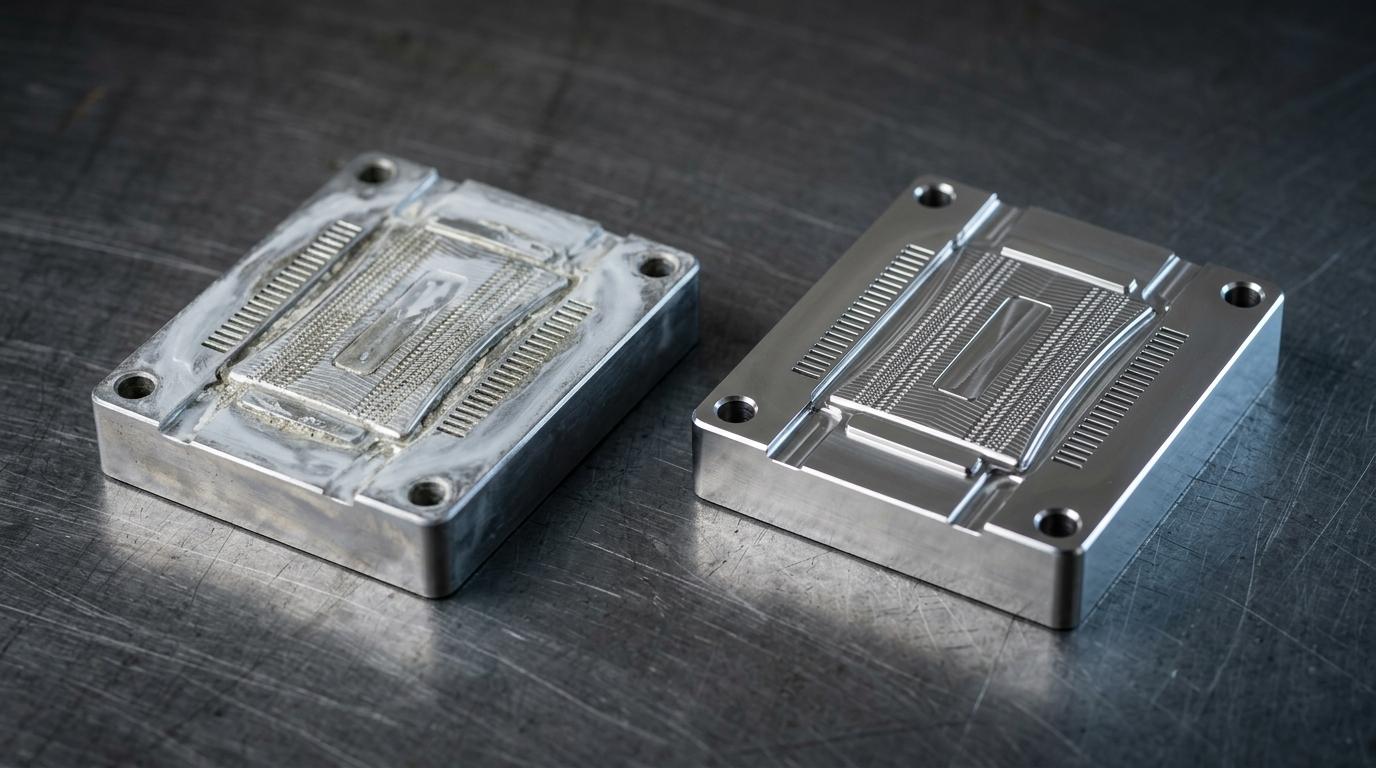
LEO builds ultrasonic and electrolysis cleaning machines for mould and die maintenance: injection and die-cast tooling, stamping dies, vents and cores, and food-industry moulds. Electrolysis and cavitation together remove carbon, gas residue, rust and release agent from cavities and vents while preserving the polished surface a mould depends on.
A mould is a surface, and the surface is the product. Every mark left by cleaning it is reproduced on every part it makes afterwards — which is why the traditional methods are all compromises. Wire brushing and abrasive blasting take the deposit off and take the polish with it. Solvent soaking softens the deposit but does not remove it from a vent or a cooling channel. Ultrasonic cleaning removes it without contact.
What builds up on tooling
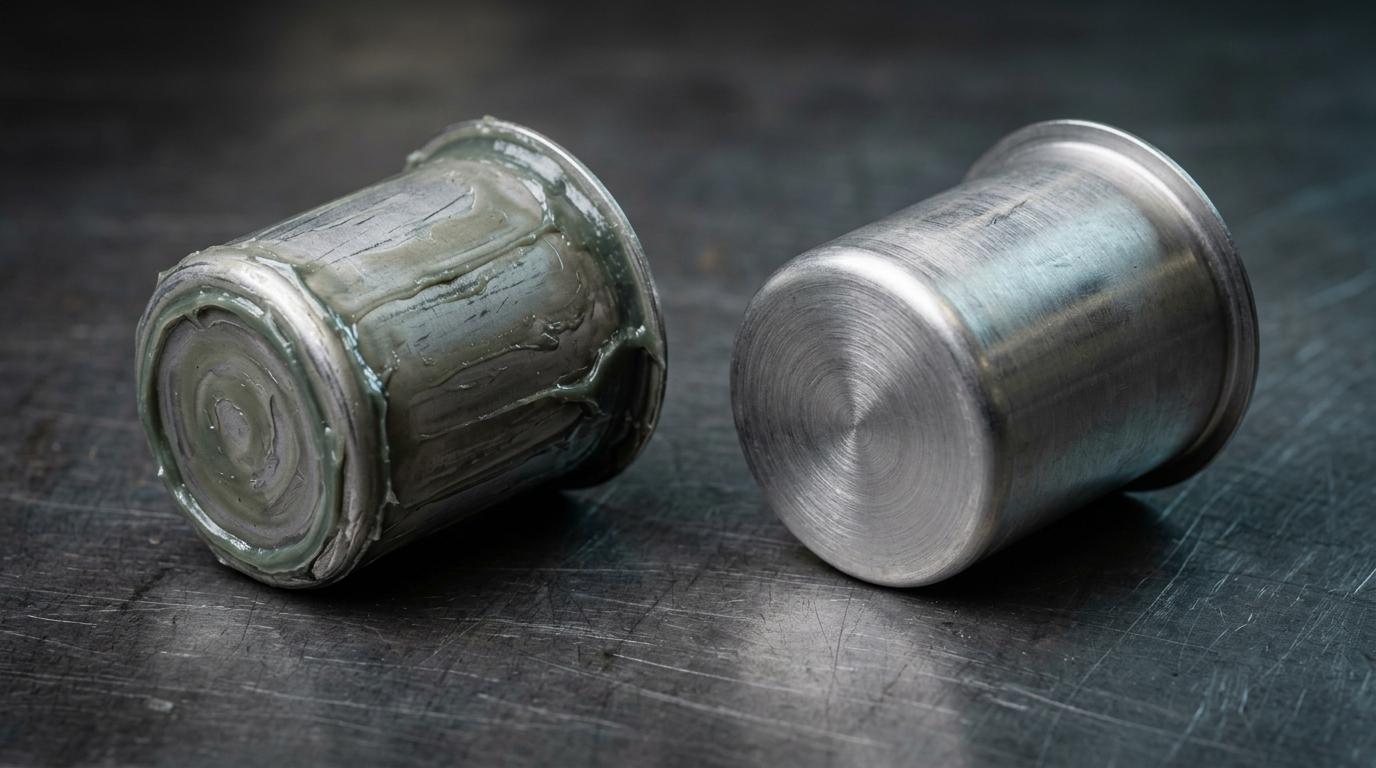
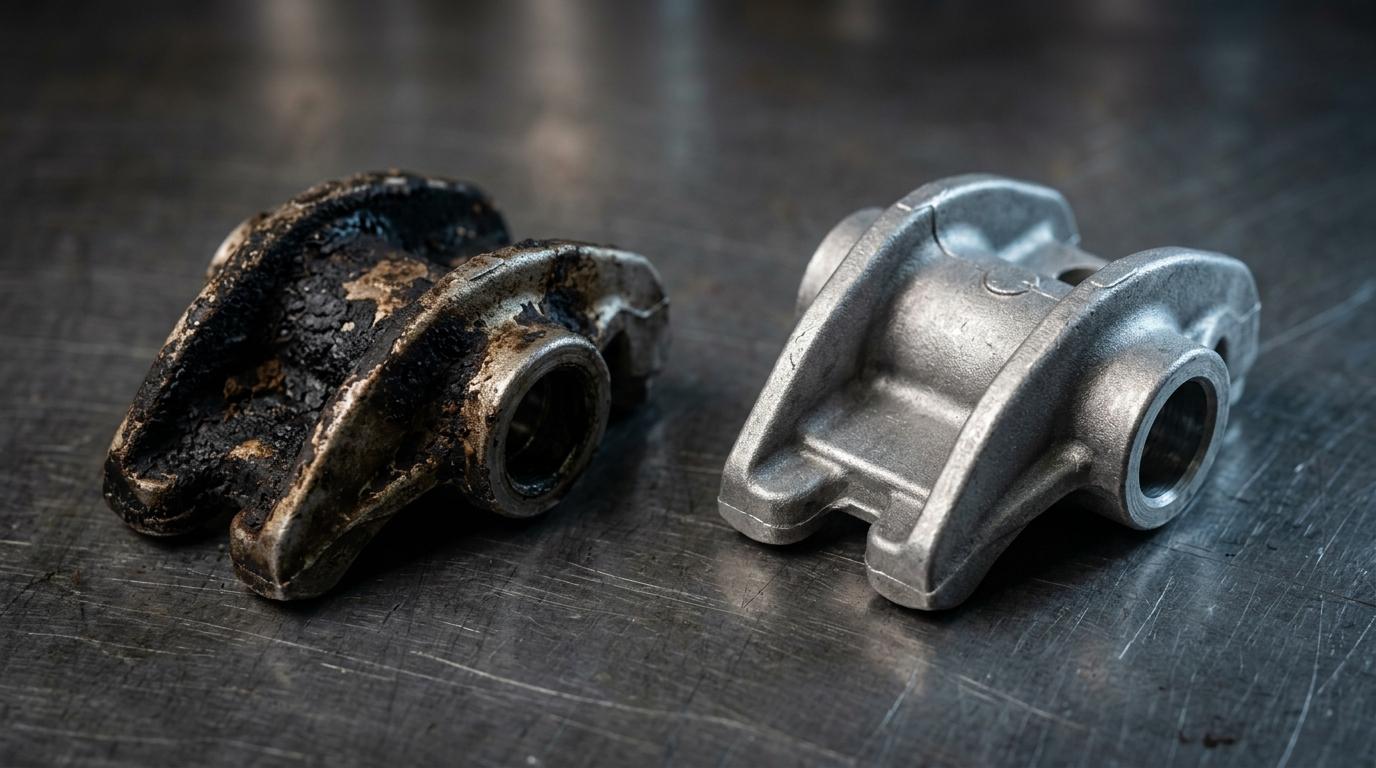
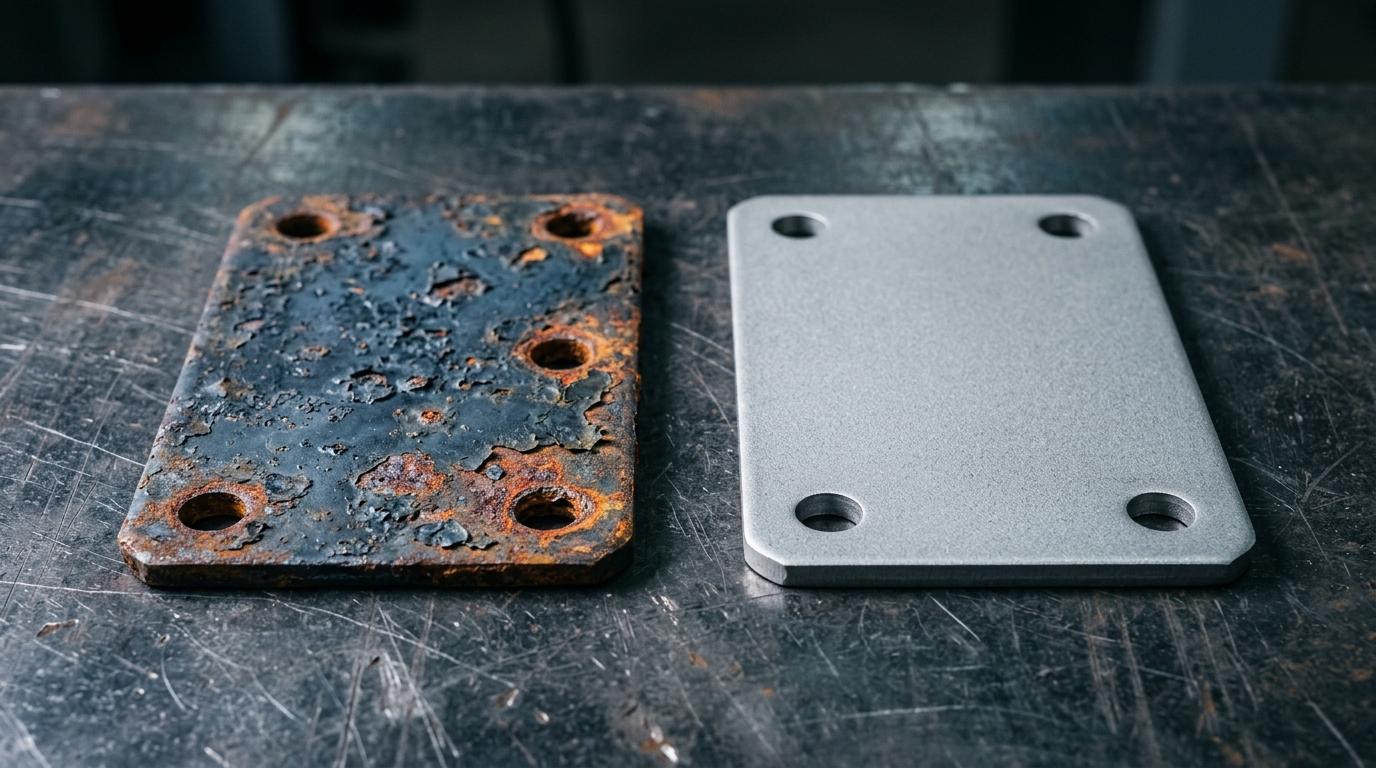
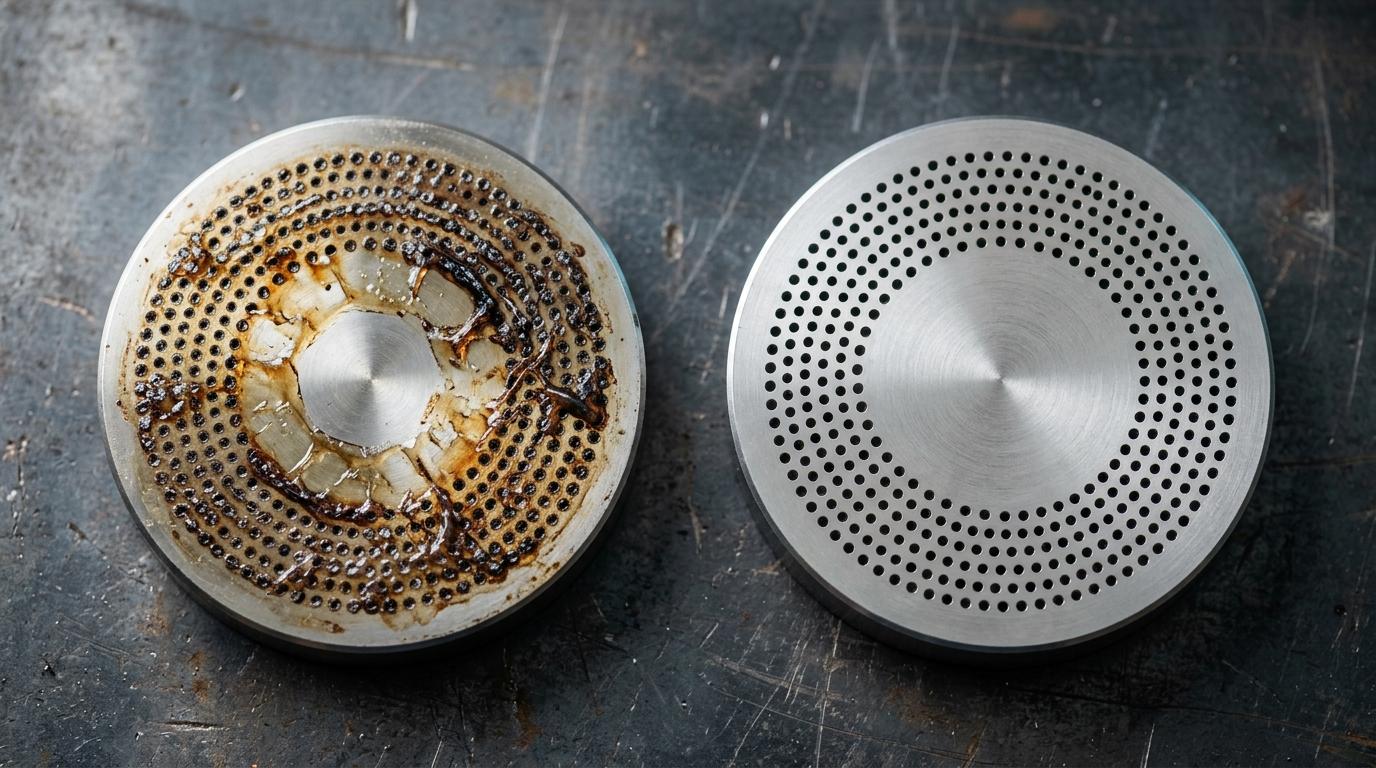
Injection and die-cast tooling accumulates carbonised gas residue and degraded release agent, particularly around vents and in the corners of a cavity where the melt front stalls. Stamping dies accumulate drawing compound, metal fines and galling debris. Food moulds accumulate baked-on sugar, fat and protein. All of them accumulate rust once the tool is put into storage without being cleaned first.
Why electrolysis is added to the ultrasonic tank
For rust and carbon on steel tooling, cavitation alone is slow. LEO’s mould cleaning machine adds an electrolytic circuit to the ultrasonic bath: current passed through a purpose-made electrolyte drives a reaction at the tool surface that decomposes the deposit and lifts it away, while cavitation carries the loosened material out of vents and blind features. The electrolysis output is adjustable — 0 to 15 V and 0 to 50 A — so the aggressiveness is set to the tool rather than fixed.
It removes rust, carbon and other contaminants without damaging the surface, which is what makes it a maintenance process rather than a refurbishing one.
The process chain
A mould cleaning cycle usually runs:
- Strip and pre-wipe to remove loose material and any grease that would foul the bath
- Heated ultrasonic wash with the electrolytic circuit running, 28 or 40 kHz
- Rinse to carry the electrolyte and the decomposed deposit away
- Hot-air drying, immediately — a bare, freshly cleaned steel cavity flash-rusts
- Rust-preventive oil before the tool goes back into storage
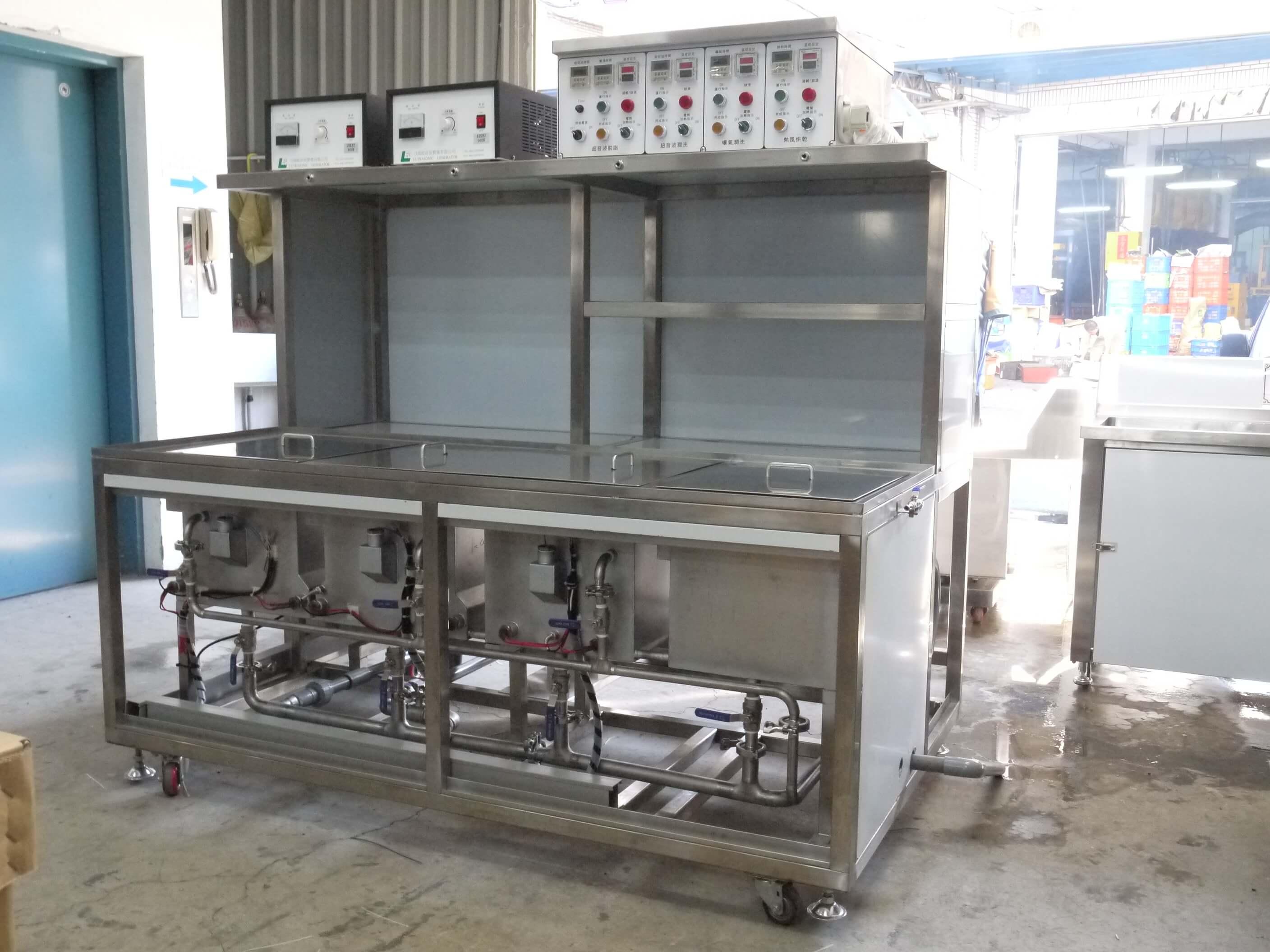
LEO’s two standard mould machines take inner tanks of 320 × 300 × 300 mm and 500 × 400 × 300 mm at 600 W and 1200 W of ultrasonic power respectively; larger tooling is quoted as a custom build.
Machines LEO has built for this sector
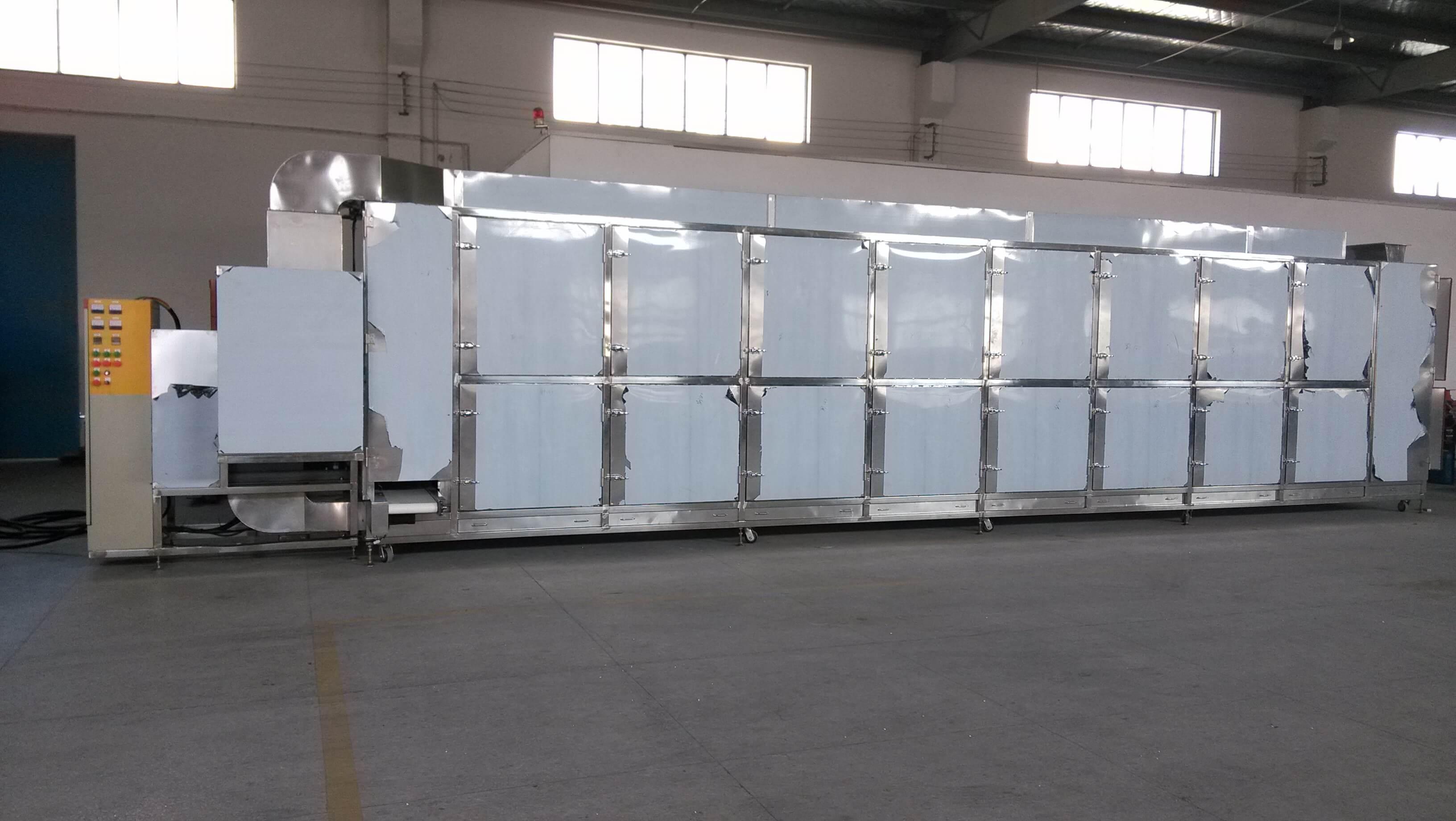
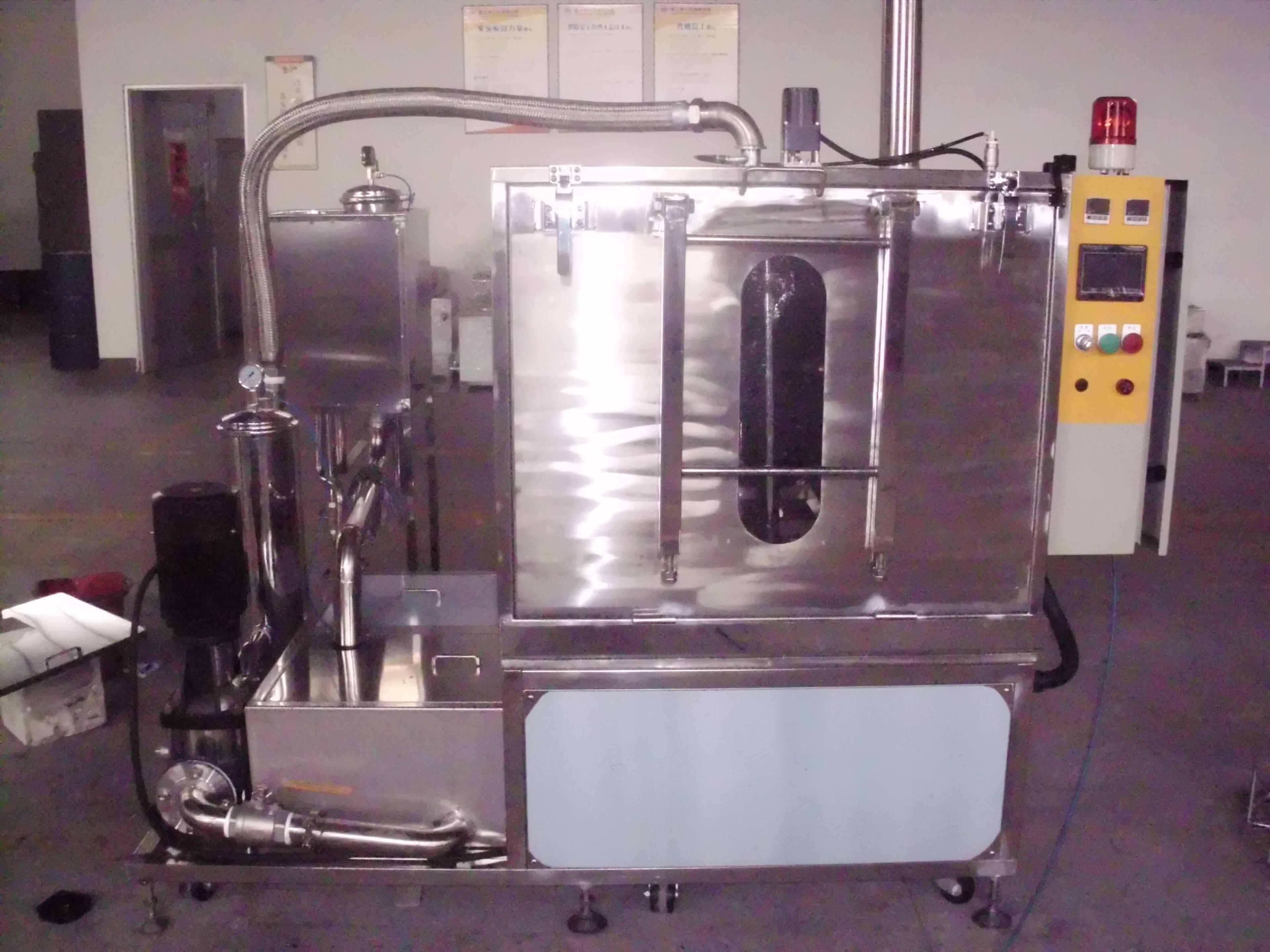
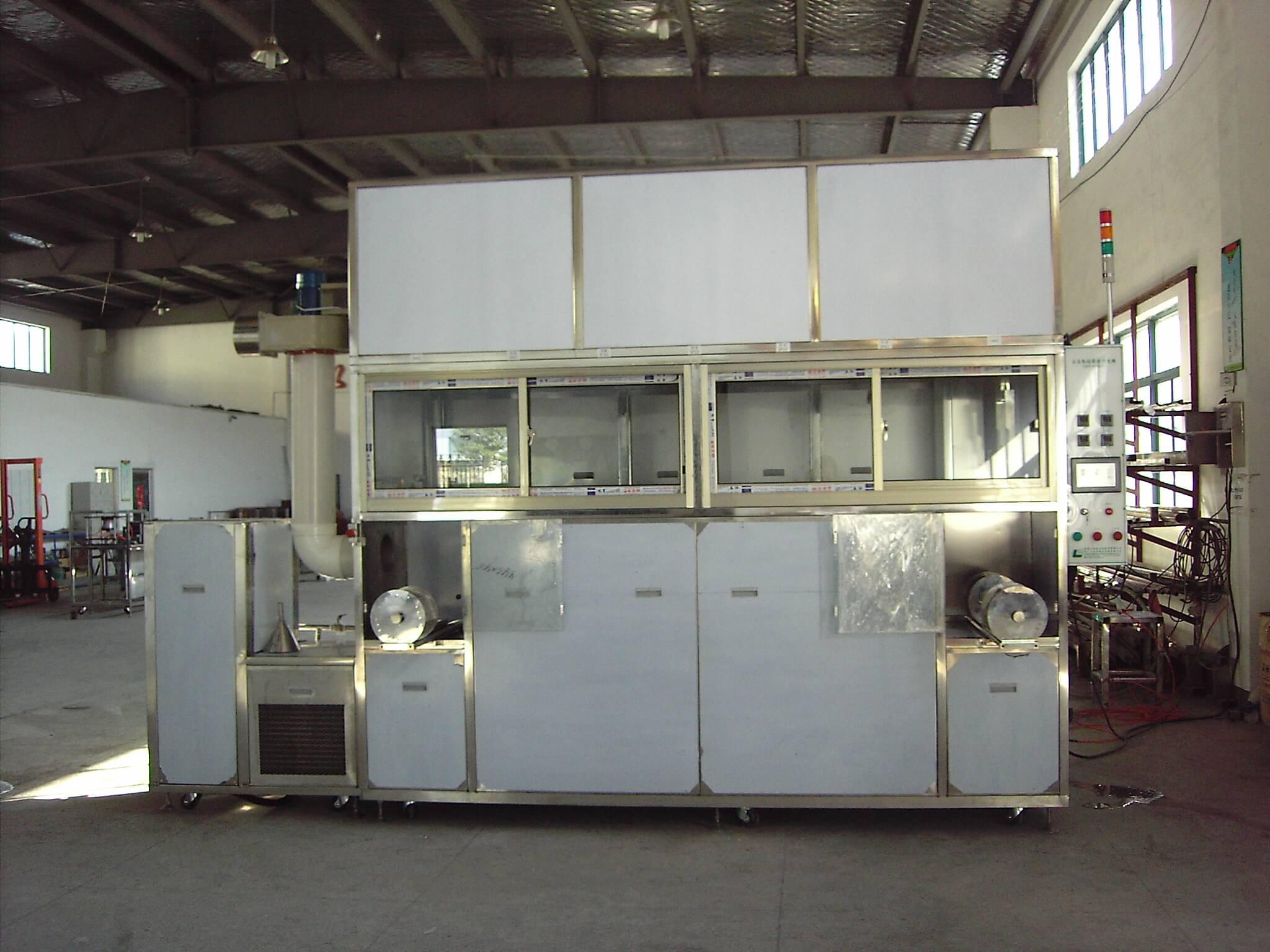
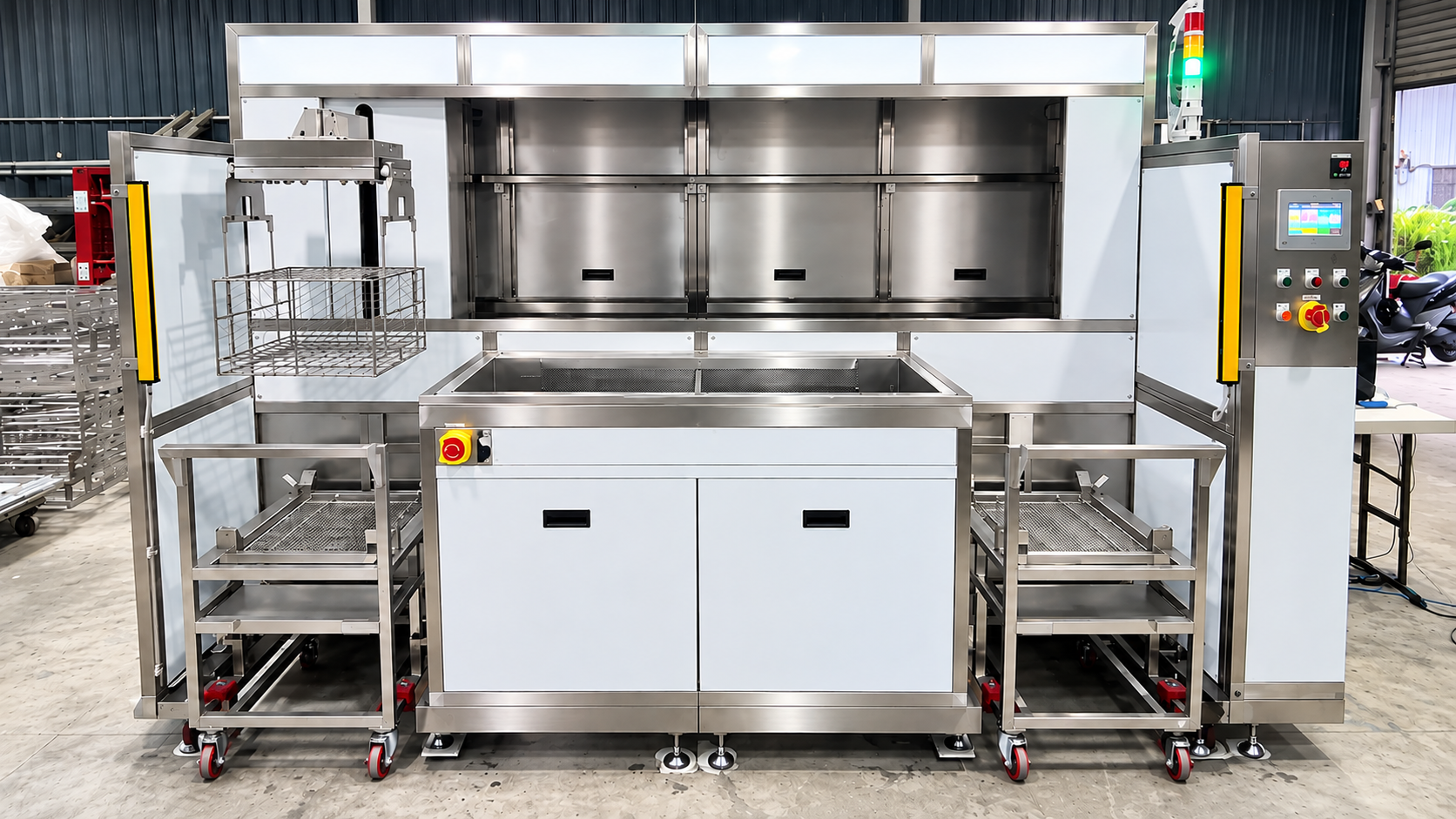
The captions are the machines as built. A fully automatic dual-tank machine of this kind is in service at a chocolate manufacturer, cleaning the moulds the chocolate is formed in — that case is documented below.
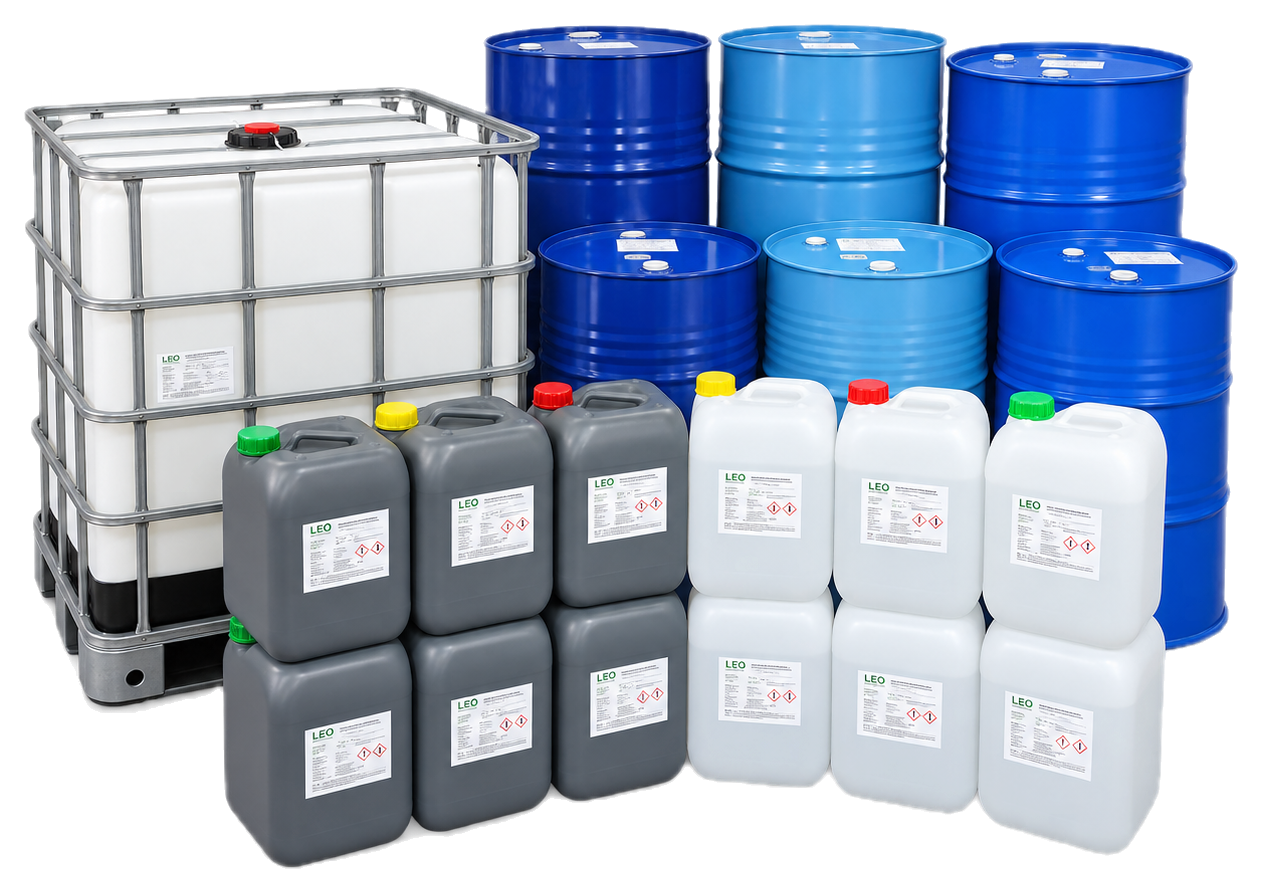
LEO also formulates the cleaning agents that go in the tank — water-based specialty cleaners and degreasers, hydrocarbon solvents and rust preventives — because for baked-on deposit the chemistry and the cavitation have to be specified together.
Workpieces & contamination
Contaminants
- Injection mould cavities and coresCarbonised gas residueDegraded release agentPolymer residue28 / 40 kHz
- Mould vents and cooling channelsGas residueScale and rustSludge28 kHz
- Die-cast toolingSoldering and metal build-upCarbon depositRelease agent28 kHz
- Stamping and progressive diesDrawing compoundMetal finesGalling debris28 / 40 kHz
- Food and confectionery mouldsBaked-on sugar and fatProtein residueRelease agent28 / 40 kHz
- Extrusion dies and tooling insertsPolymer melt residueCarbonAdditive deposit28 / 40 kHz
- Tooling in storageSurface rustOld rust-preventive oilDust40 kHz
Products
Recommended equipment
Case Studies
Proof in the field
Moulds & Dies
Fully Automatic Dual-Tank Ultrasonic Cleaning Equipment - Cleaning Chocolate Molds
Read more
Frequently asked questions
Chemistry. Current passed through a purpose-made electrolyte drives a reaction at the tool surface that decomposes rust and carbon and lifts it away; cavitation then carries the loosened material out of vents and corners. Output is adjustable from 0–15 V and 0–50 A, so the process is set to the tool.
No — that is the point of using it instead of brushing or blasting. The process removes rust, carbon and other contaminants without abrading the surface, which is what makes it suitable for tooling that has to keep its finish through hundreds of maintenance cycles.
The two standard sizes have inner tanks of 320 × 300 × 300 mm at 600 W and 500 × 400 × 300 mm at 1200 W, both with digital timing, heating and adjustable electrolysis; filtration circulation is standard on the larger one. Tooling beyond that is quoted as a custom build.
Request a Quote
Tell us what you need cleaned
Send us the part, the contaminant and your cycle time. Our engineers size the tank, the frequency and the process chain — and reply with a sized specification for your line.