Polymer melt residue
Degraded polymer, oligomer, gel and carbonised melt on spinnerets, spin packs, extruder and hot-runner parts, dies, print nozzles and build plates.
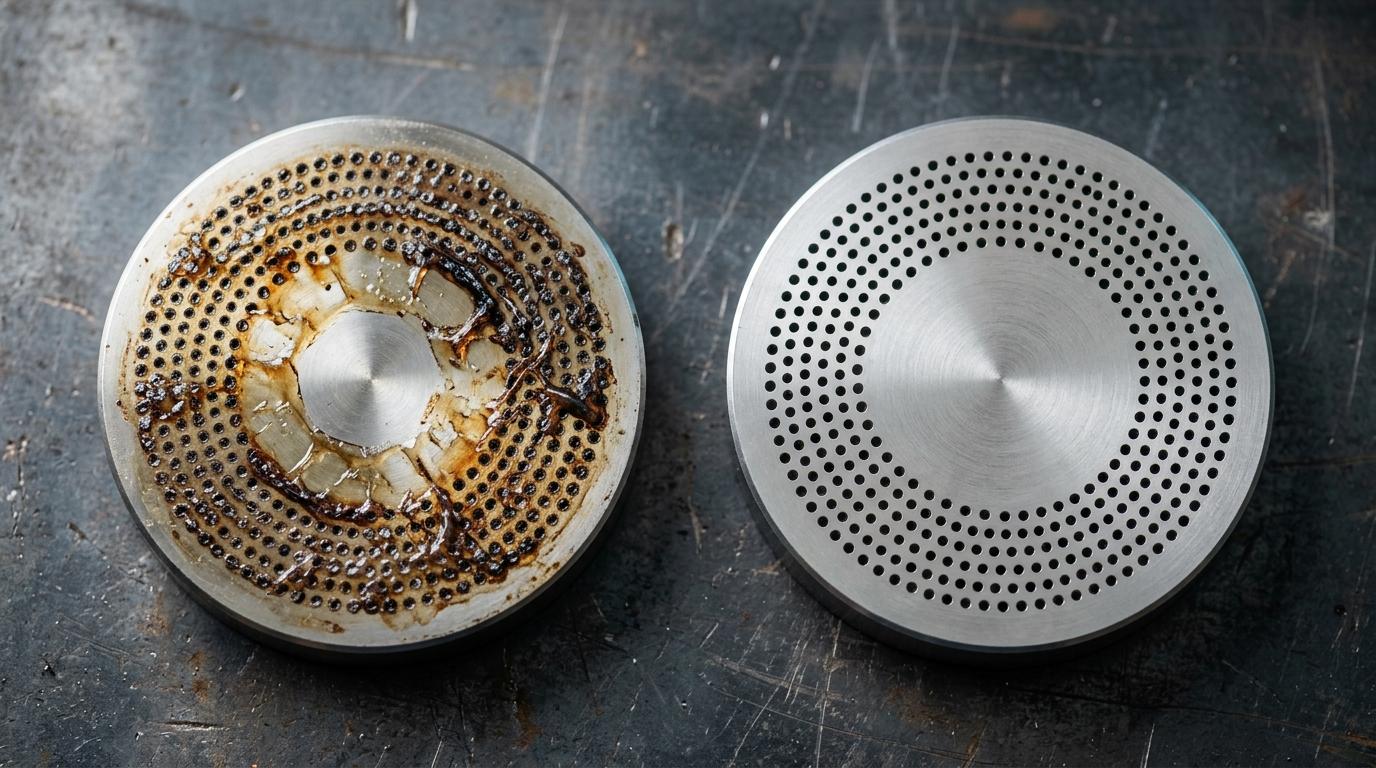
Polymer melt residue is the degraded, carbonised polymer that builds up wherever a melt is held hot — spinnerets, extruder screws, dies, hot runners and print nozzles. It is cross-linked and insoluble. Ultrasonic cleaning at 28 to 40 kHz, usually after a thermal or chemical pre-stage, clears the capillaries.
- Recommended frequency
- 28 / 40 kHz
Any polymer held at melt temperature for longer than the process intended stops being the polymer you put in. Polyester makes cyclic oligomer, polyamide makes gel, polyolefins oxidise and cross-link, and everything eventually carbonises. It happens in the dead zones — the stagnant corner of a spin pack, the root of a screw flight, the shear edge of a hot-runner gate, the wall of a print nozzle — because those are the places where residence time is not controlled by the flow.
What makes it a specialist cleaning problem is the geometry it forms in. A spinneret is a plate of capillaries that may be a fraction of a millimetre across and several diameters deep, sometimes shaped into a trilobal or hollow cross-section whose whole value is the sharpness of the corner. Deposit narrows the hole, changes the corner and unbalances the plate, and the filament count means one blocked capillary is a visible defect down the entire package. Nothing mechanical fits down that hole. Wire cleaning a spinneret capillary changes its dimension permanently, which is the same as scrapping it, and a spinneret is not a cheap part.
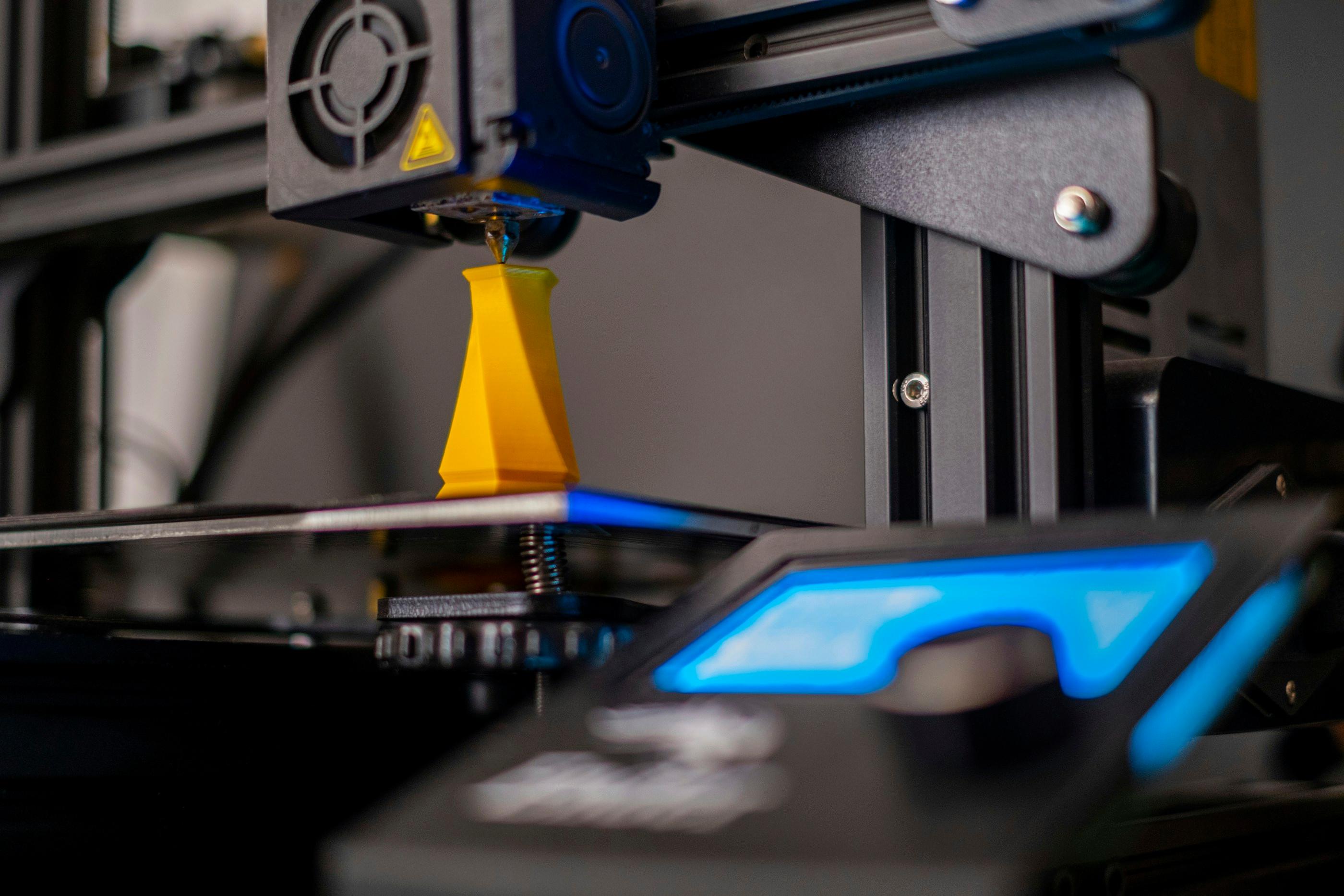
Left in place the deposit does not simply reduce output. In fibre, blocked and partially blocked capillaries give broken filaments, denier variation, dye-uptake streaks and wraps at the winder — faults that are found in the finished fabric rather than at the machine. In moulding, residue in a hot runner gives black specks, streaking and colour carry-over between runs, and a gate that has partly filled changes the fill balance across a multi-cavity tool. In additive manufacturing, carbonised filament in a nozzle causes under-extrusion and inclusions, and cured resin on a build plate destroys first-layer adhesion. In all three, the deposit is also the seed for the next deposit, so build-up accelerates.
Ultrasonic cleaning is the standard method here because it is the only one that delivers mechanical work down a capillary without a tool going into it. The usual sequence is a pre-stage that degrades the bulk polymer — thermal decomposition or a hot chemical soak, depending on the polymer and the plate material — followed by ultrasonic cleaning that removes what the pre-stage loosened and, critically, clears the residue out of every hole rather than leaving it re-deposited further down. 28 to 40 kHz is the working range: enough energy to shift a carbonised film, and applied through liquid, so the capillary wall and the shaped corner are never contacted.
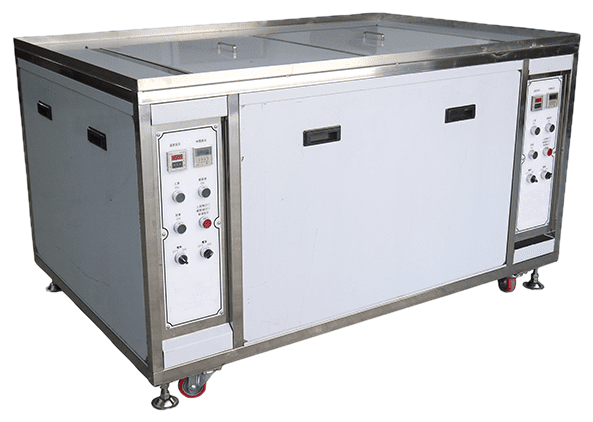
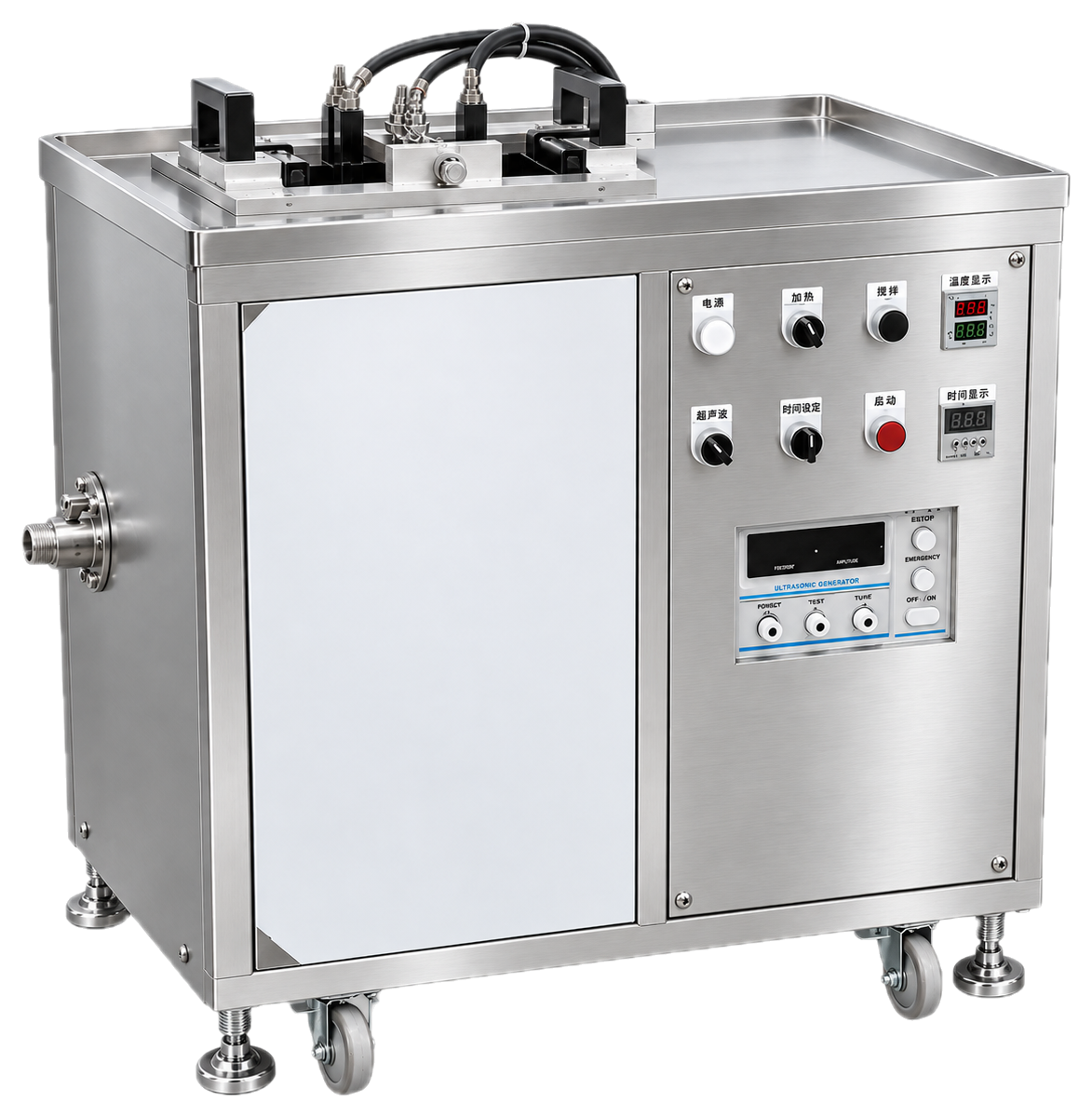
LEO has been supplying this duty for a long time and says so in the equipment’s own scope: both the double-tank industrial series and the automatic-lifting series list cleaning of chemical fibre spinning nozzles among their applications, alongside plate parts before plating and semiconductor wafers. The automatic-lifting configuration matters more here than it looks — spinnerets are cleaned in racks, the cycle is long, and a lift that raises the basket on its own at the end of the cycle is what keeps a long soak from becoming an operator-attendance problem.
Process
The process chain
- Step
Thermal or chemical pre-stage to degrade the bulk
Solid polymer filling a capillary has to be broken down before anything can carry it out. Depending on the polymer and the plate material this is thermal decomposition or a hot chemical soak. It converts a plug into a friable residue; it does not, on its own, empty the hole.
- Step
Ultrasonic wash at 28–40 kHz
Cavitation inside the capillary removes the friable residue the pre-stage produced and clears the shaped corners of a trilobal or hollow-section hole. This is the only stage that reaches the full depth of the bore, and it does it with no tool contacting the wall.
- Step
Rinse and back-flush the capillaries
Debris driven part-way down a blind capillary is worse than debris left at the entrance. The rinse stage flows through the plate rather than over it, so material leaves by the shortest route instead of being pushed deeper by the next cycle.
- Step
Inspect flow, not appearance
A spinneret that looks clean can still be unbalanced. Acceptance is a flow or pressure-drop check across the plate — the same measurement the spinning process itself will make, and the only one that finds a capillary that is 80 percent clear.
- Step
Dry fully before reassembly
Water left in a capillary flashes to steam when the pack goes back to melt temperature, which blows the first filaments and can damage the plate. Heated circulating air held long enough to dry the bore through is the last step before the pack is rebuilt.


Industries
Industries this serves

Frequently asked questions
Rarely, and it is not the right expectation. A capillary blocked with solid polymer needs the polymer degraded first — thermally or chemically — because cavitation removes loosened material, it does not dissolve a plug. The ultrasonic stage is what turns a degraded plug into an empty hole, and it is the stage that cannot be replaced, because it is the only one that applies mechanical work at the bottom of the bore without a wire going in there.
Ultrasonic cleaning applies its energy through the liquid, so nothing solid touches the bore or the shaped corner. The dimension-changing methods are the mechanical ones — wire, needle, drill — and a spinneret that has been wire-cleaned is a spinneret with a different hole. What does need attention is time and power: any process run far longer than it needs is a different question, and cycle parameters are set to the plate material rather than copied between jobs.
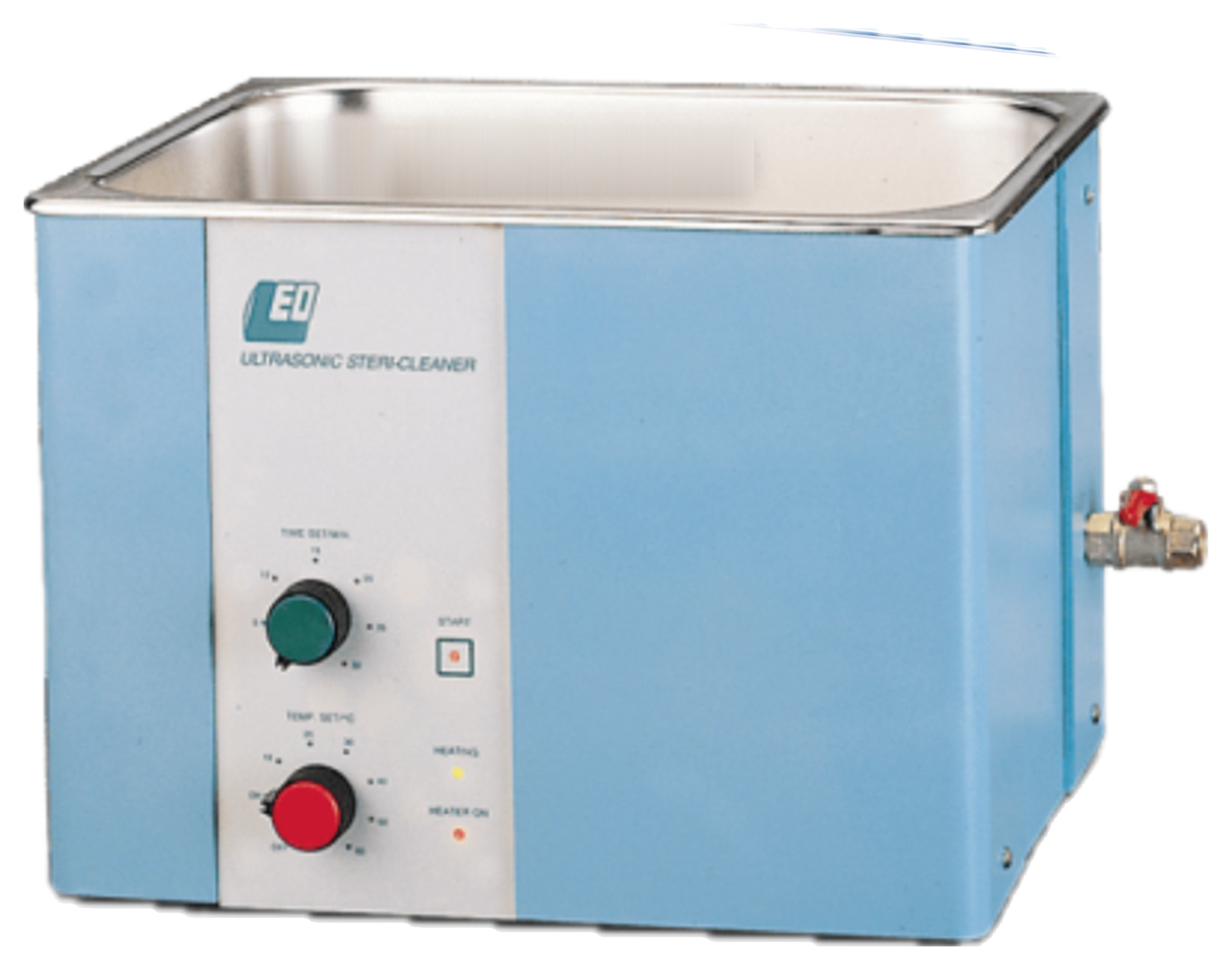
The principle transfers: degrade the polymer, then use cavitation to clear the bore. The chemistry and the temperature change with the material, and the scale changes a great deal — a hot-runner manifold is a heavy assembly for an industrial tank, while print nozzles and build plates are handled in a benchtop unit. What stays the same is that the residue is inside a hole, which is the condition that rules out every method except this one.
Request a Quote
Tell us what you need cleaned
Send us the part, the contaminant and your cycle time. Our engineers size the tank, the frequency and the process chain — and reply with a sized specification for your line.