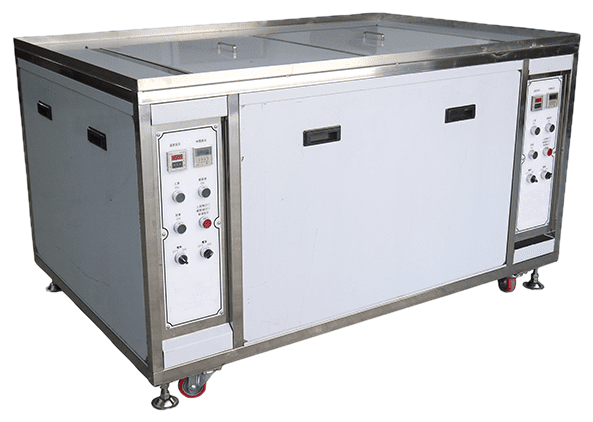
Textile & Chemical Fibre
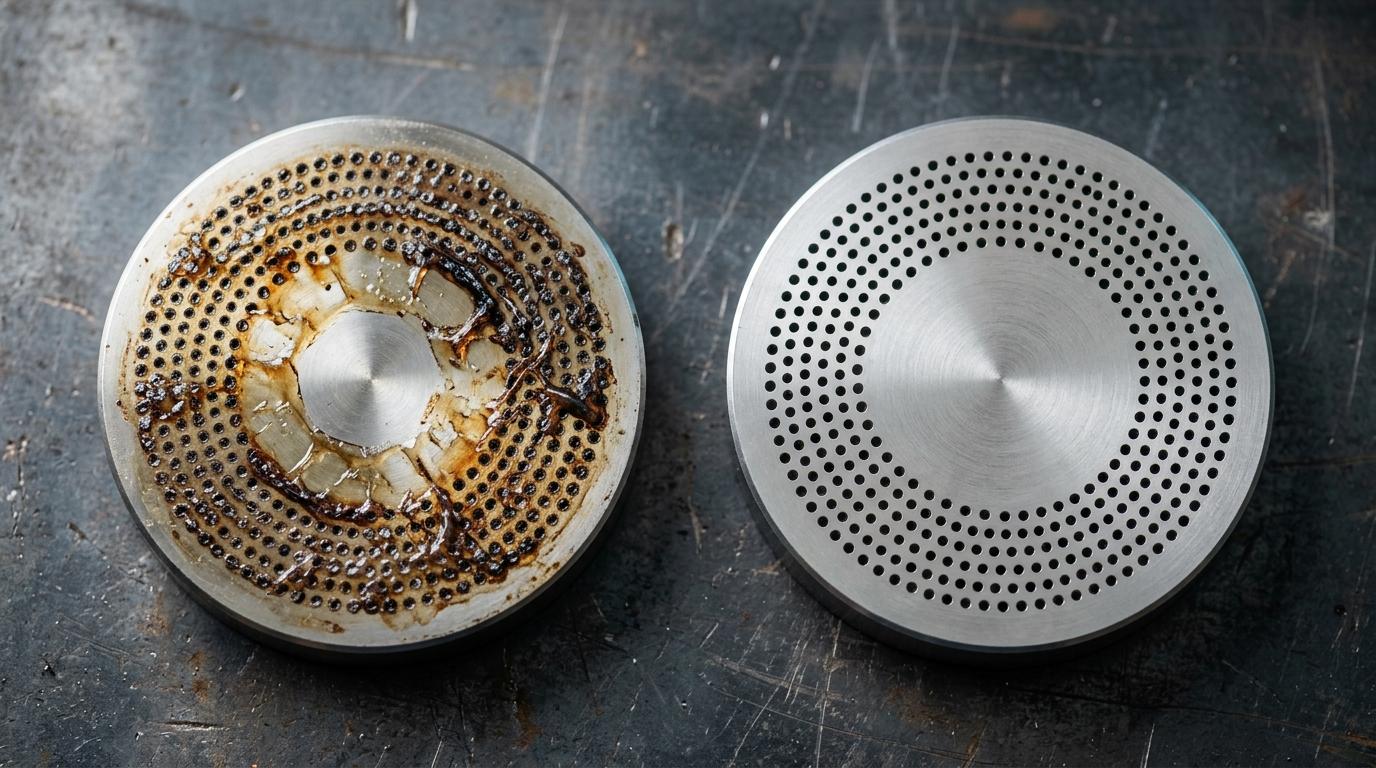
Ultrasonic and high-pressure spray cleaning for spinnerets, candle filters, spin packs and textile machine parts — clearing polymer residue from holes as fine as 50 microns.

LEO builds ultrasonic and high-pressure spray cleaning equipment for textile and chemical fibre production: spinnerets, stainless filter rods and candle filters, spin packs, godet rollers, spindles and loom parts. The soil is polymer melt, carbonised oligomer and spin finish, lodged deep in fine holes and screens, which ultrasonic and high-pressure spray cleaning reach directly.
Chemical fibre production runs polymer melt through holes that are tens of microns across, and through filter media finer than that. When a spinneret or a filter starts to drift out of spec, the cause is almost always residue — degraded polymer, carbonised oligomer, gel particles — narrowing the flow path. It cannot be brushed out, and a hole that is cleaned unevenly is worse than one that is dirty, because the filament it produces is out of tolerance rather than obviously absent.
Ultrasonic and high pressure do different jobs
Ultrasonic cavitation works everywhere the liquid reaches, which is what makes it right for a screen pack or the inside of a filter rod. High-pressure spray works where it is aimed, which is what makes it right for a bore you can address directly. LEO has built machines of both kinds for this sector, and the two are frequently specified together: ultrasonic to break the residue’s grip on the surface, directed spray to flush it out of the channel.
Where the residue has carbonised rather than merely set, a thermal or vacuum pre-stage comes first. Ultrasonic cleaning removes what a solvent or a hot bath has already loosened; it does not pyrolyse polymer on its own, and specifying it as though it does is how a spinneret line ends up under-cleaning.
The process chain
A spinneret or filter cleaning cycle usually runs:
- Thermal or vacuum pre-stage to break down carbonised polymer
- Ultrasonic wash in a heated bath at 28–40 kHz to lift the loosened residue
- High-pressure directed spray through the holes or the filter core
- Rinse, then hot-air drying before the part goes back to the spin head
Filter rods and screen packs are usually cleaned as a set, on a fixed interval, rather than individually when a fault appears — the cost of a stopped spin line is the reason the cleaning equipment exists.
Machines LEO has built for this sector
Both of these were designed around one customer’s part and cleaning interval. The captions are the machines as built.
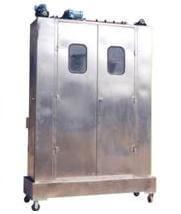
High-pressure spray washing machine for stainless steel filter rods 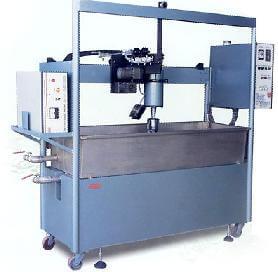
Focused ultrasonic cleaning machine for filter rods
The focused design concentrates the ultrasonic field on the filter rod itself instead of spreading it across the whole bath, which is what makes a long, narrow part worth cleaning in a tank at all.
Workpieces & contamination
Contaminants
- Spinnerets and spinneret platesPolymer melt residueCarbonised oligomerSpin finish28 / 40 kHz
- Stainless filter rods and candle filtersPolymer residueGel particlesOligomer28 / 40 kHz
- Spin packs and filter screensPolymer meltMetal finesSand and filter media28 / 40 kHz
- Godet rollers and yarn guidesSpin finish build-upPolymer depositFibre lint40 kHz
- Textile spindles and bobbin holdersSpin finish oilFibre lintWax and sizing40 kHz
- Dye jets and nozzlesDye and pigment residueThickenerMineral scale40 kHz
- Loom and knitting machine partsLintLubricating oilSizing residue28 / 40 kHz
Products
Recommended equipment
Contaminants
Cleaning applications
Frequently asked questions
Only if the residue is set rather than carbonised. Ultrasonic cavitation removes what heat, solvent or an alkaline bath has already loosened; it does not break polymer down chemically. A thermal or vacuum pre-stage normally comes first, with ultrasonic and directed high-pressure spray after it.
Because a filter rod is long and narrow, and in an ordinary bath most of the ultrasonic energy goes into the water around it. Focusing the field on the rod concentrates cavitation where the residue actually is, which is why LEO built a dedicated focused machine for this part.
On a fixed interval set by the polymer and the throughput, not when a fault appears. By the time a blockage is visible in the filament, the spin line has already produced off-spec yarn — which is the economics that justifies dedicated cleaning equipment in the first place.
Request a Quote
Tell us what you need cleaned
Send us the part, the contaminant and your cycle time. Our engineers size the tank, the frequency and the process chain — and reply with a sized specification for your line.