Food Processing & Commercial Kitchens
Ultrasonic dishwashers, produce washers and mould cleaning for commercial kitchens and food plants — cavitation reaches every surface evenly, lifting grease, baked-on residue and grit.

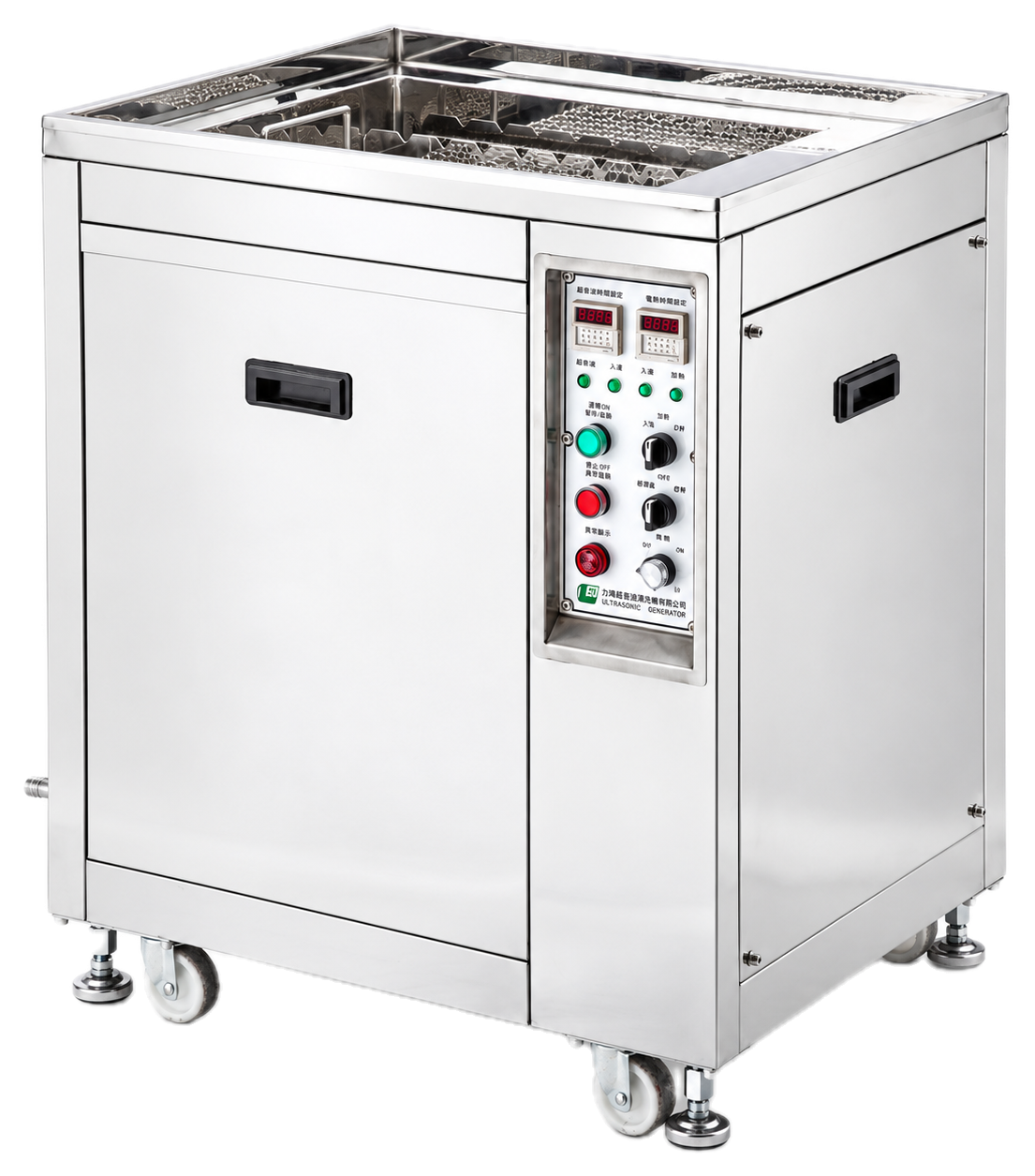
LEO builds ultrasonic cleaning equipment for foodservice and food processing: commercial dishwashers for crockery, pots and utensils, fruit and vegetable washers, and cleaning machines for baking tins and confectionery moulds. Cavitation lifts grease, baked-on sugar and protein, and grit from surfaces and crevices that manual scrubbing reaches unevenly.
Kitchen and food-plant cleaning has the same problem as every other sector on this site, just at a different scale: the soil is in the places a brush reaches last and least. The seam where a pan handle is welded, the corrugations of a baking tin, the underside of a whisk, the leaf joint of a head of celery. Ultrasonic cleaning does not care about geometry — the cavitation is carried by the water, so it arrives everywhere the water does.
What has to come off
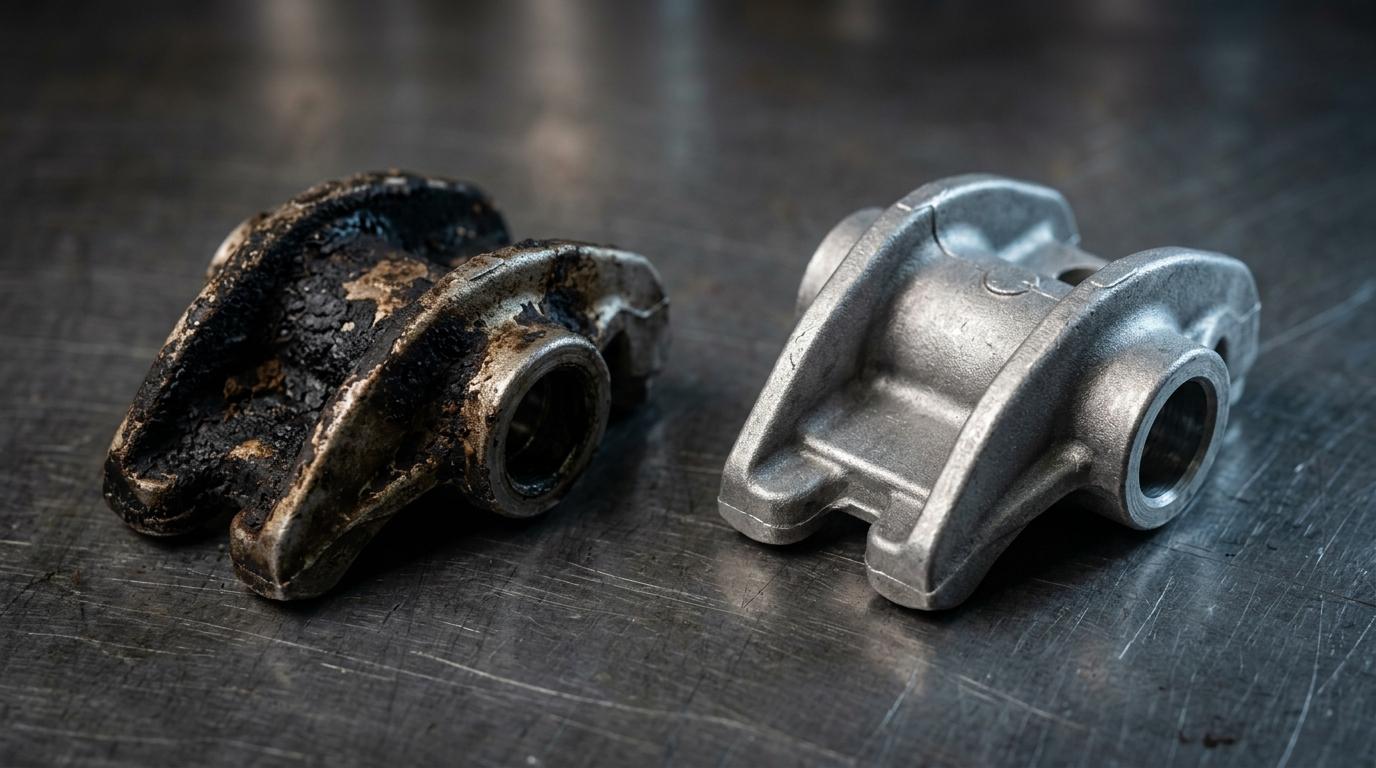
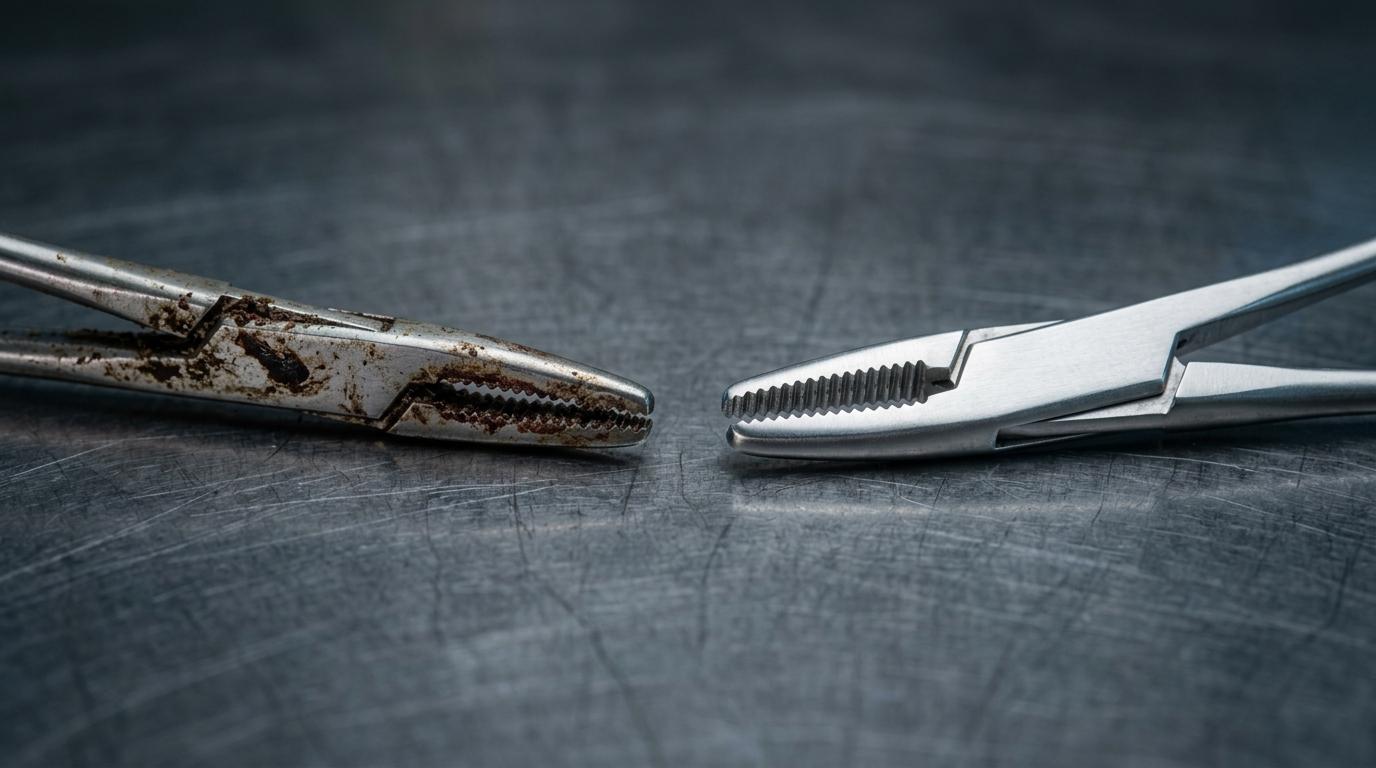
Cooked-on fat and carbon on trays and pans, baked sugar and egg on confectionery and baking moulds, protein and starch films on utensils, and — on produce — grit, insects and surface residues. On the equipment side the risk is bacterial: a grease film is where the biofilm lives, so a surface that looks clean and feels slightly tacky is the actual hygiene problem.
LEO’s published SGS test of the commercial ultrasonic dishwasher reports that neither grease residue nor E. coli was detected on tableware after cleaning.
Two very different machines
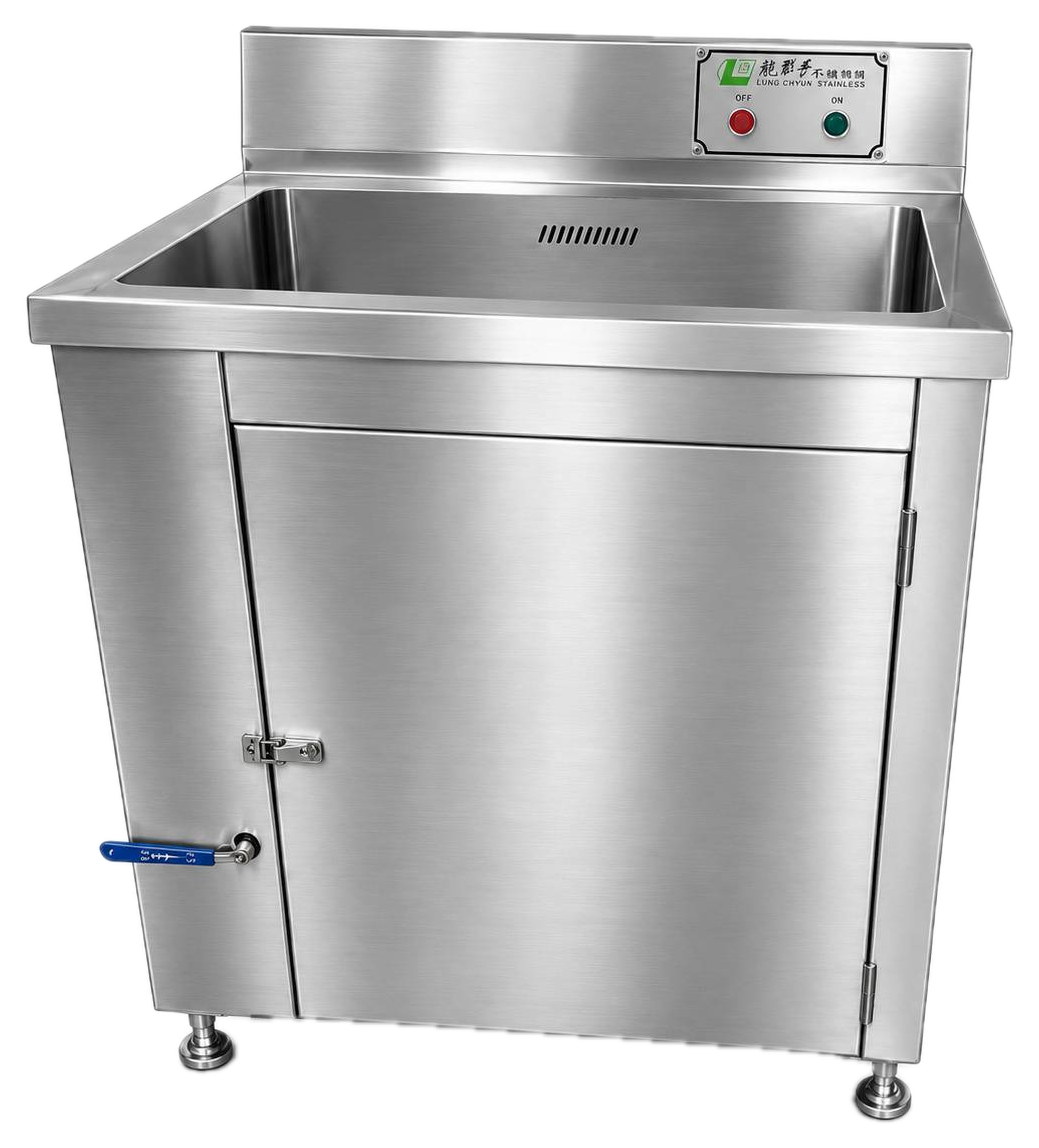
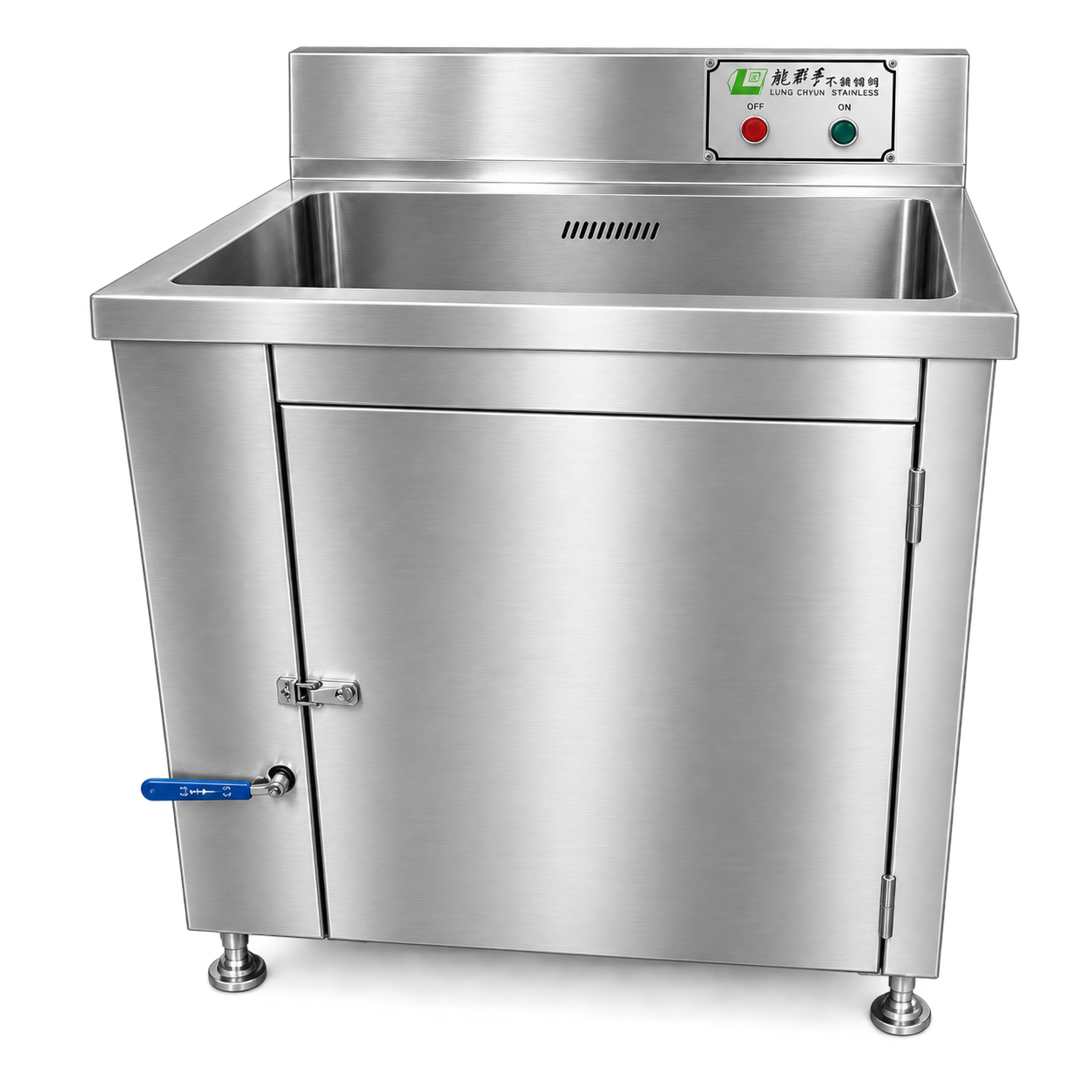
The commercial dishwasher is a stainless sink that replaces the one already in the kitchen. Crockery does not have to be arranged, there is no manual scrubbing, and pots, bowls, ladles and pans go in alongside the plates. It runs on ordinary detergent rather than a proprietary chemical, which is what keeps the running cost close to a sink and well under a conveyor machine.
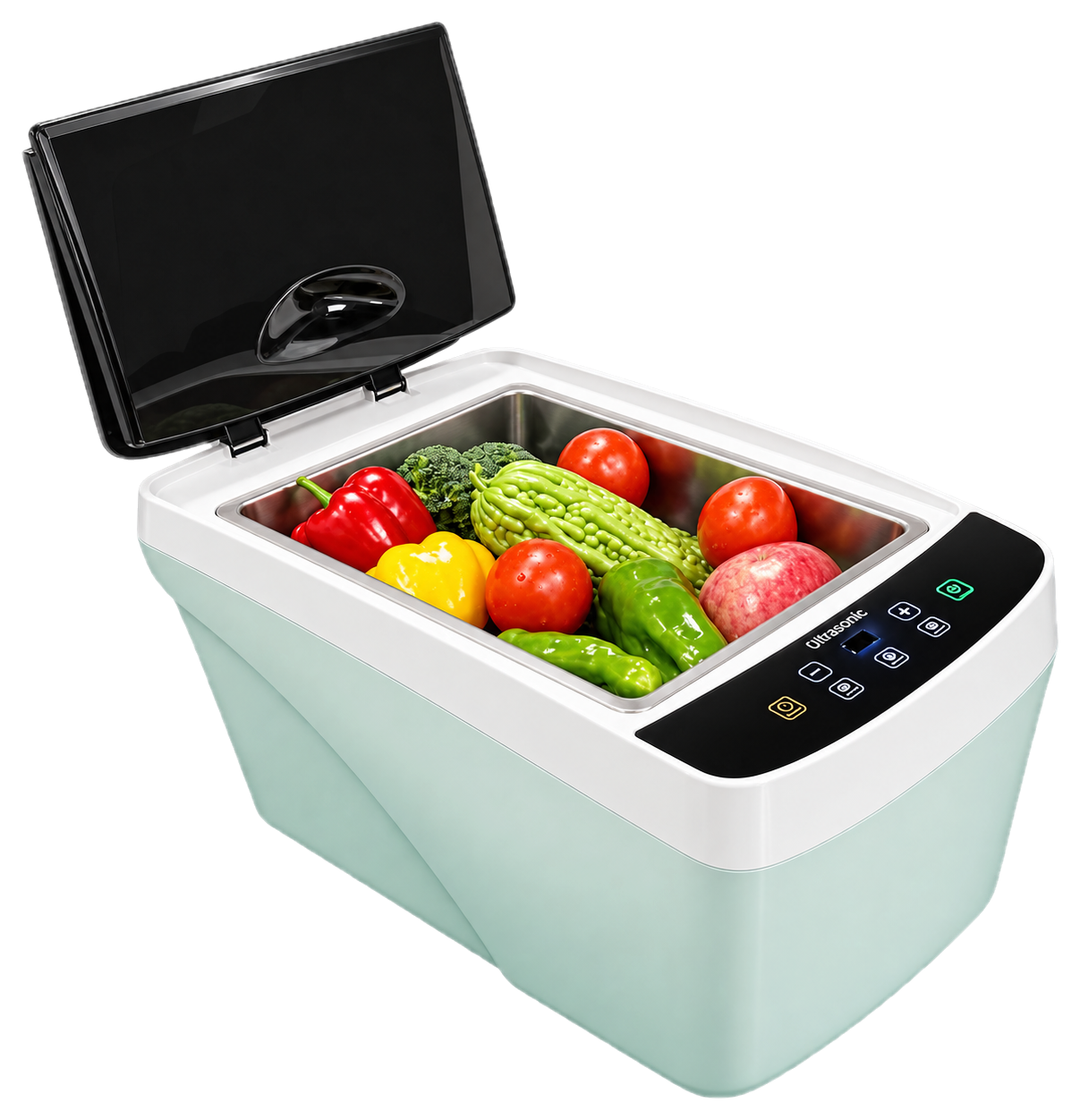
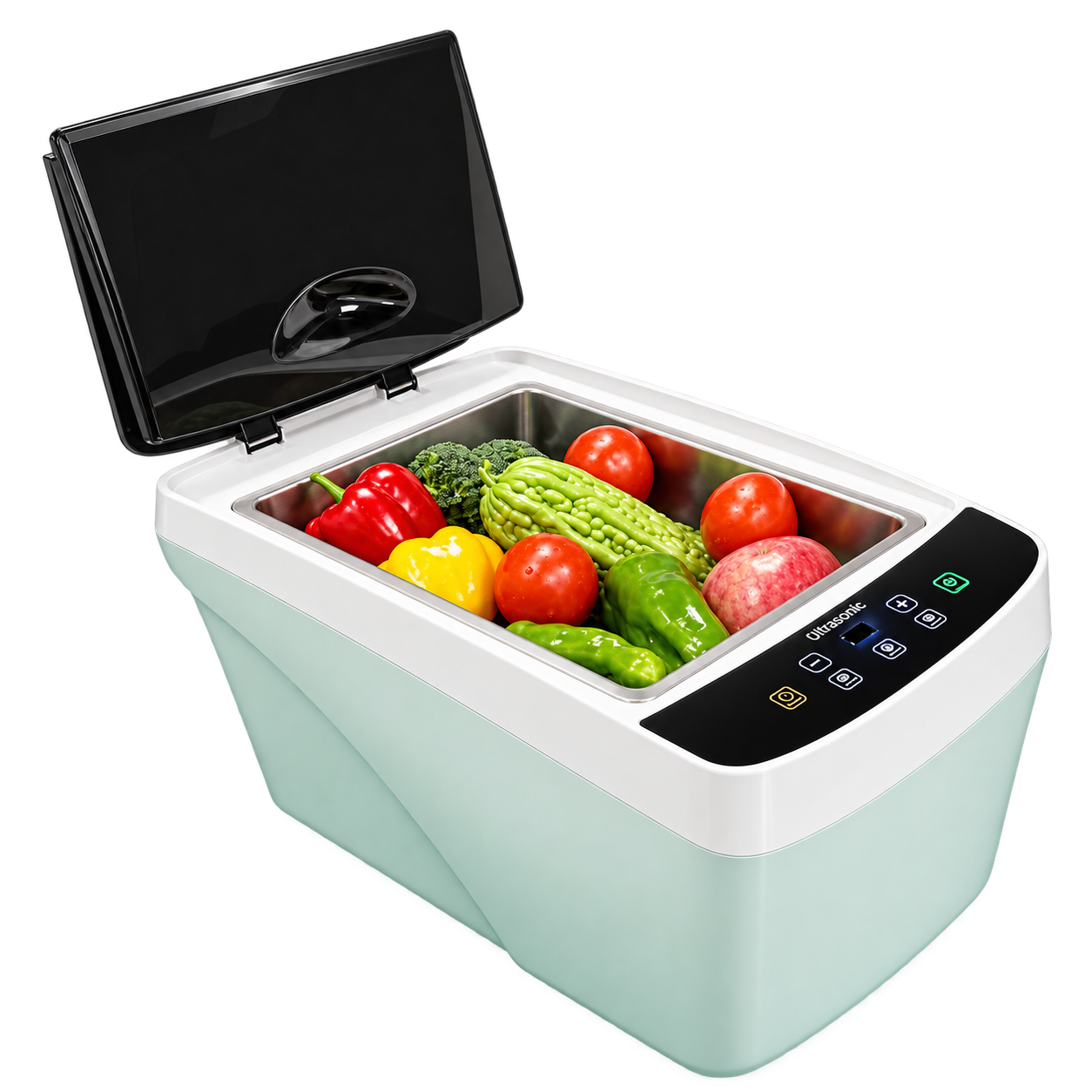
The produce washer is a different job with the same physics. Ultrasonic oscillation shakes grit, insects and eggs out of leaf and stem structures, and with the right washing sequence it measurably reduces surface pesticide residue. LEO builds it in a domestic countertop size and in a commercial version for restaurants, produce wholesalers and hot-pot kitchens.
The process chain
A commercial kitchen cycle is short and repeats all day:
- Scrape and pre-rinse to keep bulk food solids out of the tank
- Ultrasonic wash at 28–40 kHz in heated water with ordinary detergent
- Overflow or spray rinse — the machines take automatic water inlet, drain and overflow
- Drain and air-dry, or straight back into service
Bakery and confectionery moulds are the other half of this industry’s work, and LEO’s cake-mould and chocolate-mould machines are documented as cases below.
Workpieces & contamination
Contaminants
- Crockery, bowls and tablewareGrease filmStarch and protein residueLipstick and handling marks28 / 40 kHz
- Pots, pans and stockpotsCooked-on fatCarbonSauce residue28 kHz
- Utensils, ladles and whisksGreaseDough and batter residueBiofilm40 kHz
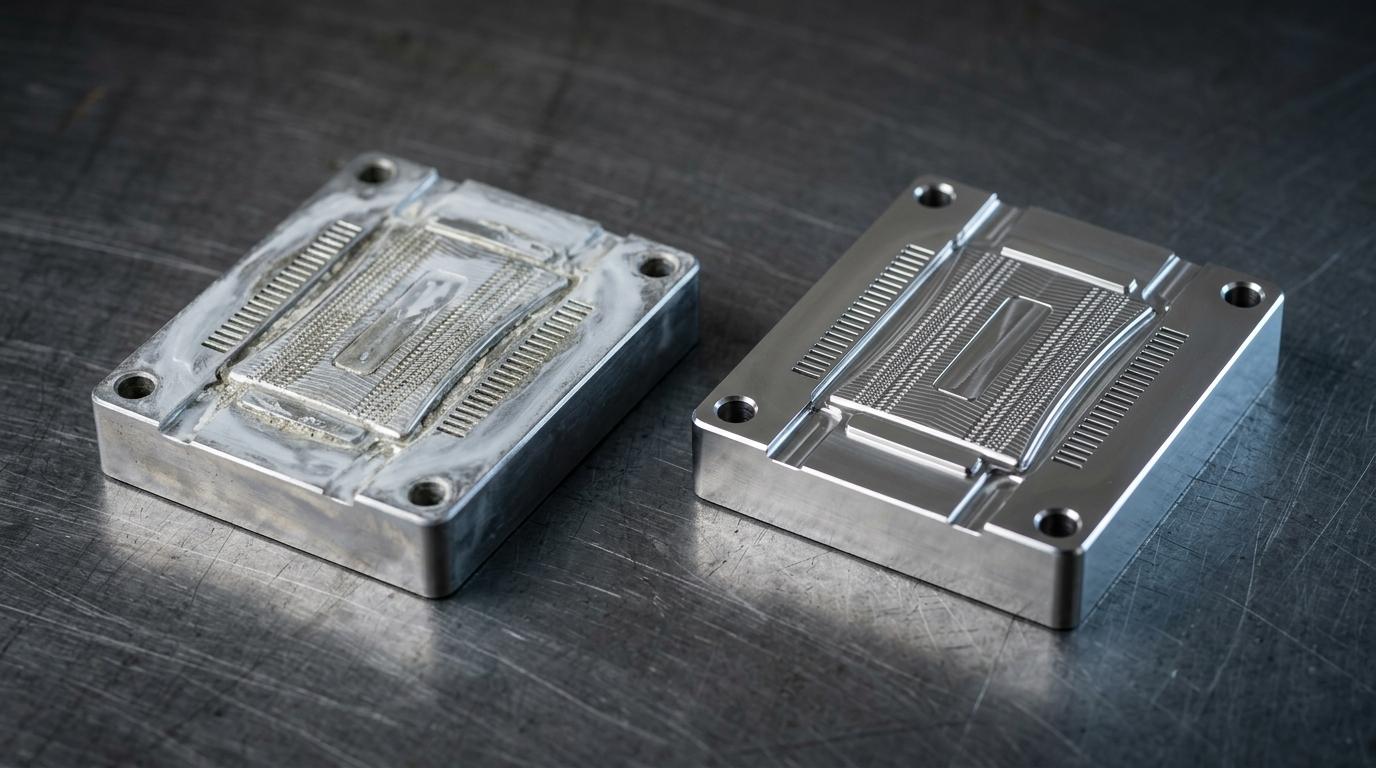
- Baking tins and cake mouldsBaked-on sugarFat and release agentEgg and protein residue28 / 40 kHz
- Confectionery and chocolate mouldsCocoa butter filmSugar depositRelease agent28 / 40 kHz
- Fruit and vegetablesGrit and soilInsects and eggsSurface pesticide residue40 kHz
- Food plant tooling and small partsFat and protein build-upCleaning-chemical residueScale40 kHz
Products
Recommended equipment
Contaminants
Cleaning applications
Case Studies
Proof in the field
Food Processing & Commercial Kitchens
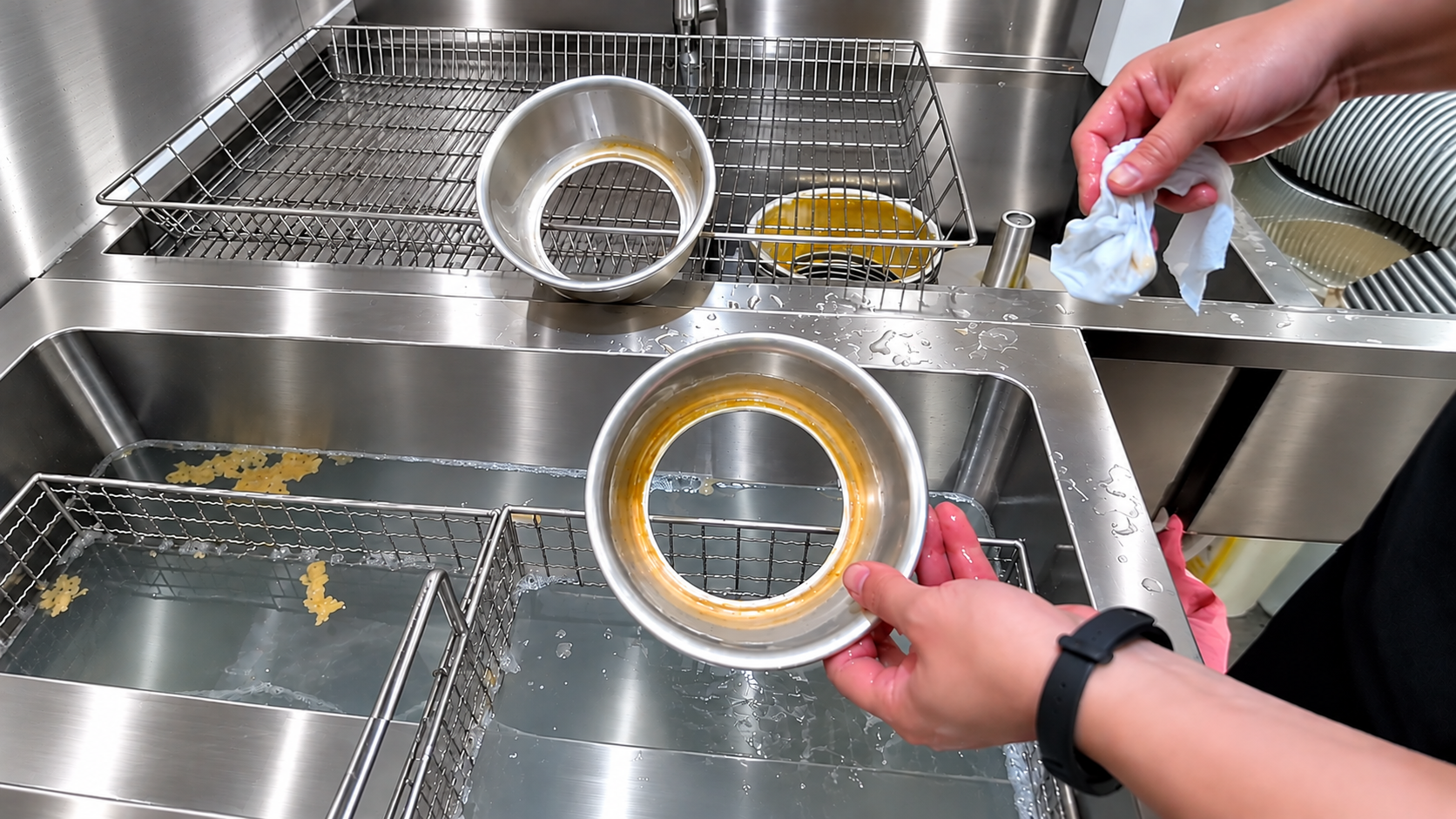
Commercial Ultrasonic Dishwasher - Cleaning Cake Molds for the Baking Industry
Read more
Food Processing & Commercial Kitchens
Ultrasonic Fruit and Vegetable Cleaning Machine KVC300
Read more
Food Processing & Commercial Kitchens
Commercial Ultrasonic Dishwasher Guide: A Smarter Cleaning Solution for Modern Foodservice Operations
Read more
Frequently asked questions
No. Ordinary washing-up detergent works, which is deliberate: it keeps the running cost close to a conventional sink and removes the dependency on a proprietary consumable. Hot water and cavitation do the work that a specialist chemical would otherwise have to.
The commercial ultrasonic dishwasher is built as a multi-purpose sink and takes crockery, pots, bowls, ladles, pans and produce. For produce as the main job — volume washing in a restaurant or for a wholesaler — LEO builds a dedicated fruit and vegetable washer with its own washing sequence.
It removes baked-on sugar and fat without scrubbing or scraping. That matters because damage from scraping is cumulative: a scratched or pitted tin holds residue more stubbornly on every subsequent bake, so the manual method makes the problem it is solving worse over time.
Request a Quote
Tell us what you need cleaned
Send us the part, the contaminant and your cycle time. Our engineers size the tank, the frequency and the process chain — and reply with a sized specification for your line.