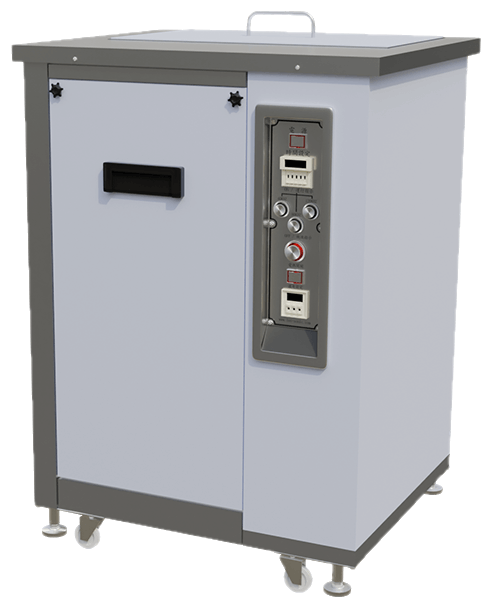
Solar & Semiconductor
Ultrasonic cleaning and centrifugal drying for silicon wafers, solar panels, quartz carriers and chamber hardware — 40, 80 and 120 kHz in one tank where the process needs all three.
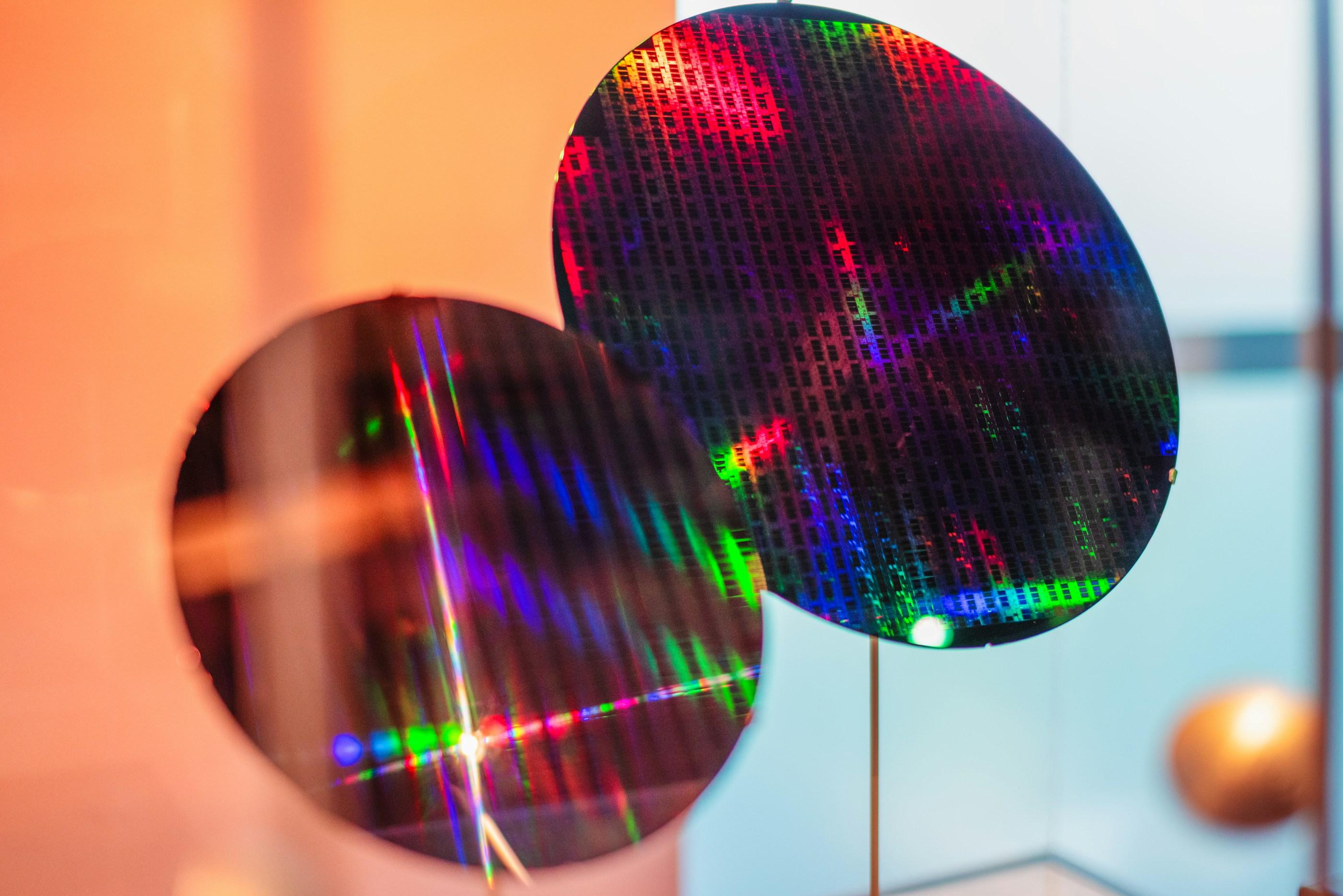
LEO builds ultrasonic cleaning and drying equipment for solar and semiconductor production: silicon wafers, PV panels and cover glass, quartz boats and carriers, lead frames and chamber hardware. High-frequency cavitation at 80–120 kHz removes slurry residue, silicon fines and sub-micron particulate while preserving polished surfaces, followed by centrifugal or hot-air drying.
Cleaning in this sector is a particle problem, not a grease problem. What has to come off a wafer or a piece of cover glass is measured in microns and below: slurry left by lapping and dicing, silicon and glass fines, colloidal silica from polishing, and the airborne particulate that settles on anything handled between steps. None of it is heavy, and all of it is where the next process step will fail.
Why frequency is the whole decision here
Cavitation bubbles get smaller and denser as frequency rises, and their collapse gets gentler. At 28 kHz the bubbles are large and energetic — good for scale on a chamber part, wrong for a polished wafer, where the same energy erodes the surface it is meant to clean. At 80 and 120 kHz the bubbles are small enough to work inside the boundary layer and lift sub-micron particulate off a mirror finish without touching it.
That is why LEO’s single-tank machines for this sector are built dual- and triple-frequency: 28/40, 40/80 and 40/120 kHz as a pair, or 40/80/120 kHz in one tank, so a line can run a coarse stage and a fine stage without moving the part to a second machine.
The process chain
A wafer or panel line normally runs:
- Pre-rinse to flood off bulk slurry before it dries onto the surface
- Ultrasonic wash — 40 kHz for glass and carriers, 80 or 120 kHz for polished wafers
- Ultrasonic rinse, then a DI cascade so the last water the part sees is the cleanest
- Centrifugal spin drying or hot-air circulation, with no wiping at any stage
Drying matters as much as washing. Water allowed to evaporate off a wafer leaves every dissolved solid it was carrying behind as a watermark, so the part is spun or blown dry rather than left to air-dry.
Machines LEO has built for this sector
Each of these was designed around one customer’s part and process. The captions are the machines as built.
Thirteen-tank ultrasonic cleaning machine for solar panels 
Fully automatic ultrasonic cleaning machine for semiconductor wafers 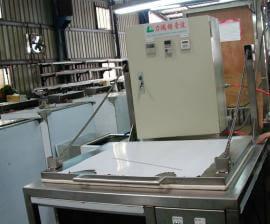
Wafer centrifugal dryer
The wafer centrifugal dryer is a made-to-order machine: adjustable fixtures take 6-inch and 8-inch wafers, and hot-air circulation runs alongside a high-speed, adjustable centrifugal spin. Other wafer sizes are arranged on request.
Workpieces & contamination
Contaminants
- Silicon wafers (6" / 8")Lapping and dicing slurrySilicon finesHandling particulate80 / 120 kHz
- Solar cells and PV cover glassCutting slurryGlass finesHandling grease40 kHz
- Quartz boats, carriers and jigsProcess residueMetal contaminationParticulate40 / 80 kHz
- Chamber parts and process hardwareProcess depositsParticulateHandling oil28 / 40 kHz
- Lead frames and package substratesStamping oilFlux residueMetal fines40 / 80 kHz
- Sapphire and compound substratesColloidal silica polishing slurryCMP residueSub-micron particulate120 kHz
- Wafer cassettes and transport fixturesStatic-attracted dustDetergent filmAbrasion particles40 kHz
Products
Recommended equipment
Contaminants
Cleaning applications
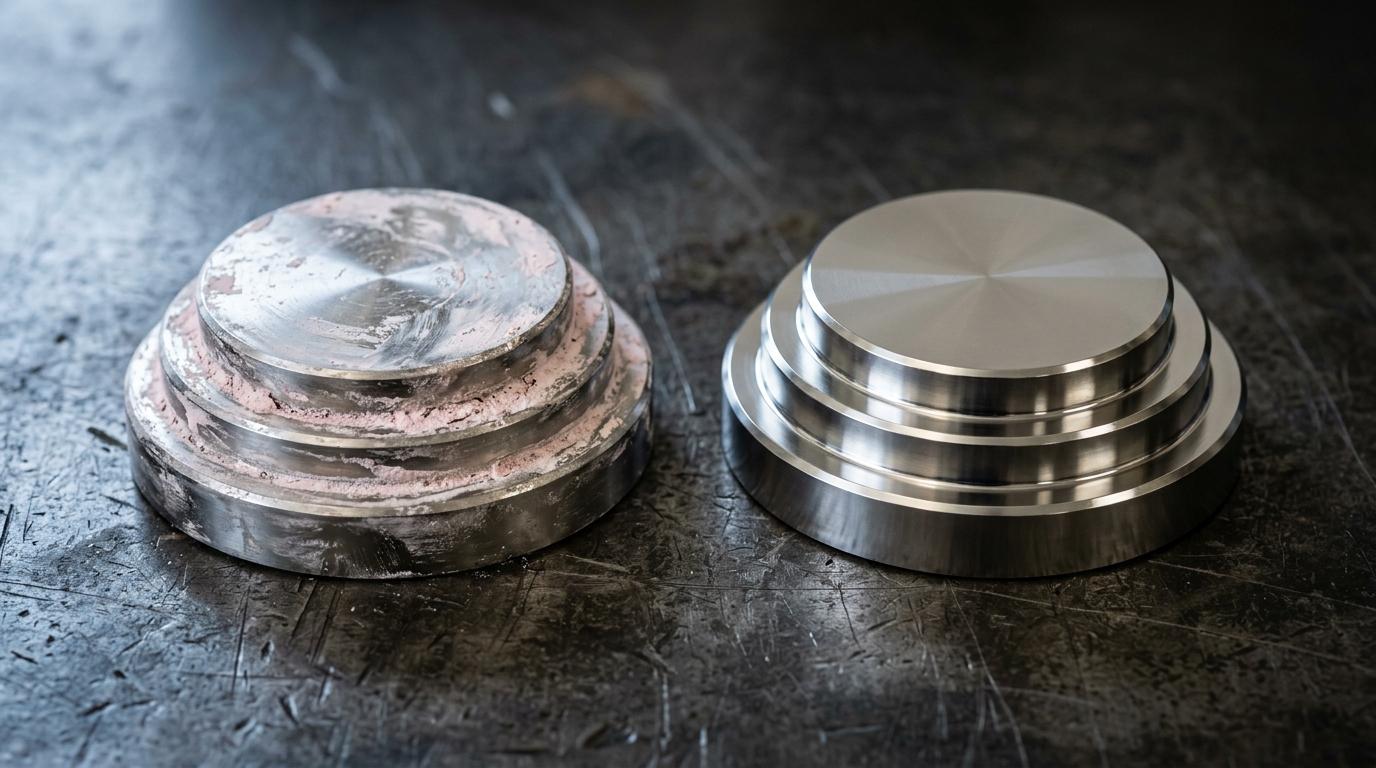
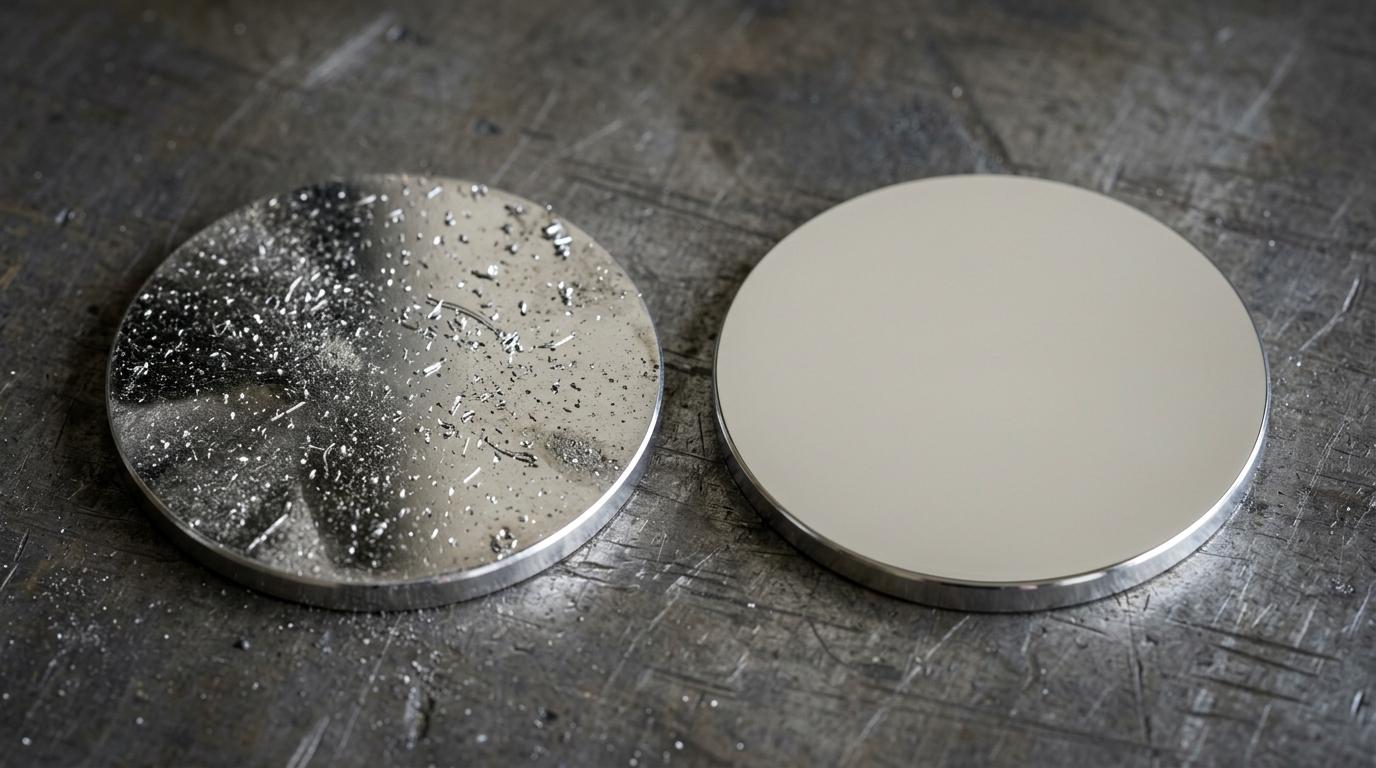
Case Studies
Proof in the field
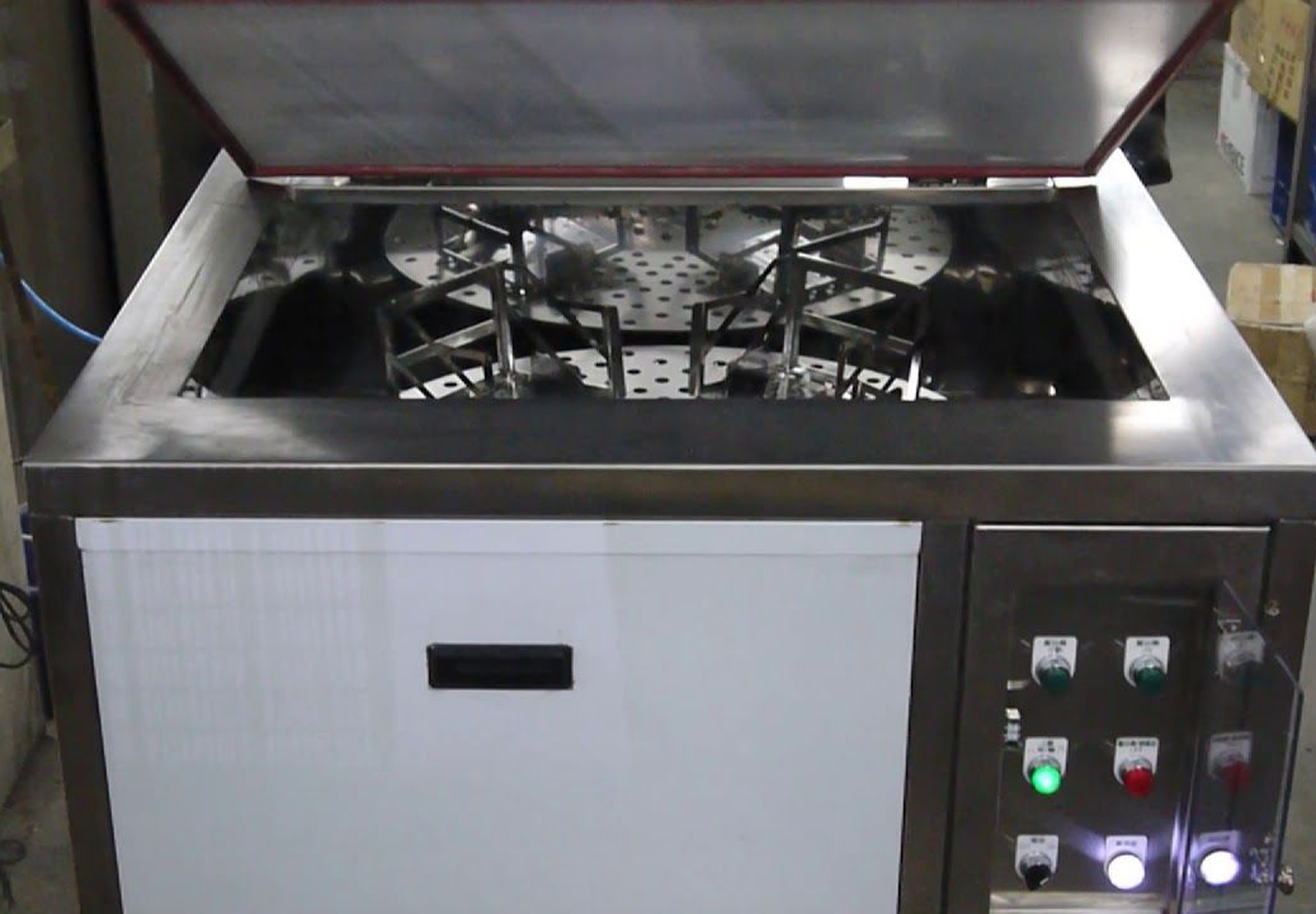
Frequently asked questions
80 to 120 kHz. Higher frequencies produce smaller, denser cavitation bubbles whose collapse is gentle enough to lift sub-micron particulate out of the boundary layer without eroding a polished surface. 28 kHz belongs on chamber hardware, never on a finished wafer.
Because water that evaporates in place leaves everything it was carrying behind as a watermark, undoing the rinse. Wafers are spun dry or dried in circulating hot air immediately after the final DI rinse — LEO’s wafer centrifugal dryer combines both, with adjustable speed and adjustable fixtures.
Yes, if it is a multi-frequency tank. LEO builds single-tank machines in dual frequency (28/40, 40/80, 40/120 kHz) and triple frequency (40/80/120 kHz), so a coarse stage and a fine stage can run in sequence in the same bath rather than across two machines.
Request a Quote
Tell us what you need cleaned
Send us the part, the contaminant and your cycle time. Our engineers size the tank, the frequency and the process chain — and reply with a sized specification for your line.