

Commercial Ultrasonic Dishwasher Guide: A Smarter Cleaning Solution for Modern Foodservice Operations
In today’s foodservice industry, restaurant owners, kitchen managers, and purchasing teams face the same challenge: how to improve cleaning efficiency while controlling labor costs, utility expenses, and food safety risk. Traditional dishwashing methods may still work for basic applications, but they often struggle with heavy grease, irregular utensils, deep containers, and the growing need for more consistent sanitation.
At LEO Ultrasonic, we see this shift clearly. Buyers are no longer just looking for a basic commercial dishwasher machine. They want a cleaning system that improves workflow, reduces manual labor, and supports long-term operational efficiency. That is where an ultrasonic dishwasher offers a practical advantage.
What Is an Ultrasonic Dishwasher?
An ultrasonic dishwasher uses high-frequency sound waves, typically 28 kHz or 40 kHz, to create microscopic bubbles in water. When these bubbles collapse, they generate cavitation energy that removes grease, protein buildup, and fine residue from submerged surfaces.
Unlike spray-type dishwashers that rely on fixed water jets, an ultrasonic dishwasher sink cleans through immersion. This allows cleaning energy to reach corners, crevices, uneven surfaces, and complex shapes more effectively. For commercial kitchens handling mixed tableware, cookware, and stainless trays, this can significantly improve cleaning consistency.
Why More Buyers Are Reassessing Traditional Dishwashing Systems
Traditional machines are often designed for standard plates and predictable loading. In real kitchens, however, operators deal with bowls, baskets, pots, utensils, hot pot liners, baking tools, and heavily soiled items every day. This creates several common problems:
- Blind spots caused by item placement
- High detergent usage
- Large hot-water demand
- Extra labor for soaking and scrubbing
- Inconsistent results during peak hours
For many businesses, dishwashing is no longer just a utility process. It affects labor allocation, turnaround speed, hygiene standards, and total operating cost.
5 Key Advantages of a Commercial Ultrasonic Dishwasher Machine
1. Better Cleaning for Irregular Items
An ultrasonic sink dishwasher is especially effective for items with corners, seams, curves, and hard-to-reach areas. This makes it ideal for ramen bowls, hot pot liners, cutlery, trays, baskets, and cookware that traditional spray systems may not clean thoroughly.
2. Reduced Manual Scrubbing
Because ultrasonic cavitation helps loosen stubborn residue, staff often spend less time on repetitive hand scrubbing. This is especially valuable in kitchens facing labor shortages or high employee turnover.
3. Lower Detergent and Utility Consumption
Compared with conventional systems, an ultrasonic dishwasher often uses less detergent and can work effectively at lower temperatures. This supports both cost control and more sustainable kitchen operations.
4. Multi-Purpose Cleaning Flexibility
Many buyers value the fact that an ultrasonic dishwasher sink can often be used not only for tableware, but also for stainless steel trays, produce, seafood, and other washable kitchen items.
5. Durable Stainless Steel Construction
A well-built stainless steel dishwasher made with SUS 304 or SUS 316 offers better durability, corrosion resistance, and long-term reliability in demanding commercial environments.
Traditional Spray Dishwasher vs. Ultrasonic Dishwasher Sink
When comparing cleaning systems, buyers should look beyond upfront purchase cost and focus on daily operational value.
| Comparison Item | Traditional Spray Dishwasher | Ultrasonic Dishwasher Sink |
|---|---|---|
| Cleaning Method | Fixed-angle high-pressure water spray | Immersion-based ultrasonic cavitation cleaning |
| Cleaning Coverage | Depends heavily on item placement | More even cleaning across submerged surfaces |
| Irregular Tableware | Less effective | Highly effective |
| Blind Spot Cleaning | May leave missed areas | Better access to corners and crevices |
| Manual Scrubbing | Often still required | Greatly reduced |
| Detergent Use | Higher | Lower |
| Water Use | Higher continuous spraying | More efficient depending on workflow |
| Application Range | Standard dishes | Dishes, cookware, trays, produce, seafood |
| Maintenance Focus | Spray arms, nozzles, pumps | Tank, transducers, water condition |
For kitchens with mixed utensils, grease-heavy washing needs, or multi-purpose cleaning tasks, an ultrasonic dishwasher sink often creates stronger long-term value than a traditional spray machine.
Frequently Asked Questions About Commercial Ultrasonic Dishwashers
For buyers, restaurant owners, and kitchen managers evaluating a commercial dishwasher machine, the questions below address the most common concerns about safety, cleaning performance, operating cost, maintenance, and return on investment. We have also included practical considerations for choosing the right ultrasonic dishwasher, ultrasonic dishwasher sink, or ultrasonic sink dishwasher for commercial use.
Q1: Will an ultrasonic dishwasher damage delicate porcelain or fragile tableware?
A1: Under standard operating frequencies such as 28 kHz or 40 kHz, an ultrasonic dishwasher is generally safe for most commercial tableware, including porcelain, glass, stainless steel, and melamine. Because the cleaning action occurs through microscopic cavitation rather than harsh manual abrasion, it removes grease and residue gently yet effectively. However, cracked, chipped, or structurally weakened items should still be handled with caution.
Q2: How long does a typical ultrasonic cleaning cycle take?
A2: For standard restaurant tableware with normal grease and food residue, a typical cycle in an ultrasonic dishwasher sink takes around 3 to 5 minutes. Heavier contamination, dried protein buildup, or more complex cookware may require a slightly longer cycle or a short pre-soak. Even so, the process is usually faster and more consistent than manual soaking and scrubbing.
Q3: What types of kitchen items can be cleaned in a commercial ultrasonic dishwasher machine?
A3: A commercial dishwasher machine with ultrasonic technology can clean a wide range of items, including plates, bowls, cups, chopsticks, cutlery, stainless steel trays, baking tools, hot pot liners, pots, and other irregularly shaped utensils. Because ultrasonic cleaning reaches blind spots, corners, and crevices, it is especially effective for items that are difficult to clean with traditional spray-type machines. Certain models can also be used for fruits, vegetables, and seafood.
Q4: Are there any materials or items that should not be cleaned with ultrasonic technology?
A4: In general, most commercial tableware can be cleaned safely in an ultrasonic dishwasher. However, severely cracked ceramics, extremely fragile glassware, loosely bonded coatings, or items with parts that may be damaged by vibration should be tested before regular use. If your kitchen handles specialty items or high-value utensils, it is best to confirm compatibility with the equipment manufacturer first.
Q5: Can an ultrasonic dishwasher remove heavy grease and dried food residue effectively?
A5: Yes. One of the biggest advantages of an ultrasonic sink dishwasher is its ability to break down stubborn grease, dried protein, and dirt trapped in narrow gaps or uneven surfaces. The cavitation effect allows cleaning energy to reach areas that spray-type systems often miss. For extremely heavy buildup or burnt-on residue, a short pre-soak or pre-rinse may still improve efficiency.
Q6: Can an ultrasonic dishwasher completely replace manual scrubbing?
A6: In many commercial kitchen applications, an ultrasonic dishwasher sink can greatly reduce or even eliminate the need for secondary manual scrubbing. This is especially valuable for restaurants and foodservice operations handling large volumes of mixed or irregular tableware. However, in cases involving severe carbonized residue, minimal pre-treatment may still be beneficial before ultrasonic cleaning.
Q7: Does ultrasonic cleaning require detergent or chemical cleaners?
A7: Yes, but usually much less than traditional dishwashing systems. An ultrasonic dishwasher relies primarily on physical cavitation rather than heavy chemical breakdown, so only a moderate amount of suitable cleaning solution is typically required. This can significantly reduce detergent consumption, lower operating costs, and support more environmentally friendly kitchen operations.
Q8: Can a commercial ultrasonic dishwasher also be used to clean fruits, vegetables, or seafood?
A8: Yes. This is one of the unique advantages of an ultrasonic dishwasher sink. In addition to cleaning tableware, many commercial systems can help remove surface dirt, residual pesticides, and contaminants from produce and seafood. For foodservice businesses such as salad bars, juice shops, hot pot restaurants, seafood restaurants, and central kitchens, this adds another layer of food safety and operational flexibility.
Q9: Is ultrasonic cleaning the same as sterilization or disinfection?
A9: Not exactly. An ultrasonic dishwasher is highly effective at removing grease, dirt, residues, and some surface contaminants, and it may help reduce microbial load. However, whether it qualifies as full sterilization or disinfection depends on factors such as water temperature, detergent type, hygiene standards, and local food safety regulations. Businesses with strict sanitation requirements may still combine ultrasonic cleaning with additional disinfection steps.
Q10: How does an ultrasonic dishwasher compare with a traditional spray dishwasher?
A10: Traditional spray dishwashers rely on fixed-angle water jets, high water temperatures, and larger amounts of detergent. Their performance can be affected by how items are placed inside the machine. In contrast, an ultrasonic sink dishwasher uses immersion-based cavitation cleaning, allowing it to clean submerged surfaces more evenly, including hidden corners and complex shapes. It also typically uses less water and fewer chemicals than a traditional commercial dishwasher machine.
Q11: How much water, electricity, and detergent can a business save?
A11: Savings vary depending on cleaning volume, operating hours, and machine specifications. In general, an ultrasonic dishwasher reduces water usage because it does not rely on continuous high-pressure spraying. It can also clean effectively at lower temperatures, which may reduce energy consumption. In many applications, detergent use is often reduced by more than 50%, making ultrasonic systems attractive for businesses focused on long-term operating cost control.
Q12: What should buyers consider before purchasing a commercial ultrasonic dishwasher?
A12: Before purchasing a commercial dishwasher machine, buyers should evaluate daily dishwashing volume, the types of items being cleaned, available kitchen space, drainage conditions, power requirements, and whether the machine will also be used for produce or seafood. It is also important to compare tank size, ultrasonic frequency, the stainless steel dishwasher structure, durability of the transducers, ease of maintenance, and the manufacturer’s after-sales service and technical support.
Q13: Is installation complicated in an existing commercial kitchen?
A13: In most cases, installation is straightforward, but requirements may vary depending on the machine’s size and configuration. Buyers should confirm power supply specifications, water access, drainage, and available workflow space before purchase. Proper planning helps ensure the ultrasonic dishwasher sink can be integrated smoothly into the kitchen without disrupting daily operations.
Q14: How often should the tank water be replaced?
A14: The replacement frequency depends on how heavily the machine is used and how much grease, food residue, or produce contamination is being processed. In busy kitchens, water should be monitored regularly and replaced whenever it becomes excessively dirty to maintain cleaning performance. Following the manufacturer’s recommended maintenance schedule will help ensure stable operation and longer equipment life.
Q15: What kind of maintenance does a commercial ultrasonic dishwasher require?
A15: One of the benefits of an ultrasonic dishwasher is its relatively simple maintenance structure. Because it does not rely on complicated spray arms or easily clogged nozzles, daily maintenance mainly includes cleaning the tank, monitoring water condition, inspecting controls, and performing routine checks on the transducers and electrical components. A durable stainless steel dishwasher built with industrial-grade SUS 304 or SUS 316 typically offers better longevity and lower long-term maintenance risk.
Q16: What is the typical return on investment (ROI) for a commercial ultrasonic dishwasher?
A16: ROI depends on each business’s labor costs, cleaning volume, utility expenses, and detergent use. For many restaurants and foodservice operations, the main financial benefits come from reduced manual labor, shorter cleaning times, lower water and chemical consumption, and improved workflow efficiency. Businesses with high-volume dishwashing needs often see the value of an ultrasonic sink dishwasher more quickly than smaller operations.
Q17: Which types of businesses benefit the most from commercial ultrasonic dishwashers?
A17: A commercial ultrasonic dishwasher is especially suitable for restaurants with heavy grease loads, complex or irregular tableware, high staff turnover, or high dishwashing volume. It is also a strong fit for hot pot restaurants, buffet operations, central kitchens, catering businesses, bakeries, salad bars, seafood restaurants, and fresh juice shops that need both efficient cleaning and higher food safety standards.
Why This Technology Matters in Today’s Market
Across the foodservice industry, labor shortages, stricter hygiene expectations, and rising operating costs are pushing operators to rethink back-of-house efficiency. More businesses are moving toward solutions that support consistency, flexibility, and lower total cost of ownership. That is why the ultrasonic dishwasher, ultrasonic dishwasher sink, and ultrasonic sink dishwasher category continues to gain attention among forward-looking commercial buyers.
How We Support Buyers at LEO Ultrasonic
At LEO Ultrasonic, we apply our industrial ultrasonic expertise to commercial kitchen cleaning challenges. We design durable, efficient solutions for restaurants, central kitchens, catering operations, bakeries, and food businesses that need better cleaning performance with lower labor dependency. If you are evaluating a more effective commercial dishwasher machine, we invite you to explore our ultrasonic dishwasher solutions
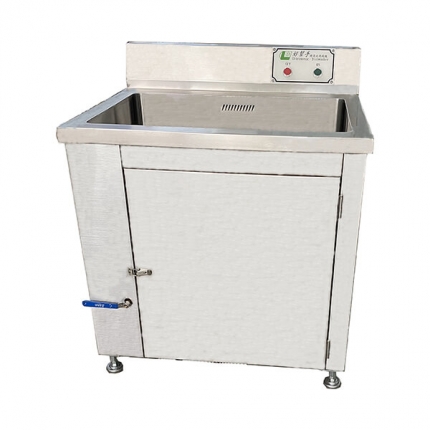
If you would like product recommendations or application advice based on your kitchen setup, please feel free to contact LEO ULTRASONIC today. We will provide a professional assessment tailored to your kitchen's scale.